






















Roof Box Capacity: How to Choose the Right Size

Roof box capacity: a size verification guide
How to evaluate the volume needed for luggage?
Correctly evaluating the right roof box capacity prevents the purchase of an oversized structure that would unnecessarily weigh down the vehicle or one that is too cramped for your luggage. Each type of sports equipment or vacation luggage requires a specific length and height for roof storage space.
This self-assessment guide allows for the quick determination of the ideal volume based on actual transport needs:
Does your sports equipment exceed 180 cm in length? (If yes, a long roof box is necessary, avoiding short models under 160 cm).
Does your luggage include tall or rigid items, such as strollers or bulky bags? (If yes, a very narrow aerodynamic profile should be avoided in favor of generous interior height).
Does the estimated total weight of the load exceed the maximum roof weight limit allowed by the vehicle manufacturer? (Check the car's technical manual before loading).
Are additional accessories needed for organization inside the car? (The cabin space can be optimized using a trunk organizer or other storage accessories from the same size range).
Is the box mounting system compatible with the existing crossbars? (Using a Quick fixing kit for Nordrive roof boxes series 430/430D/530/530D/630/630D facilitates the installation of compatible roof boxes).
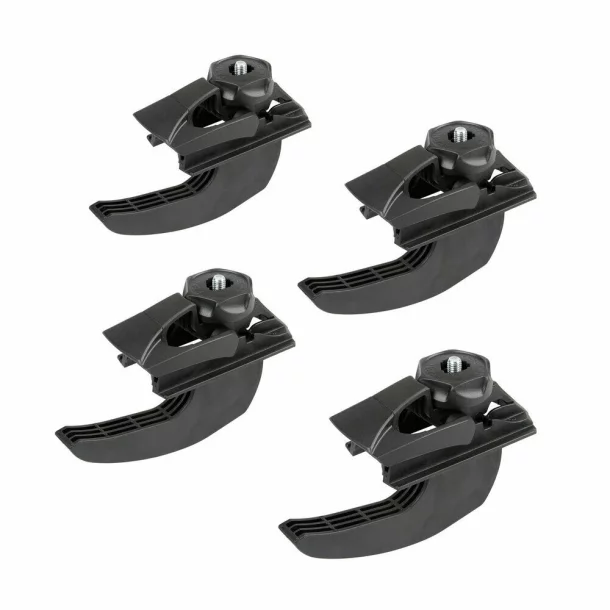
After going through these points, determining the necessary volume becomes a clear decision, contributing to organized transport.
Is the body length compatible with the desired structure?
Body length directly limits the external dimensions a roof-mounted box can have. Correct installation requires that the transport equipment does not extend past the windshield line to prevent excessive wind resistance, and that it allows the trunk lid to open fully without contact. The final position of the entire system is determined by the mounting points on the roof, which must be checked before purchase to ensure optimal crossbar compatibility.
To determine if the desired structure is compatible with the vehicle, follow this verification process:
Is the distance from the front mounting point on the roof to the top edge of the windshield greater than the front overhang of the box?
Is the clearance between the rear mounting point and the fully opened trunk door sufficient to avoid physical contact?
Are the crossbars positioned to allow attachment in the areas specifically provided on the box rails?
Does the total length of the selected transport equipment fall within the limits of the vehicle's total roof length?
Once all these criteria have been confirmed through concrete measurements, you can proceed to configure the transport system itself.
How to check the vehicle's weight limits?
Road safety depends directly on adhering to the maximum authorized weights established by the car manufacturer for each specific vehicle. Exceeding these limits affects stability in corners, alters the center of gravity, and dangerously increases the vehicle's braking distance. To prevent serious incidents, the user must verify component compatibility and correctly calculate the total load before starting the journey. The following checklist allows for a quick assessment of transport system compliance:
The vehicle's technical manual has been consulted to identify the maximum permitted roof load.
The maximum load specified in the crossbar installation instructions is greater than or equal to the sum of the box's own weight and the planned cargo.
The empty weight of the roof box is known exactly before adding luggage.
The total sum of the bars' mass, the box's own weight, and the weight of the luggage does not exceed the limit allowed on the car's roof.
The total weight of the luggage falls within the loading limit specified by the roof box manufacturer.
The distribution of the load inside the box follows technical recommendations, with heavy objects placed in the central area, above the crossbars.
After checking all the items on the list, the car transport system is ready for use in complete safety.
How do color and finish influence the car's aesthetics?
Chromatic integration of transport accessories maintains a harmonious and unified visual appearance for the entire vehicle. Modern finishes offered by the Nordrive brand, which includes a wide range of roof box accessories, are designed to complement the design lines of current cars, ensuring a fluid transition between the roof and the additional cargo volume.
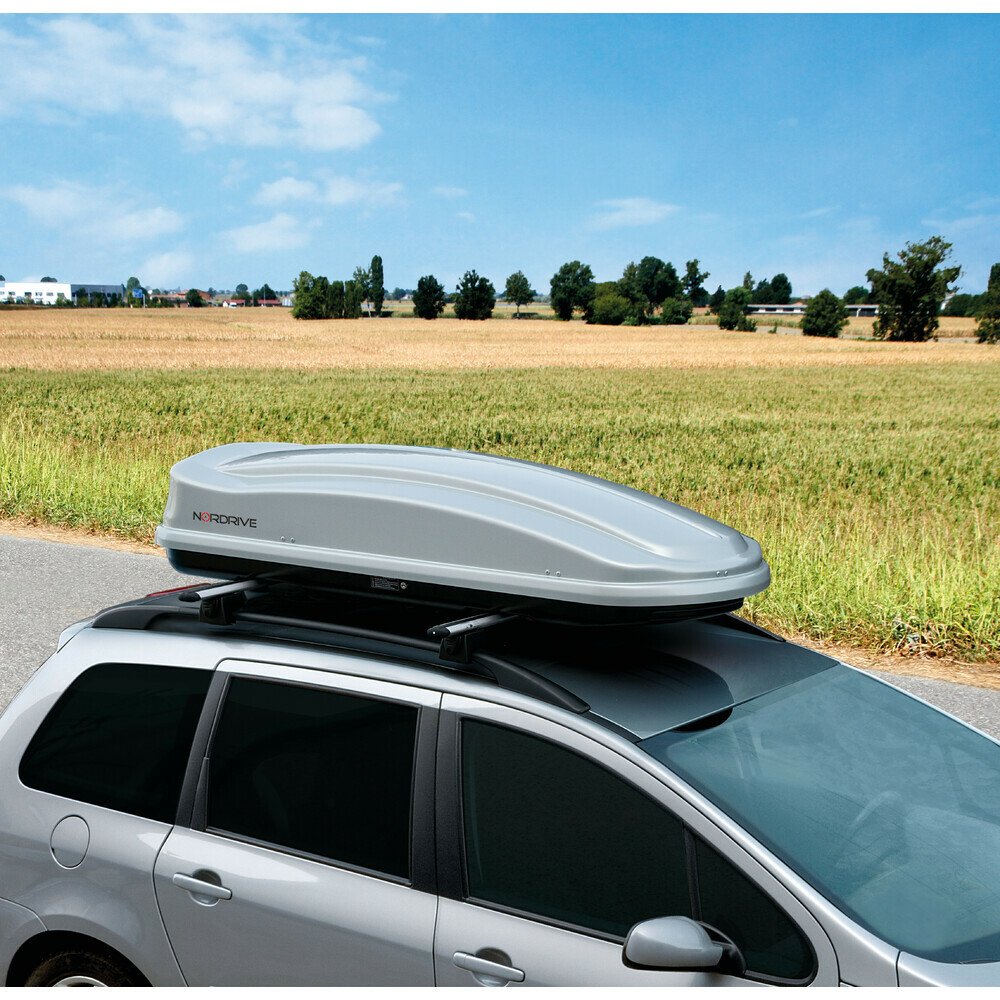
Choosing the right shade can reduce the visibility of fine scratches caused by dust or branches during trips. The following checklist allows for the evaluation of aesthetic compatibility and finish for the selected equipment:
Does the color of the shell match the body color or the car's black or chrome decorative elements?
Is the exterior finish a matte textured type to effectively mask fingerprints and fine scratches from the road?
Does the chosen glossy surface benefit from a UV protection layer to prevent fading over time?
Does the aerodynamic design of the shell follow the natural line of the vehicle's roof?
This verification is complete when all visual compatibility criteria have been checked.
Is the mounting system compatible with the crossbars?
Compatibility between the mounting system and the crossbars is the deciding factor for the safety of the entire equipment during travel. Quick and secure mounting requires dedicated fastening accessories adapted to the existing bar profiles on the car, as a mismatch can lead to damage to the roof or accidental detachment of the load.
Using a certified kit, such as those from the Nordrive range, which includes solutions for Kargo, Kargo-Plus, and the entire range of crossbars, contributes to securing the load on the roof. Periodic checking of the tightening points prevents play during long trips, ensuring compliant use of the equipment.
To determine if the mounting system is road-ready, you can go through this quick audit:
Is the mounting system specifically designed for the crossbar profile (aerodynamic, oval, or rectangular)?
Do the fastening accessories include rubber protective gaskets to prevent slipping and scratching the bars?
Does the mounting kit used hold a European-recognized safety certification for roof transport?
Are all manual or special key-tightened screws and clamps fully tightened, without signs of wear or damaged threads?
After driving the first few kilometers, have the mounting points been checked to ensure there is no physical play when manually moving the box?
If most of these points are not met, it is recommended to immediately replace the improvised mounting kit with an approved fastening system compatible with the specific profile of the crossbars installed on the vehicle.
Fix priorities: what should be corrected first?
If previous checks have highlighted inconsistencies, the absolute first priority is evaluating the technical compatibility of the mounting system. Road safety depends directly on the rigidity of the assembly, which is why any mismatch between components must be corrected before planning the luggage organization for the trip.
Using the specialized platform portbagajulmeu.ro allows for quick filtering of products based on the car's make, model, and year of manufacture to completely eliminate the risks of a wrong purchase. This digital tool ensures the selection of accessories compatible with the vehicle, contributing to their secure attachment to the roof.
Before analyzing aspects related to car aesthetics or choosing specific colors for the roof box, specialists recommend following these remediation steps in strict order:
Verifying the load capacity prescribed in the vehicle manual, which always takes precedence over the technical limits of the accessories.
Inspecting the physical condition of the mounting points on the roof and removing any worn or deformed crossbars.
Purchasing a dedicated fastening system, compatible with the profile of the bars used, to ensure compatibility with the bar profile.
Evaluating the additional volume needed, choosing a roof box capacity that does not exceed the roof length and does not block the full opening of the trunk lid.
Verifying these technical elements contributes to the correct use of car transport systems.
How is technical compatibility with crossbars established?
Correct installation of a roof box depends entirely on the mounting system and the profile of the crossbars already mounted on the vehicle's roof. A technical mismatch in this area can compromise the safety of the entire assembly during travel. To prevent any risk, it is recommended to go through a quick compatibility verification process.
The box's fastening system is designed to embrace or anchor directly onto the bar profile. While quick-clamping systems are extremely efficient for narrow or medium-profile bars, very wide bars, specific to modern aerodynamic profiles, often require dedicated adapters for the T-shaped channel.
To determine if the current equipment allows for secure fastening, you can check the following technical aspects: Are the crossbars compatible with the maximum clamping width of the box's clips?
Do the bars have a median T-shaped channel if the box's mounting system requires specific adapters?
Does the distance between the crossbars allow for the sliding and correct fixing of the box's anchor points?
How to evaluate compatibility with existing crossbars
A roof box cannot be mounted safely without an intermediate support perfectly compatible with the car's bar profile. For correct system attachment to the crossbars, it is essential that the box's mounting system fits exactly the width and thickness of the crossbars already installed on the vehicle. A quick audit of technical compatibility involves checking the following concrete elements:
Do the crossbars have a profile width that falls within the limits of the box's quick-mounting system?
Is the distance between the two crossbars mounted on the roof within the minimum and maximum adjustment range allowed by the box's guides?
Does the crossbar profile (aerodynamic, oval, or rectangular) allow for the complete and secure closing of the clamping claws?
In the case of using a U-bolt fastening system, is the width of the bar channel compatible with the supplied mounting accessories?
If most of these checks indicate a mismatch, the first mandatory measure is purchasing a set of dedicated adapters for the aluminum profile channel or replacing the crossbars with a model compatible with the vehicle.
FAQ
How do you correctly measure the roof space to determine the maximum roof box length?
Measure the distance from the upper edge of the windshield to the point where the open tailgate meets the roof. The roof box should not extend beyond the front of the vehicle, as this could obstruct visibility, nor should it prevent the tailgate from opening fully.
What happens if the vehicle's maximum permitted roof load is exceeded?
Exceeding the limit specified by the vehicle manufacturer can place excessive stress on the vehicle's roof structure and significantly affect its center of gravity. This can lead to reduced stability when cornering and unpredictable handling during emergency braking.
What is the main criterion when choosing the exterior finish of a roof box?
Beyond appearance, the finish should be selected based on its resistance to wear. Textured surfaces are better at concealing fine scratches and dust accumulated during travel, while glossy finishes require more careful maintenance.
When should you avoid installing a rigid roof box?
Installation should be avoided if the vehicle is not equipped with compatible crossbars or if the roof has structural damage. A roof box should also not be used if the weight of the empty box exceeds the maximum permitted roof load specified in the vehicle owner's manual.


