


Clear Visibility, Even on Rainy Days

Car Windshield Wipers in Rainy Weather: How to Choose Them and When to Replace Them
Autumn Brings Rain, and Visibility While Driving Becomes Essential
It's an ordinary October morning. A light rain is falling outside, the asphalt is wet, and traffic is starting to build up. You start your car, switch on the windshield wipers, and notice that instead of cleaning the windshield perfectly, they leave a few streaks right in your field of vision. With every pass, the lights of oncoming vehicles reflect in the film of water left on the glass.
It may seem like a minor detail, but in rainy, foggy, or dark conditions, windshield wipers in good condition are essential for clear visibility and driving safety.
Autumn is one of the seasons when the windshield wiping system is used frequently. Repeated rainfall, wet leaves, dust, and temperature fluctuations can reveal problems that went unnoticed during the summer.
How can you tell when your windshield wipers need replacing? What are the differences between conventional and flat, aerodynamic models? And how can you extend the service life of the wiper blades without compromising their effectiveness?
In this guide, we explain what you should check and how to choose the right windshield wipers for your vehicle.
How Can You Tell If Your Windshield Wipers Are Worn Out?
Windshield wipers do not always fail suddenly. In most cases, their performance gradually decreases, and the first signs appear during an ordinary rain shower.
The rubber on the wiper blades is constantly exposed to UV rays, temperature fluctuations, dust, and contaminants. Over time, the material can lose its elasticity, and the edge that comes into contact with the windshield may no longer follow the glass surface evenly.
Signs That It's Time to Check or Replace Your Windshield Wipers
Streaks on the windshield: lines of water remain after the blade passes, affecting visibility.
Unwiped areas: certain sections of the windshield remain wet even though the wipers are operating.
Squeaking or juddering: the blades move unevenly or produce unusual noises.
Cracked or detached rubber: the contact edge shows visible damage.
Uneven cleaning: several passes are needed to remove the water.
A simple test can be carried out before setting off. Spray windshield washer fluid and observe how the blades clean the surface. If persistent streaks appear, first try cleaning the windshield and the wiper rubber.
If the problem continues, replacing the blades may be necessary.
Cridem Tip: Check your windshield wipers before the rainy season begins and before long journeys. Don't wait until the first heavy downpour to discover that they are no longer working properly.
Why Do Windshield Wipers Leave Streaks on the Glass?
Not every streak means you need to buy new windshield wipers immediately.
During the summer, dust, insects, pollen, wax residue from car washes, and oily particles from traffic can accumulate on the windshield. When autumn rains arrive, these contaminants mix with water and can form a film that prevents the blades from gliding smoothly.
In some situations, careful cleaning can significantly improve wiper performance.
How to Clean the Windshield and Wiper Blades Properly
Start by washing the windshield with a cleaning solution specifically designed for automotive glass. Pay particular attention to areas where you notice streaks or unusual reflections, especially at the bottom of the glass, where contaminants frequently accumulate.
Next, lift the wiper arms if your vehicle's system allows it. Some cars require the wipers to be placed in the service position before the arms can be raised.
Use a soft, lint-free cloth dampened with water or a mild cleaning solution compatible with the blade material. Gently wipe the rubber edge without pulling or forcing the profile.
Avoid petrol, paint thinners, and aggressive solvents, as these can damage the elastic material.
After cleaning, carefully lower the arms and test the wipers on a wet windshield.
If the streaks persist and the rubber shows signs of hardening or deformation, it is probably time for a new set.
Conventional or Flat Windshield Wipers: What Are the Differences?
When looking for car windshield wipers, you will frequently encounter two construction types: conventional models with a metal frame and flat models, also known as flat blades or beam blades.
Both are designed to remove water from the windshield, but they differ in their construction and in how they distribute pressure across the glass.
Conventional Windshield Wipers with a Metal Frame
Traditional models use an articulated frame, usually made of metal, that distributes pressure through several contact points.
This construction is found on many passenger cars and commercial vehicles and is appreciated for its simplicity and the availability of a wide range of sizes.
One example from the Cridem range is the Standard Wiper Blade – 60 cm (24") – 1 pc., featuring a graphite-coated rubber blade and a metal frame.
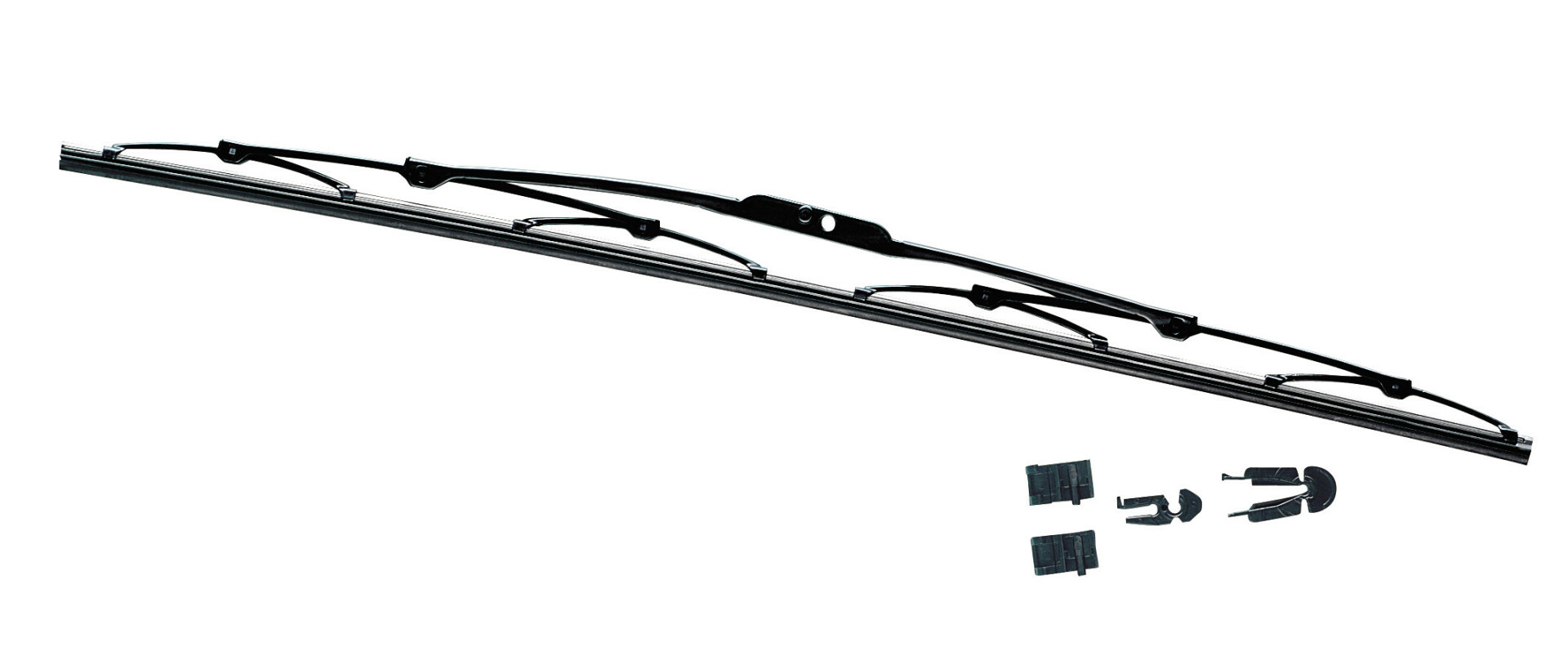
The graphite coating helps reduce friction between the rubber and the glass, promoting smoother movement when the windshield is wet.
Conventional windshield wipers can be a practical choice for vehicles that use this type of construction, provided the correct dimensions and attachment system are respected.
Flat Windshield Wipers with an Aerodynamic Profile
Flat windshield wipers have a more compact construction, without the external articulated frame characteristic of traditional models.
Elastic supporting elements are integrated into the profile and designed to distribute contact pressure along the blade.
The low-profile design can help reduce aerodynamic noise and maintain contact with the windshield at higher speeds, depending on the model and its compatibility with the vehicle.
The absence of external joints also reduces the number of areas where snow and ice can accumulate.
However, a flat windshield wiper is not automatically better for every car. Windshield geometry, arm pressure, and adapter compatibility are just as important as blade design.
Which Type Should You Choose?
If your car was originally equipped with conventional windshield wipers, you can choose compatible replacement models of the same type.
If your vehicle uses flat windshield wipers, it is recommended to keep the construction type specified by the manufacturer or choose a verified alternative for that particular model.
In some cases, conversion solutions from conventional to flat windshield wipers are also available, but these must be compatible with the wiper arms and windshield geometry.
The correct choice depends not only on appearance but, above all, on the blade's ability to clean the glass effectively.
How to Choose the Correct Windshield Wiper Size
One of the most common mistakes when buying windshield wipers is choosing them based exclusively on length.
For example, two 60 cm windshield wipers may have different attachment systems and are not necessarily interchangeable.
In addition, many passenger cars use different blade lengths for the driver's side and the passenger's side.
Check Three Things Before Ordering
1. The length of each blade
Consult your vehicle's manual or a compatibility catalogue. You can also measure your existing windshield wipers if you are certain they are the correct size.
Length is frequently expressed in both centimetres and inches. For example, 24" corresponds to approximately 60 cm, depending on the commercial rounding used.
2. The attachment system
There are hook-type wiper arms, as well as specific systems such as Push Button, Top Lock, Side Pin, and other variants used by vehicle manufacturers.
Some windshield wipers include several adapters, but this does not guarantee universal compatibility.
3. Blade position and wiping range
The windshield wipers must correctly cover the area specified by the manufacturer without touching the windshield edges or interfering with each other.
A blade that is too short can reduce the cleaned area, while one that is too long may cause mechanical interference or operate incorrectly.
Our recommendation: Do not choose a longer blade simply to obtain an apparently larger wiping area. Follow your vehicle's specifications.
Windshield Wipers for Passenger Cars and Commercial Vehicles: What You Need to Know
Although the operating principle is similar, windshield wipers used on commercial vehicles may have different dimensions and configurations compared with those designed for passenger cars.
Vans and trucks may require longer blades designed for large glass surfaces.
The Cridem range also includes the Optimax Truck Line Windshield Wiper – 70 cm (28"), featuring a metal structure and a graphite-coated rubber blade.
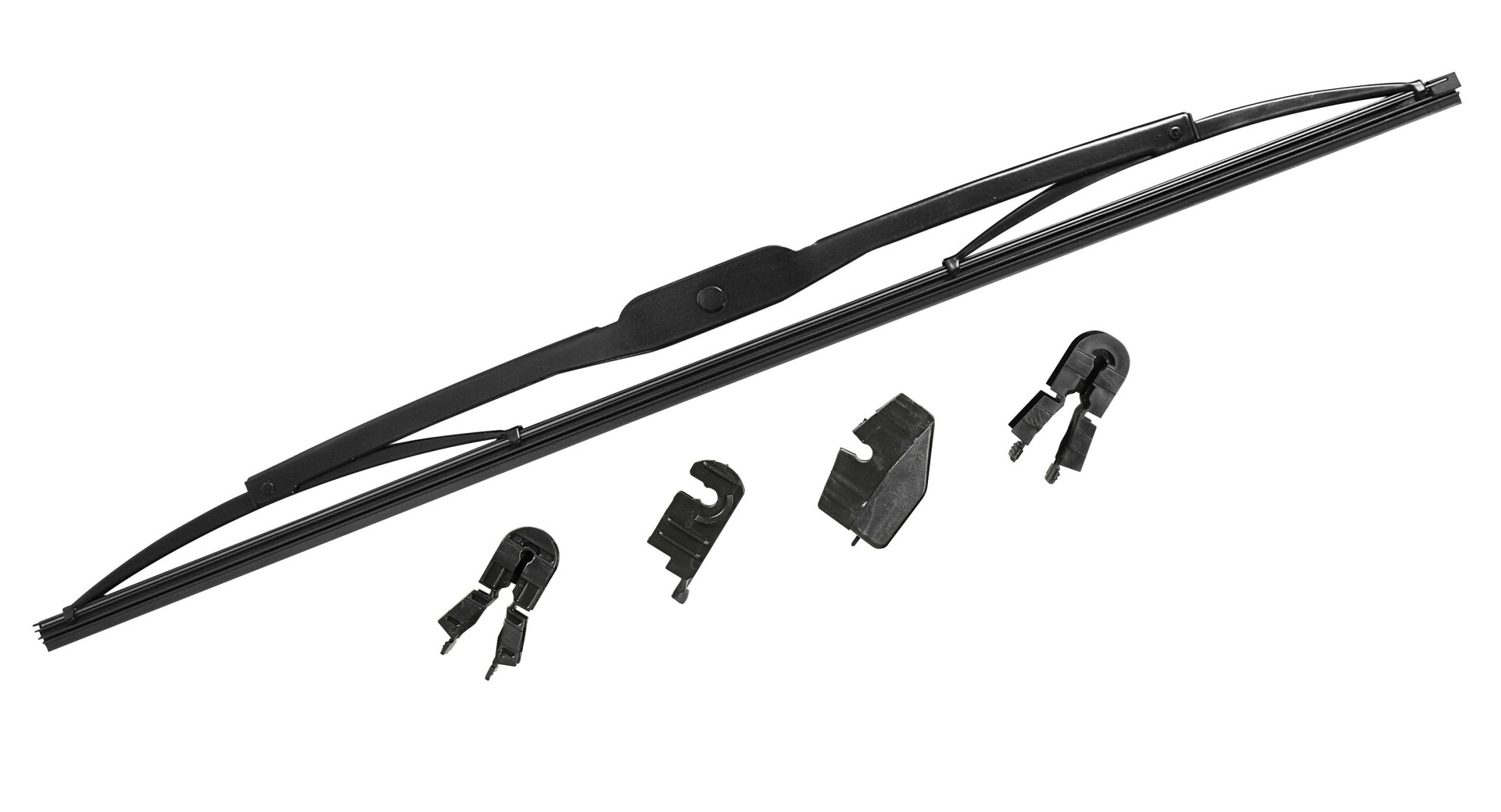
Such a product may be an option for commercial vehicles requiring this length and attachment type.
Before purchasing, always check compatibility with your vehicle model. A length of 70 cm does not automatically mean that the wiper is suitable for every truck or van.
For vehicles used daily in distribution, transport, or commercial activities, regularly checking the windshield wipers is particularly important. A clean windshield helps reduce visibility difficulties during long journeys and deliveries made in rainy conditions.
When Should You Replace Your Windshield Wipers?
There is no universal replacement interval that applies to all car windshield wipers.
Their service life depends on material quality, weather conditions, frequency of use, and maintenance.
As a practical rule, it is useful to check the condition of your windshield wipers every few months and consider replacing them approximately every 6–12 months, depending on wear and the manufacturer's recommendations.
A car frequently parked in direct sunlight and exposed to dust and significant temperature fluctuations may require more frequent blade replacement.
Why Is It Useful to Check Them Before Autumn?
After the summer months, the rubber may already show signs of ageing, even if the windshield wipers have rarely been used.
When the rains of October and November arrive, the blades are used more frequently, and any defects become more noticeable.
Checking them before the rainy season is a simple preventive maintenance measure.
There is no need to wait until the wipers break or become completely ineffective. If you notice rubber damage or persistent wiping problems, replace them.
How to Replace Windshield Wipers Correctly
For many passenger cars, replacing windshield wipers is a relatively simple operation that can be performed without special tools.
However, attachment mechanisms differ from one vehicle to another, so it is important to follow the manufacturer's instructions.
Main Steps for Installing a New Set
Prepare the car. Switch off the engine and the wiping system. If necessary, activate the wiper service position according to your vehicle's manual.
Protect the windshield. Carefully lift the arm and place a thick cloth on the glass beneath the working area. A metal arm that accidentally springs back can damage the windshield.
Remove the old blade. Identify the release mechanism and detach the wiper without forcing the adapter.
Install the new wiper. Fit the appropriate adapter and check that it locks into place. Depending on the mechanism, you may hear a click when it is secured.
Check the attachment. Make sure the blade has no play and is correctly positioned on the arm.
Test its operation. Carefully lower the arm, wet the windshield, and activate the wipers to check that the entire wiping cycle operates normally.
Do not test new windshield wipers on completely dry or dusty glass, as friction can accelerate wear on the rubber edge.
If the attachment mechanism does not fit, do not attempt to modify it or secure it using an improvised solution. Check the adapter and product compatibility.
How to Extend the Service Life of Windshield Wipers During the Cold Season
Late autumn brings not only rain but also temperatures close to freezing, frost, and sometimes the first snowfall.
Under these conditions, the blades can be damaged if used incorrectly.
A Few Simple Habits That Make a Difference
Before switching on the windshield wipers on a cold morning, check that they are not frozen to the windshield.
If the glass is frozen, use your vehicle's demisting and defrosting system or suitable ice-removal products. Do not attempt to free the blades by activating the wiper motor.
Remove leaves and plant debris accumulated at the base of the windshield. These can get caught beneath the blades and affect wiping performance.
Use windshield washer fluid suitable for outdoor temperatures. As temperatures drop, replace summer washer fluid with a winter formula that resists freezing.
Clean the wiper rubber regularly and avoid using the blades to remove dried mud or ice.
If you usually lift the wiper arms during freezing weather, check whether this operation is permitted for your vehicle model. Some vehicles require the service position, and forcing the arms upward can damage the mechanism.
These measures do not eliminate natural rubber wear, but they can help prevent premature blade deterioration.
New Windshield Wipers Still Leave Streaks? Check the Wiper Arms Too
Sometimes replacing the blades does not completely solve the problem.
If new windshield wipers leave unwiped areas or produce juddering, the cause may be related to the wiper arm, the adapter, or the condition of the windshield.
The arms are equipped with mechanisms that provide the pressure needed to maintain contact between the blade and the glass. Over time, dirt can accumulate in the joints, and components may become deformed or worn.
A bent arm or uneven pressure can prevent even a new blade from working properly.
Check that the wiper is securely attached and that the windshield is clean. If the problem persists, have the mechanism inspected at a vehicle service centre.
Do not attempt to bend the arms to increase pressure against the glass. Such an intervention can alter the system's geometry and make the problem worse.
Choose the Right Windshield Wipers for Your Vehicle at Cridem.ro
Whether you drive through the city every day, take long journeys, or use a commercial vehicle, windshield wipers in good condition help maintain visibility in difficult weather conditions.
At the Cridem online store, you can discover car windshield wipers in different sizes and configurations, including conventional models with metal frames and graphite-coated rubber blades.
Before ordering, check the length, attachment type, and compatibility with your vehicle. If the driver's and passenger's side wipers have different dimensions, choose the appropriate combination rather than assuming that a set containing two identical blades will fit.
A clean windshield and effective wipers can make all the difference on a rainy autumn morning. Check them in advance, maintain them properly, and replace them when signs of wear appear.
FAQ – Frequently Asked Questions About Car Windshield Wipers
How Often Should Windshield Wipers Be Replaced?
As a general guideline, windshield wipers may need replacing approximately every 6–12 months, depending on material quality, usage conditions, and the manufacturer's recommendations. If they leave persistent streaks, produce juddering, or show damaged rubber, they should be inspected and, if necessary, replaced sooner.
Why Do Windshield Wipers Leave Streaks Even When They Are New?
Possible causes include wax or grease deposits on the windshield, an unsuitable adapter, incorrect installation, or uneven wiper arm pressure. Clean the glass and check the installation before assuming that the blades are defective.
Are Flat Windshield Wipers Better Than Conventional Ones?
Flat windshield wipers can offer aerodynamic advantages and a different distribution of pressure, but performance depends on compatibility with the vehicle. A high-quality conventional wiper, installed correctly, can perform very well on a windshield for which it was designed.
Can I Install Longer Windshield Wipers Than the Original Ones?
Changing the dimensions without confirming compatibility is not recommended. Blades that are too long may interfere with each other or with the windshield edges, while blades that are too short may reduce the cleaned area.
Should Both Windshield Wipers Be Replaced at the Same Time?
It is recommended to inspect both blades, as they are exposed to similar conditions. Replacing them simultaneously can be practical, but it is not mandatory if one blade is still in good condition. Always respect the specific length required for each position.
Can I Clean Wiper Blades with Alcohol or Solvents?
Avoid aggressive solvents and petroleum-based products. For regular maintenance, use a soft cloth and a mild cleaning solution compatible with the blade material, following the manufacturer's instructions.
What Should I Do If the Windshield Wipers Are Frozen to the Glass?
Do not activate the wiping mechanism. Defrost the windshield using the vehicle's defrosting system or dedicated products, and only release the blades once the ice has melted sufficiently. Forcing the mechanism can damage the rubber or the wiper system.


