






















Driving Comfort in Autumn Light

Autumn sun and driving comfort: how car window films help you
As autumn days grow shorter, the low position of the sun in the sky turns daily morning and evening commutes into a visibility challenge. Although temperatures are dropping, direct sunlight and reflections from wet roads become extremely bothersome, affecting visual comfort in the cabin and straining the driver's eyes.
What is actually true
Car window films are not exclusively summer accessories; they provide essential protection against the glare of the low autumn sun.
The low position of the sun in the autumn months directs rays straight into the driver's field of vision, increasing the risk of temporary blindness.
A window film reduces tiring reflections from wet roads and protects interior materials against degradation.
The installation of any type of film must strictly comply with legal standards regarding the degree of transparency permitted on public roads.
The autumn sun is not harmless: why the low angle of solar rays causes real problems
Autumn brings a major change in driving visibility dynamics, and applying car window films is an effective solution to counteract the effects of sunlight during this season. As days grow shorter, the sun's apparent trajectory drops significantly in the sky, causing rays to penetrate directly into the cabin and affect the driver's field of vision during morning and evening commutes.
This phenomenon of temporary blindness is felt acutely on open roads, in areas where sparse vegetation or the absence of tall buildings cannot block direct sunlight. Although outside temperatures gradually drop, the intensity of the radiation penetrating through the glass surfaces remains high, generating eye fatigue and reducing visual comfort while driving.
Unlike the summer period, when the high angle of the sun limits the direct penetration of rays through the side windows, in autumn the light falls almost parallel to the line of sight. This low position increases bothersome reflections from wet roads or the metal elements of other vehicles in traffic. Using a tinted car film or an athermal film helps control the amount of visible light passing through the windows, providing constant cabin protection and a significant reduction in discomfort without compromising safety while driving.
It is not just direct light that bothers you while driving: how reflections affect visibility during autumn
Asphalt wet from autumn rains acts like a giant mirror, reflecting sunlight directly into the windshield and drastically reducing visibility during morning or evening commutes. This reflection phenomenon is not limited to the road, as rays hitting shiny bodywork, the windows of other cars in traffic, or glass building facades can cause momentary temporary blindness, which is extremely dangerous for road safety. Although the car's sun visor blocks some of the light from above, it remains completely ineffective against oblique reflections that penetrate through the side angles of the cabin.
Sunlight reflected by wet roads or metal surfaces in traffic can generate momentary blindness, but applying approved car films to the side windows actively contributes to reducing eye fatigue by effectively filtering the disturbing light flux.
To combat these unpleasant effects, car window films represent an excellent technical solution, helping to precisely control the amount of light that penetrates through the side windows and the rear window. By reducing the violent contrast between shaded areas and those strongly illuminated by reflections, a set of car films or a quality athermal film stabilizes the driver's peripheral field of vision. This light control considerably reduces the effort of the eyes to accommodate sudden changes in brightness, ensuring optimal visual comfort while driving and preventing eye fatigue during daily routes.
Car films are only useful in summer: why cabin protection is necessary all year round
Associating car films exclusively with the heatwave of July or August is a misconception, because harmful ultraviolet radiation and the effects of sunlight remain active throughout all four seasons. Even in cold autumn or winter periods, when outside temperatures drop significantly, solar energy continues to penetrate through the unprotected glass surfaces of the vehicle.
The effects of constant exposure of the cabin to the solar spectrum without an adequate barrier include the following technical aspects:
Accelerated degradation of interior materials, a process manifested by the premature fading of textile or leather upholstery, as well as the cracking of the plastic on the dashboard.
Uninterrupted penetration of ultraviolet radiation into the vehicle interior; a study published by the University of Wollongong indicates that standard car side windows offer limited protection against the UV spectrum, allowing the transmission of a significant amount of harmful radiation.
Rapid heating of the cabin on sunny autumn days, a phenomenon that forces the use of the air conditioning system and increases fuel consumption.
Applying a quality product, such as a window film from our range, contributes directly to reducing exposure to this harmful radiation and maintaining the original appearance of interior elements. This type of window film acts as a permanent protective screen, reducing the fading of finishes and improving general thermal comfort. By selecting an appropriate degree of transparency, car window films ensure effective protection throughout the year, protecting the investment in the vehicle and optimizing visibility in strong light conditions.
How do you choose the right degree of transparency for your car?
Choosing the optimal level of visible light transmission is an essential step to ensure the perfect balance between visual comfort while driving, passenger privacy, and traffic safety. Various options adapted to the specific needs of each driver are available on the Cridem.ro website, allowing for the effective customization of rear side windows and the rear window.
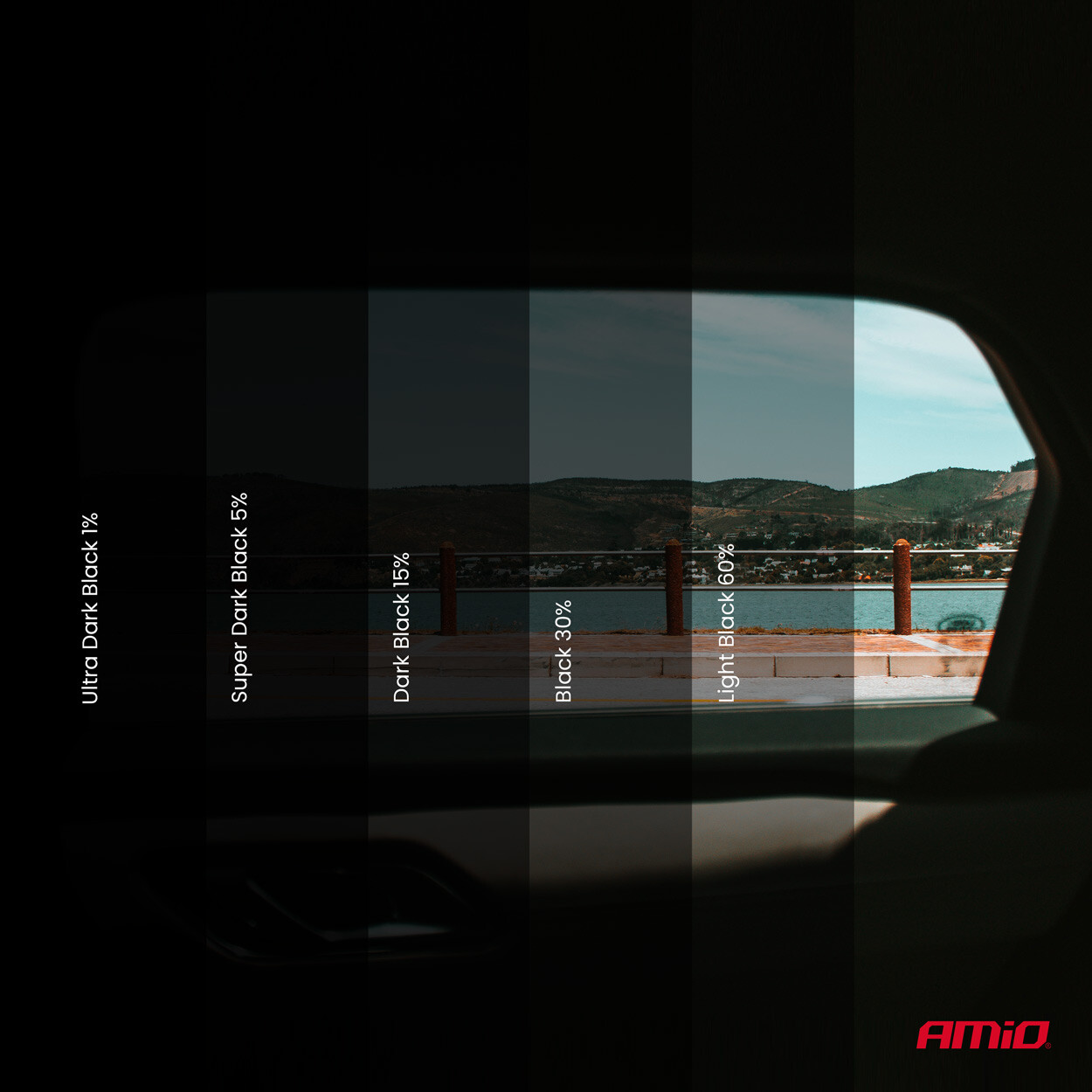
Amio solar window film 50x300cm 30% transparency Black offers a marked reduction in direct light, being ideal for diminishing solar glare and protecting passengers in the back seat.
Amio solar window film 75x300cm 15% transparency Dark Black ensures a high level of privacy and a strong visual barrier against prying eyes, being suitable for those who frequently transport goods in the cabin.
Amio solar window film 50x300cm 60% transparency Light Black is the ideal option for a discreet tint that maintains excellent visibility in the rearview mirrors even in low light conditions or at night.
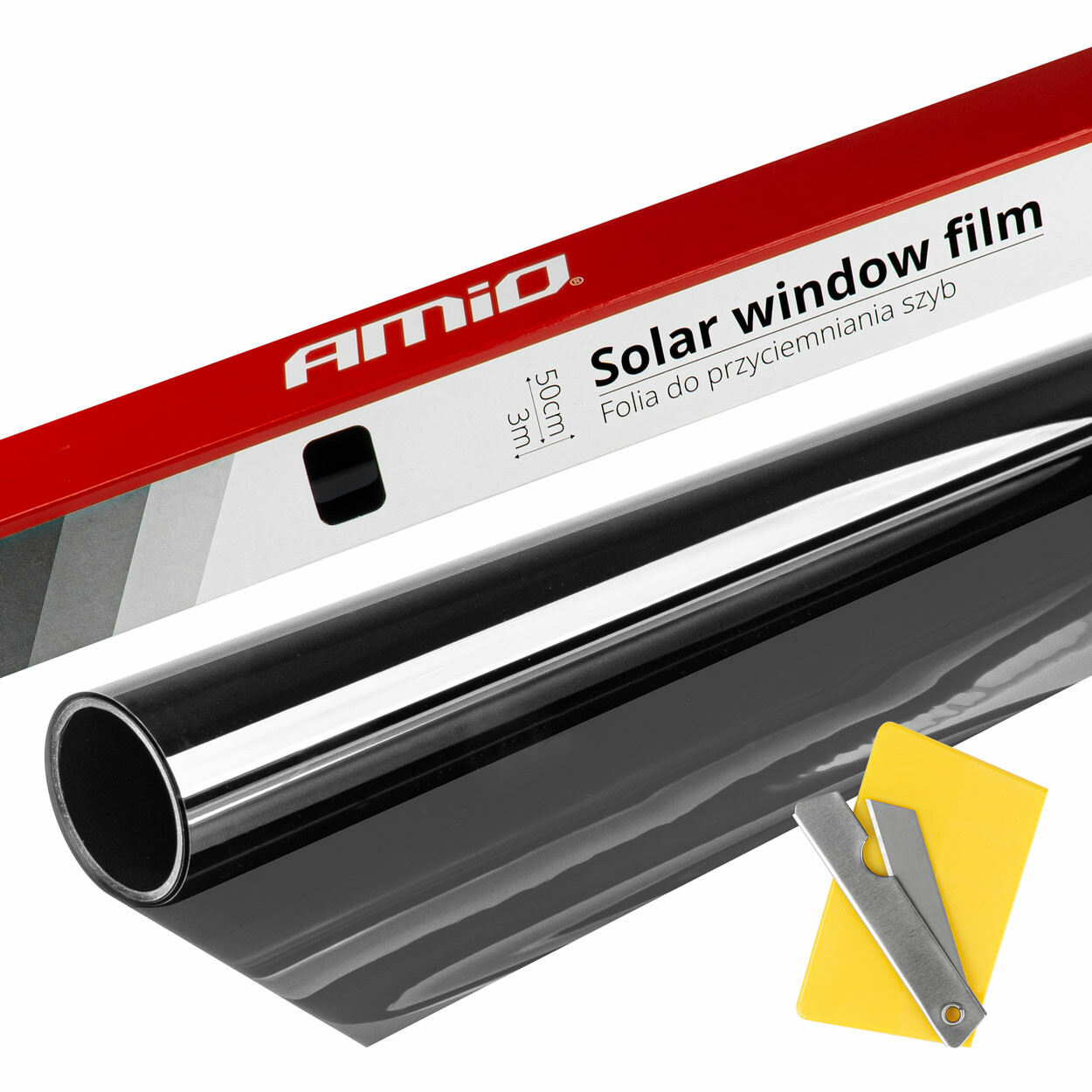
The final decision regarding the degree of transparency must take into account that car window films influence visual perception during parking maneuvers or when driving in the rain. A shade that is too dark, applied without a prior analysis of road conditions, can hinder spatial orientation, which is why product selection must always prioritize optimal visibility from the cabin to the outside.
Any film can be applied to any window: what legal limits must be respected
Applying films to the glass surfaces of a vehicle is not a simple personalized design decision, but a procedure strictly regulated by road legislation in Romania and the standards established by the Romanian Automotive Register (RAR). Current road legislation requires compliance with transparency limits for films applied to car windows; failure to comply may result in sanctions according to applicable standards.
To ensure compliance with road legislation, it is important to keep in mind the regulations regarding the degree of transparency for each glass area of the car:
Windshield: This is the area with the most severe restrictions, where the application of standard tinted films is prohibited; it is mandatory to maintain almost total transparency so as not to affect visibility at night or in low-light conditions.
Front side windows: Together with the windshield, these must ensure a visible light transmission (VLT) of at least 70% after applying the film, thus ensuring optimal visual control over the exterior rearview mirrors.
Rear side windows and rear window: These surfaces allow for a much higher degree of darkening, with no lower limit for transparency, provided that the vehicle is equipped with exterior rearview mirrors on both sides.
To ensure compliance with road legislation, we recommend installation in an authorized service center, which can provide the necessary documentation regarding the compliance of the products and the installation.
When you want to improve thermal and visual comfort, using a certified product, such as a window film from our offer, guarantees that the material meets the declared technical specifications. Choosing the correct degree of transparency prevents the risk of compromising visibility during morning or evening commutes, when the low angle of the autumn sun creates strong reflections on wet roads. Thus, car window films become a useful protection tool without violating current legal standards.
Surface preparation determines the durability of the film application
Correctly installing car films is not just a matter of aesthetics, but directly influences the lifespan of the material and visual clarity while driving.
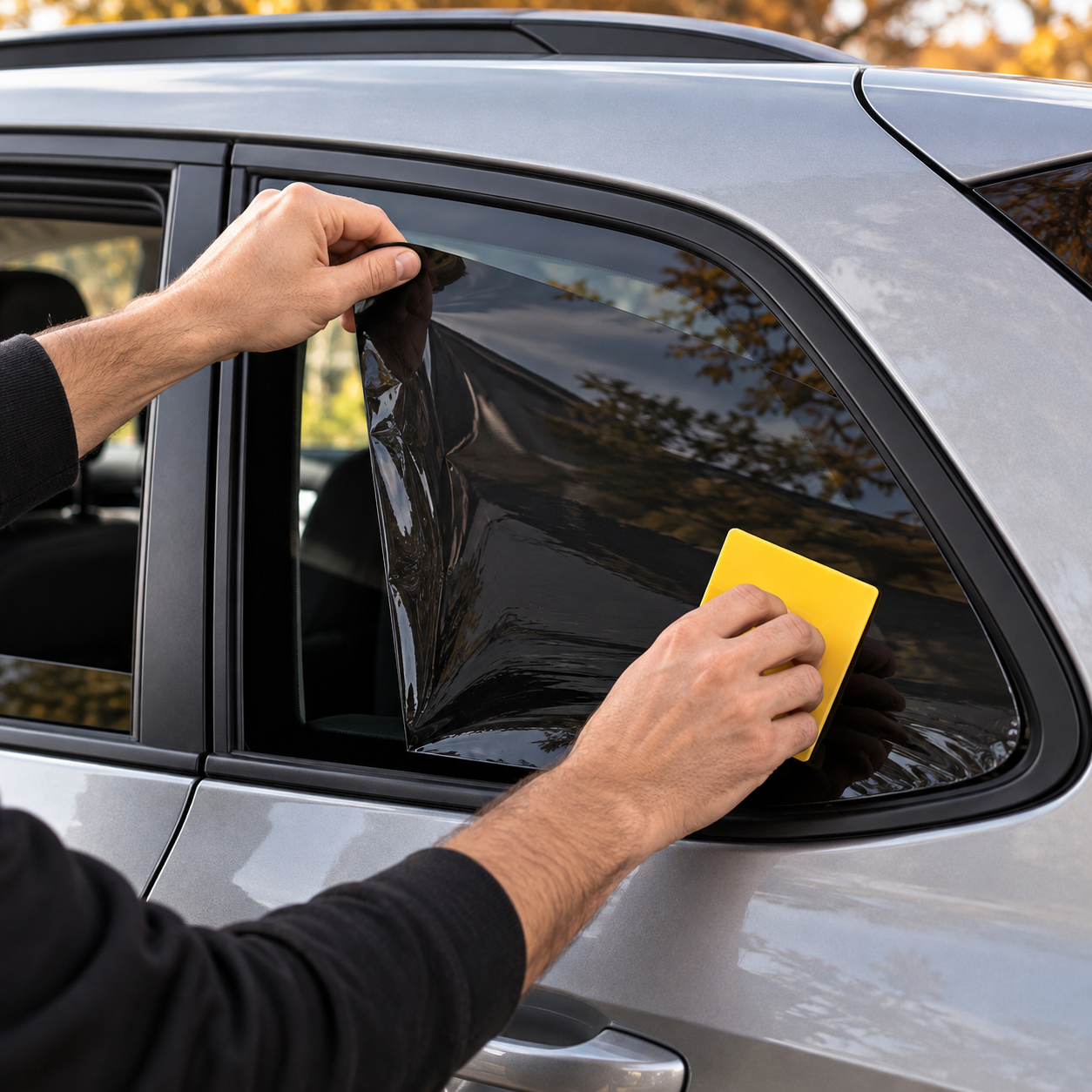
Although the process may seem easy to perform at first glance, the final result depends entirely on the rigor of the glass preparation stages. Impurities left on the window can affect the adhesion of the adhesive layer.
Extremely thorough window cleaning: Traces of dust, grease, fingerprints, or lint left on the glass surface can lead to the appearance of air bubbles under the film, which can be difficult to remove later.
Measurement and preliminary cutting: Dimensions must be established with precision before removing the protective layer, leaving a technological margin for a perfect fit at the edges.
Use of dedicated accessories: Using appropriate tools, such as a squeegee for applying films and stickers, ensures a uniform spread of the material on the window and prevents accidental scratching of the active surface while removing excess water.
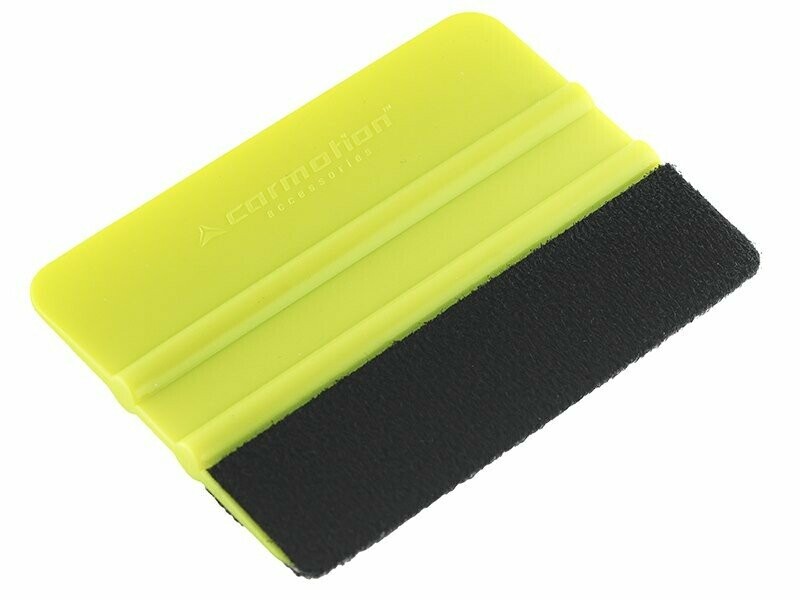
Respecting drying time: After application, the adhesive requires a period of thermal stabilization to achieve maximum adhesion to the glass.
To simplify this procedure, some films from the Amio range include accessories in the package to facilitate installation, with the range being diversified and including multiple types of mounting, such as magnetic, suction cup, headrest, or cigarette lighter. Using these included accessories reduces the risk of creases or irregular edges. For optimal results, application is carried out in an enclosed space, protected from drafts that can carry dust particles onto the work surface. Choosing quality installation accessories and impeccable cleaning is the only way that car window films will maintain their protective properties and optical clarity throughout the year.
The right choice for relaxed driving in any season
To make the right choice, first evaluate your daily routes and identify whether you need maximum privacy for rear passengers or just a discreet tint that does not affect visibility at night at all. Check the dimensions of the side windows and the rear window before purchasing to ensure that the length of the selected roll covers the entire glass surface.
If you prefer quick installation and already have experience in applying automotive materials, opt for packages that include basic accessories for cutting and smoothing. Discover the full range on cridem.ro, choose the level of transparency compatible with your driving style, and equip your car with the right car window films to transform every trip into a safe and relaxing experience.
FAQ
How do car window films influence visibility at night or in the rain?
A film with a degree of transparency that is too low, improperly installed on the front windows, can significantly reduce visibility at night. Therefore, it is essential to choose car window films while respecting the legal transparency limits for each area of the car.
What causes air bubbles to appear under the car film after installation?
The appearance of bubbles is usually caused by insufficient cleaning of the window before application or by not using an appropriate squeegee for removing water and air. Using an accessory such as a squeegee for applying films and stickers helps to obtain a perfectly smooth surface.
What is the difference between a standard solar film and an athermal film?
Standard solar film mainly reduces visible light and glare, providing privacy, while an athermal film is specially designed to block infrared radiation responsible for heat and UV rays, often having higher transparency.
How should car windows be properly maintained after applying the film?
Cleaning windows with applied film should only be done with soft microfiber cloths and ammonia-free cleaning solutions to prevent dulling or scratching the protective layer.


