


How to Protect Your SUV During Winter

SUV Car Covers: How to Choose the Right Protection for Winter
With the arrival of the cold season, cars parked outdoors are exposed daily to rain, snow, frost, and wind. Mornings when you have to remove ice from the windows or snow from the bodywork can become a real hassle, especially if you don't have the option of parking in a garage.
A winter car cover can be a practical solution for protecting your car during periods when it remains parked outdoors. Besides limiting direct contact with precipitation, a well-chosen cover can reduce the time needed to prepare your car before setting off.
For SUVs, choosing the right cover requires a little extra attention. The generous dimensions of the bodywork, the height of the roof, and any roof rails must be taken into account to ensure that the cover fits properly and stays securely in place.
In this guide, we explain which types of car covers are suitable for the cold season, how to choose the correct size, and what to check before buying.
Why Is It Worth Using a Car Cover in Winter?
Winter isn't just about snow. Fluctuating temperatures, moisture, frost, and wind can cause problems for cars parked outdoors for extended periods.
A suitable car cover can offer several advantages:
Protection against snow and frost: reduces direct accumulation on windows and bodywork, making it easier to prepare your car for the road.
Protection against rain and dirt: limits contact with precipitation, dust, and other impurities from the outdoor environment.
Less time spent cleaning: after removing the cover, the car may require less cleaning than one left completely uncovered.
Additional protection against minor impacts: certain padded models, such as hail protection covers, can absorb some impacts.
However, not every cover provides the same level of protection. The material, dimensions, and fastening system all influence the result, and an unsuitable or incorrectly installed cover can cause more inconvenience than benefits.
What Type of Car Cover Is Suitable for the Cold Season?
When looking for a car cover for winter protection, you'll come across models made from different materials. Two options worth considering are covers with a waterproof and breathable membrane and those with an additional impact protection layer.
Waterproof and Breathable Car Covers
For a car frequently parked outdoors, a cover with a waterproof and breathable membrane can be a practical choice.
The material is designed to limit water penetration from the outside while allowing some of the moisture vapor accumulated beneath the cover to escape.
This is particularly important in winter, when temperature differences between the air, ground, and bodywork can encourage condensation.
In the Cridem range, you can find, for example:
Membrane Garage Full Car Cover, Waterproof and Breathable – L – SUV/Off-Road
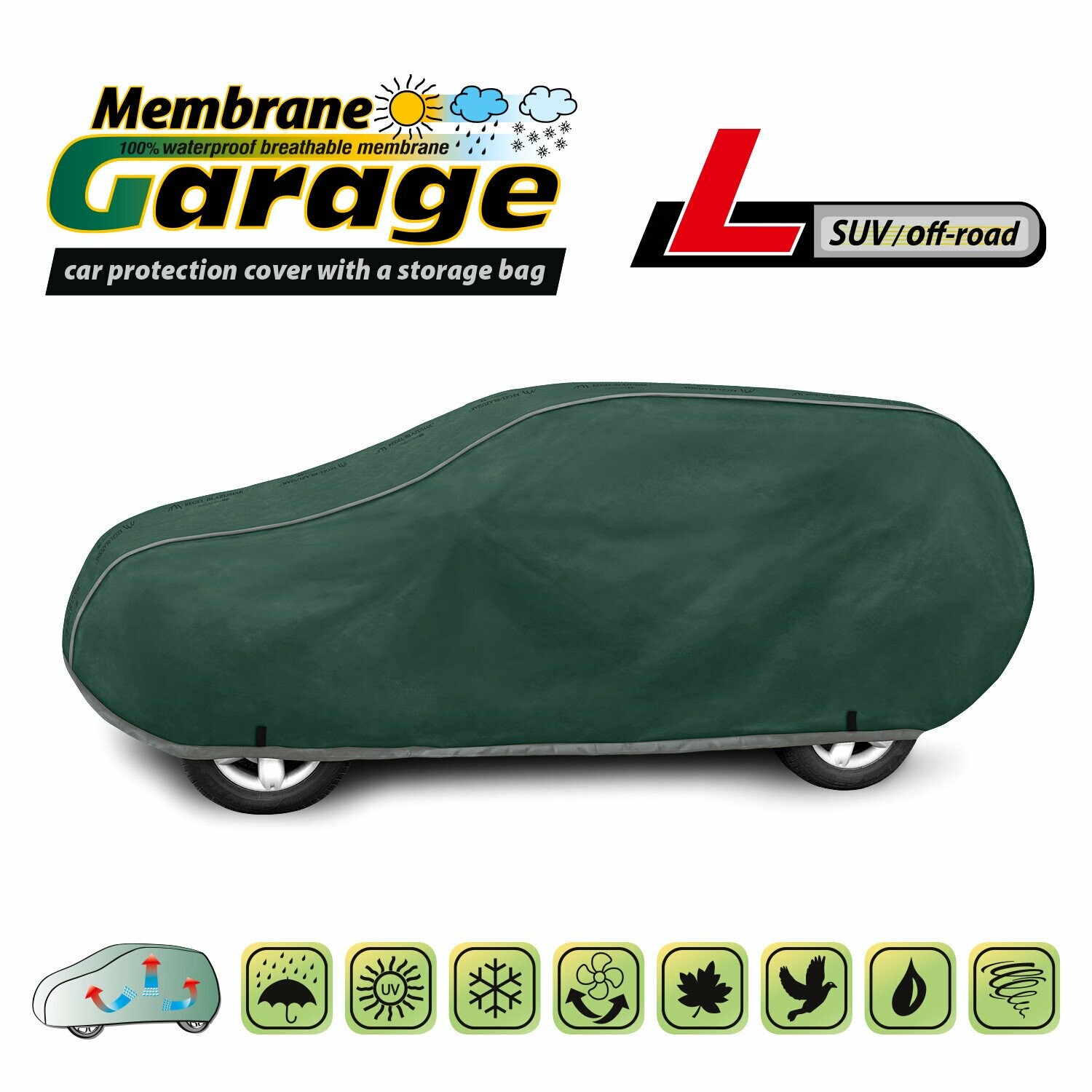
This is an option worth considering for protecting the exterior of an SUV, provided its dimensions match the vehicle.
For larger SUVs, the following version is also available:
Membrane Garage Full Car Cover, Waterproof and Breathable – XL – SUV/Off-Road
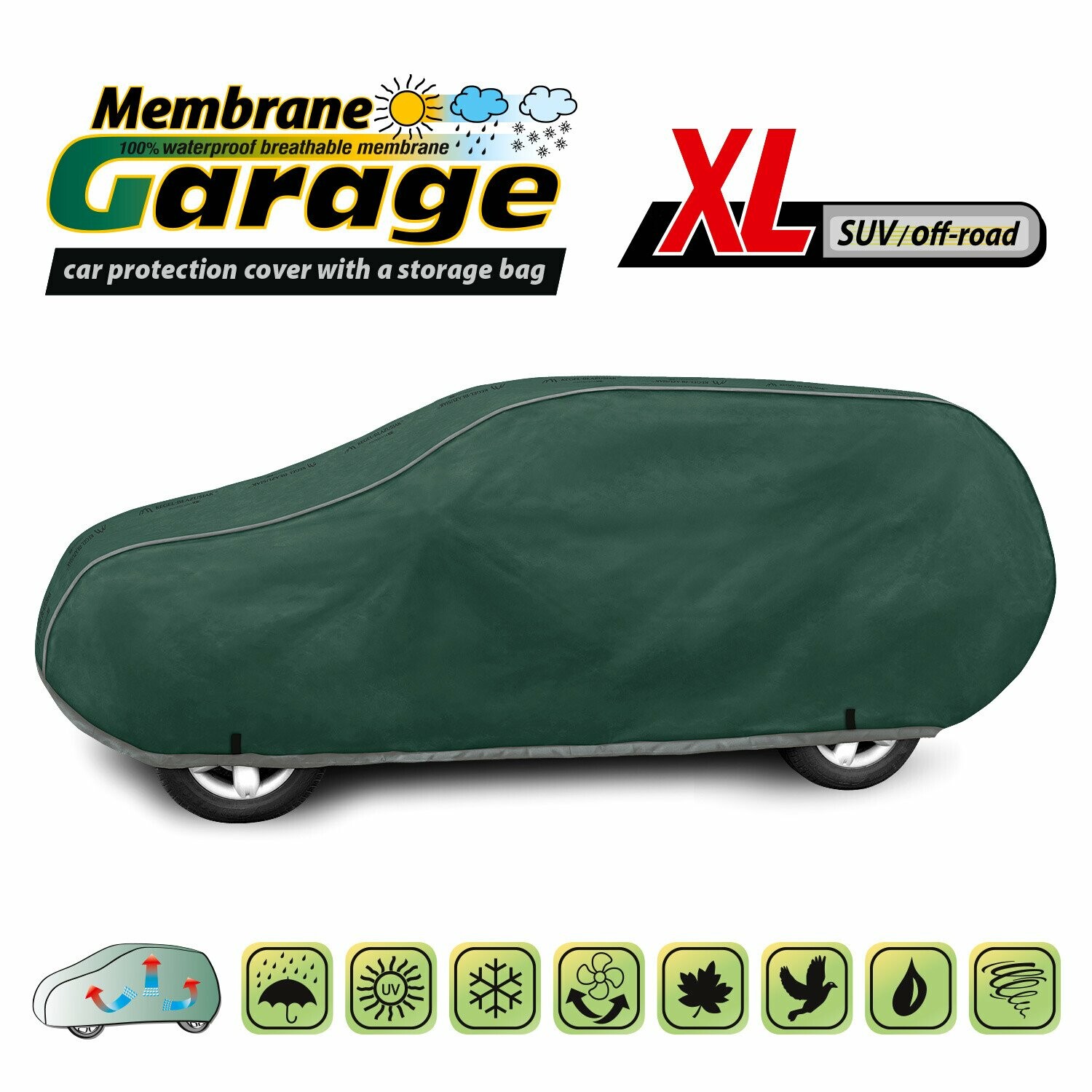
Even if the material is breathable, it's important to periodically check whether moisture has accumulated beneath the cover, especially after prolonged periods of rain or snowfall.
Hail Protection Car Covers with Additional Protection
If your car is parked in an area exposed to severe weather conditions, you can also consider a hail protection cover.
These models feature a layer of cushioning material designed to reduce the effects of certain impacts on the bodywork.
One example available at Cridem is:
Gran-Pree SUV Meteo Guard MG-SUV-XL Hail Protection Car Cover – 155 × 185 × 520 cm
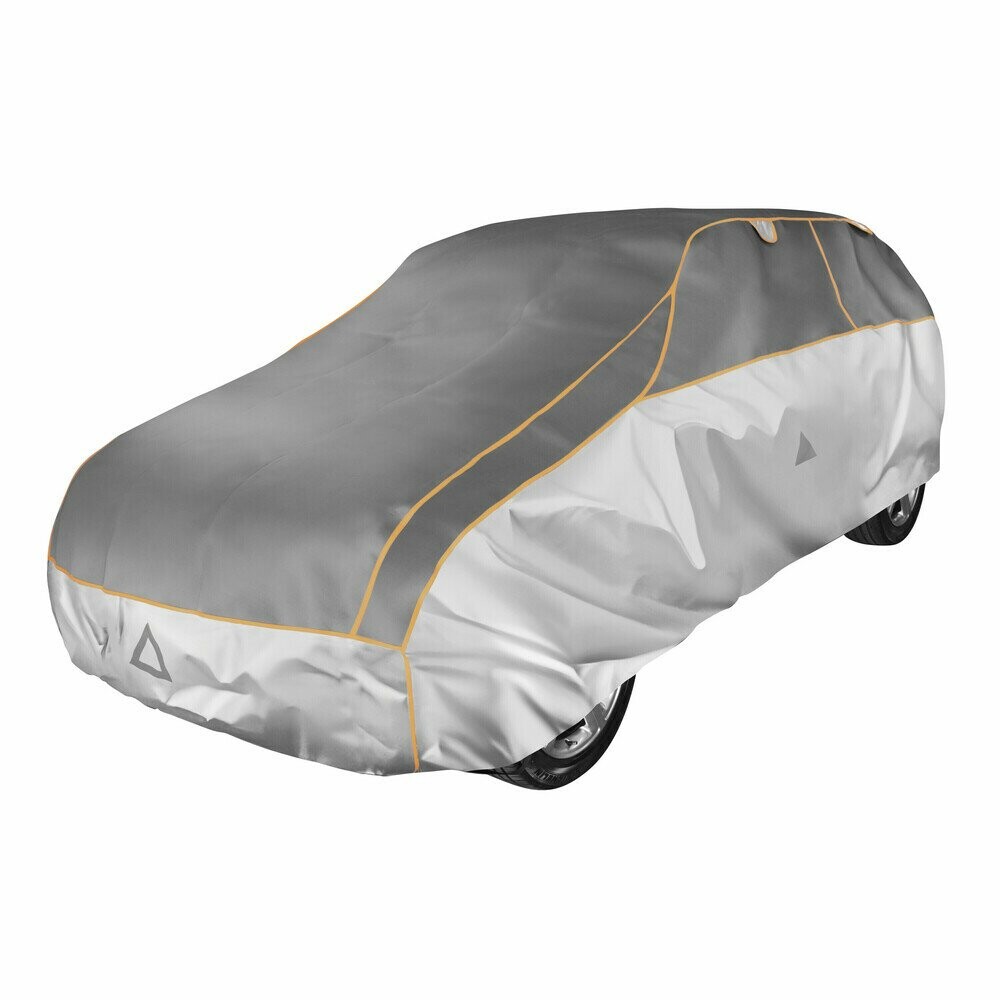
The protective layer can be useful against impacts for which the product was designed. However, a hail protection cover does not guarantee protection against large branches, heavy blocks of ice, or other objects falling from a height.
Which option should you choose? If your main goal is protection against rain, snow, and dirt, start with a waterproof and breathable cover. If you also want a certain level of impact protection, check the specifications of a hail protection cover.
How Do You Choose the Correct Car Cover Size for Your SUV?
One of the most common mistakes is choosing a cover based solely on the vehicle category. Two SUVs can have very different dimensions, even if they belong to the same class.
A cover that's too small won't properly cover the car, while one that's too large may flap in the wind, causing the material to rub against the bodywork.
Before buying, check three important dimensions:
Vehicle length: measure the distance between the outermost points of the front and rear bumpers.
Body width: check the width specified by the manufacturer and how the cover is designed to accommodate the side mirrors.
Vehicle height: take into account the roof profile, roof rails, and any other permanently installed accessories.
Then compare these measurements with the exact dimensions of the cover. Sizes S, M, L, or XL are not necessarily identical from one manufacturer to another.
For example, a cover designed for a compact SUV won't necessarily have the dimensions required for a seven-seater SUV.
Useful tip: Don't automatically choose a larger size just to make sure it fits. The closest possible fit, according to the manufacturer's recommendations, helps keep the cover stable in windy conditions.
Why Is It Important for a Car Cover to Be Breathable?
At first glance, a completely waterproof cover may seem sufficient for winter protection. However, waterproofing isn't the only important feature.
Condensation can form beneath a cover, especially when temperatures fluctuate or the car is covered before it has completely dried.
If moisture remains trapped for long periods, it can encourage corrosion in vulnerable areas of the bodywork, particularly where the protective coating is already damaged.
That's why it's recommended to choose a cover that combines protection against precipitation with good moisture management.
To limit condensation buildup:
Cover the car only after the bodywork is clean and dry.
Choose breathable materials or models equipped with ventilation systems.
Do not block the cover's ventilation openings.
Periodically lift the cover to check the condition of the bodywork and allow it to dry if necessary.
Remember that breathable material doesn't completely eliminate the risk of condensation. Weather conditions, the surface on which the car is parked, and the duration of parking all influence the amount of moisture that accumulates.
How Do You Prepare Your Car Before Installing the Cover?
Even a high-quality cover can cause scratches if it's placed over dirty bodywork.
Dust, sand, and mud particles trapped between the material and the paint can act as abrasives when the wind moves the cover.
Before installation, a few simple checks are recommended:
Wash the car, removing dust, mud, and road salt deposits.
Allow the bodywork to dry completely, including around the mirrors and joints.
Remove snow and ice, without using objects that could scratch the paint.
Check the mirrors, antenna, and roof rails to avoid placing unnecessary tension on the material at unsuitable points.
Make sure the car has cooled down, especially around the exhaust system, before installing the cover.
If you use your car daily, it's also worth considering the time needed to install and store the cover. On days with precipitation, the cover may be wet or frozen and will need to dry before long-term storage.
How Do You Secure a Car Cover Properly in Windy Conditions?
SUVs have large side surfaces, and wind can put considerable pressure on the cover material.
That's why the fastening system is almost as important as the material itself.
For proper installation:
Place the cover in the center of the clean roof, in an area sheltered from strong wind gusts.
Gradually unfold the material toward the front and rear of the vehicle.
Position the side edges so that they cover the bodywork evenly.
Secure the elastic bands and fastening straps according to the manufacturer's instructions.
Check for loose sections of material that could flap in the wind.
Do not improvise anchoring points or route straps over hot, moving, or sensitive components underneath the car. Use only the fastening systems and routing methods specified by the manufacturer.
After installation, check that the cover is stable but not excessively tight.
During storms or very strong winds, follow the usage limits specified by the manufacturer. No cover should be considered safe in all weather conditions.
When Is It Not Recommended to Use a Car Cover?
There are also situations when installing a car cover should be postponed.
When the car is wet or covered in ice. If you install the cover over a wet surface, water may remain trapped beneath the material and freeze.
Immediately after a long drive. Exhaust components may remain hot, and contact with synthetic material can cause damage or even create a fire risk.
When the bodywork is very dirty. Abrasive particles can cause micro-scratches, especially if the cover moves in the wind.
In extreme wind conditions. If the fastening system isn't designed for such gusts, there's a risk that the cover may come loose.
Extra care is also needed when the car is parked on grass or wet ground. Moisture rising from the ground can contribute to condensation, especially during extended parking periods.
Which Car Cover Should You Buy for Winter Protection?
Your choice depends primarily on where you park your car, how often you use it, and the type of protection you want.
If your SUV remains outdoors overnight or for several days, a full waterproof and breathable cover can be a suitable solution against precipitation and dirt.
If you also want additional protection against certain impacts, it's worth looking at hail protection models.
At Cridem, you can find car covers for different body types, including SUVs and off-road vehicles. Before ordering, check the dimensions, material, fastening system, and manufacturer's recommendations.
A correctly chosen cover, used according to the instructions, can make car maintenance easier during the colder months and help preserve the appearance of its exterior.
Frequently Asked Questions About Winter Car Covers
What Car Cover Is Recommended for Winter?
For protection against rain, snow, and dirt, a waterproof and breathable cover is a practical option. If you also want additional protection against certain impacts, you can consider a hail protection model, checking the level of protection specified by the manufacturer.
Can a Car Cover Scratch the Paint?
Yes, if it's installed on a dirty car, has an unsuitable inner surface, or moves excessively due to wind. Cleaning the bodywork and choosing the correct size reduce this risk.
Is It Okay to Cover a Car When It's Wet?
It's not recommended. Moisture can remain trapped beneath the cover, encouraging condensation or causing the material to freeze onto the bodywork. Ideally, wait until the car is dry.
Can I Leave the Cover on My Car All Winter?
A cover designed for outdoor use can be used for longer periods, within the limits recommended by the manufacturer. However, it's important to periodically check the fastening system, snow accumulation, and any signs of moisture.
Is a Hail Protection Cover Better Than a Waterproof Cover?
Not necessarily. The two types of covers serve different purposes. Hail protection models are designed to absorb certain impacts, while covers with waterproof and breathable membranes focus on protection against precipitation and moisture management. Some products may combine these features.
How Do I Choose the Right Car Cover Size for My SUV?
Check the vehicle's length, width, and height and compare them with the product's size chart. Don't rely solely on size labels such as S, M, L, or XL, as dimensions may vary between manufacturers.
Is It Worth Using a Car Cover If I Drive Every Day?
It depends on parking conditions and the time available for installation. If you use your car daily, a full cover may be less practical, especially when it's wet or frozen. For longer periods of outdoor parking, the benefits may be more significant.


