






















Car Protection in Autumn and Winter: Car Cover or Portable Garage?

Car cover or mobile garage: 6 essential selection criteria
The dilemma between a car cover or mobile garage frequently arises among drivers who lack a permanent covered parking space. The right choice depends on the available ground space, vehicle usage frequency, and tolerance for anchoring procedures. The analysis below details the practical differences between the two systems to guide a decision tailored to each parking regime.
Verdict at a glance
The comparison between a car cover or mobile garage is resolved based on the available footprint and the rhythm of daily trips.
A waterproof car cover molds to the vehicle without taking up extra space in the yard or parking lot.
A folding tent-type structure eliminates direct mechanical contact with the paint, but requires a dedicated installation area.
Quick fixing with elastic cords provides superior flexibility in the daily use of the car.
What to choose between a car cover or mobile garage?
The dilemma between a car cover or mobile garage is resolved depending on the available yard space, installation speed, and allocated budget. A textile cover protects the bodywork directly along the outer contour without any additional ground footprint. In contrast, a folding tent-type structure functions as an independent mechanical shelter, but requires a dedicated flat surface.
Selection criterion | Dedicated car cover | Tent-type mobile garage |
|---|---|---|
Required ground footprint | 0 m² extra compared to the car size | Minimum 15 m² up to 18 m² flat surface |
Installation mechanism | Quick manual tensioning with elastic cord | Metal frame assembly and ground anchoring |
Mechanical barrier | Direct contact with the clear coat layer | Air gap of 15-30 cm from the bodywork |
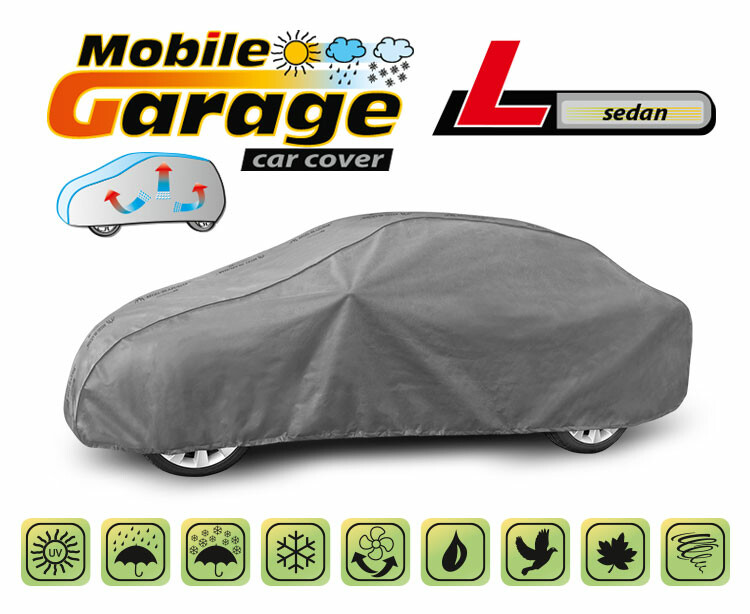
The exterior cover remains the optimal solution for narrow spaces or parking lots without mechanical fixing possibilities. Models such as Complete car cover Mobile Garage - L - Sedan use triple-layer polypropylene to ensure condensation evacuation and protection against UV rays. For high-volume vehicles, the Complete car cover Mobile Garage - XL - SUV/Off-Road version offers stable molded coverage, firmly fixed by the perimeter tightening cord.
The independent garage represents the correct choice when you own a generous private perimeter and aim for easy access to the doors without uncovering the bodywork. However, the metal frame imposes rigorous ballasting requirements against gusts of wind, involving a distinct logistical effort. The car cover offers immediate protection against everyday weather, keeping the investment in a strictly utilitarian zone.
What ground space does each protection variant require?
The choice between a car cover or mobile garage depends directly on the flat surface available in the parking perimeter.
A folding tent-type structure requires a dedicated flat surface of at least 15 to 18 square meters. This space implies usual dimensions of 5.0 to 6.0 meters in length and 2.5 to 3.0 meters in width. In addition, the perimeter requires free areas all around for structural anchoring and ballasting systems. Access to the tensioning elements remains mandatory for mechanical stability. For this reason, such a setup is impossible in collective residential parking lots or on narrow alleys.
In contrast, an exterior cover requires zero extra square meters compared to the vehicle ground footprint. The textile material strictly covers the bodywork, without exceeding the demarcation lines of the parking space. The solution remains perfectly viable in crowded urban spaces, narrow yards, or shared garages.
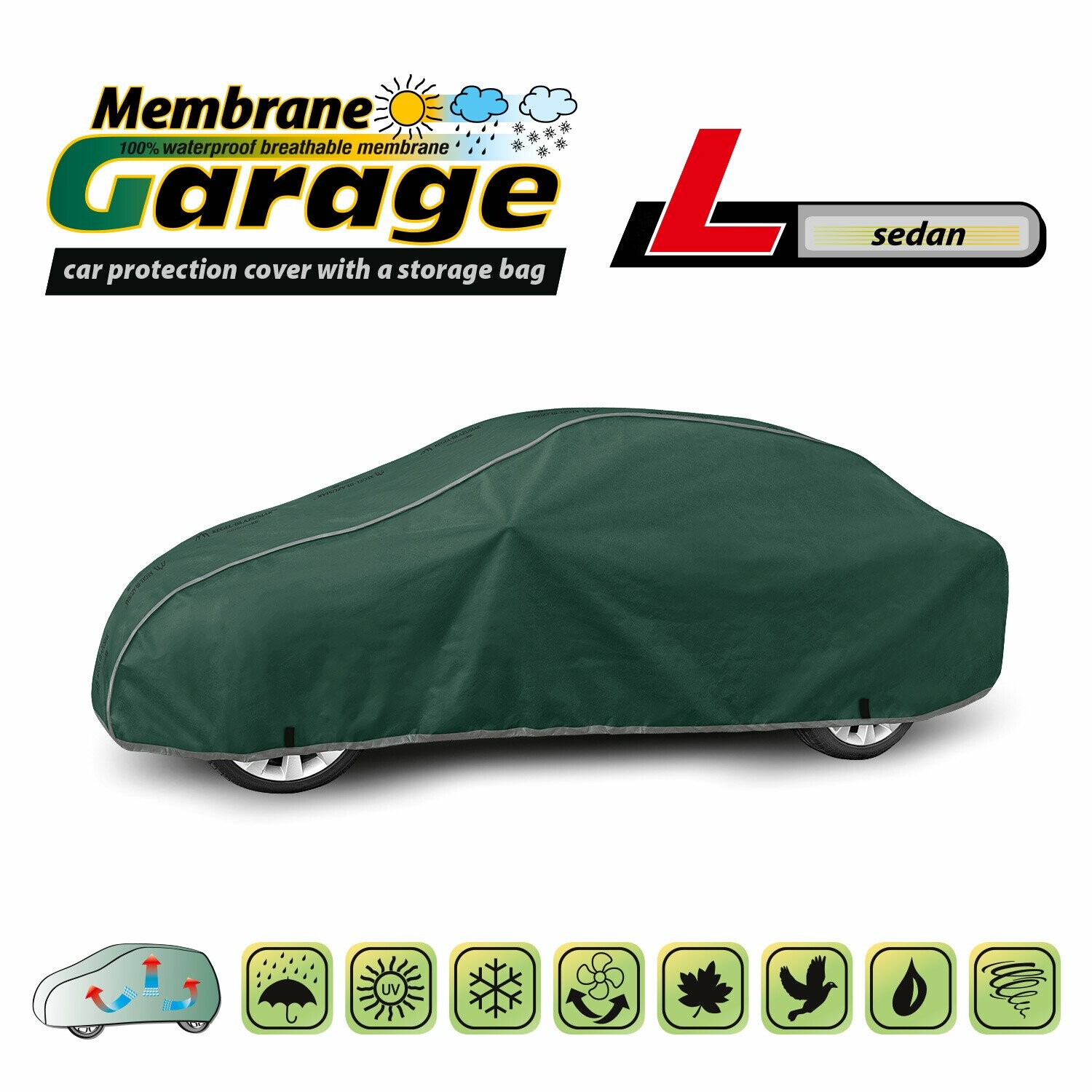
For medium-segment family cars, Complete car cover Membrane Garage completely waterproof and breathable - L - Sedan exclusively occupies the car footprint. This protective layer against weather effectively isolates painted surfaces without blocking neighboring driving lanes. A car body exposed in a strictly delimited spot thus receives complete protection, keeping free access on both sides.
How does the installation effort differ between the cover and the fixed tent?
The major difference in effort consists of installation time and the complexity of the necessary tools. The choice between a car cover or mobile garage determines whether vehicle protection involves a few minutes maneuver or a technical assembly work. Installing an exterior shelter imposes rigorous mechanical fixing procedures:
Assembling the modular frame from metal profiles on a dedicated flat surface.
Stretching and tensioning a heavy textile membrane over the structure.
Ensuring ground anchoring through threaded rods or ballasting to resist air currents.
In contrast, placing a flexible textile cover requires only a few simple steps:
Unrolling the material directly over the roof, from the front to the back.
Lowering the elastic edges over the front and rear bumpers.
Blocking the position by tying the integrated elastic cord all around.
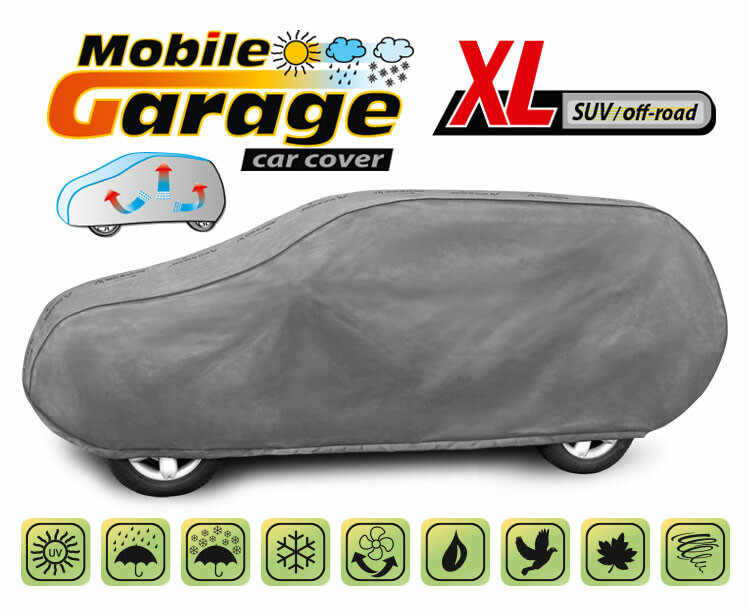
For bulky vehicles, dedicated equipment substantially simplifies handling. For instance, Complete car cover Mobile Garage - XL - SUV/Off-Road is firmly tensioned with elastic fastening elements even on tall bodyworks.
Perimeter fixing keeps the fabric tight on the car contour, preventing ballooning caused by wind. The range includes variants for various body styles, including Mini VAN, SUV/Off-Road, Coupe, Hatchback/Kombi, XL SUV - Coupe, LAV, 350x90x127cm or Pickup Hardtop.
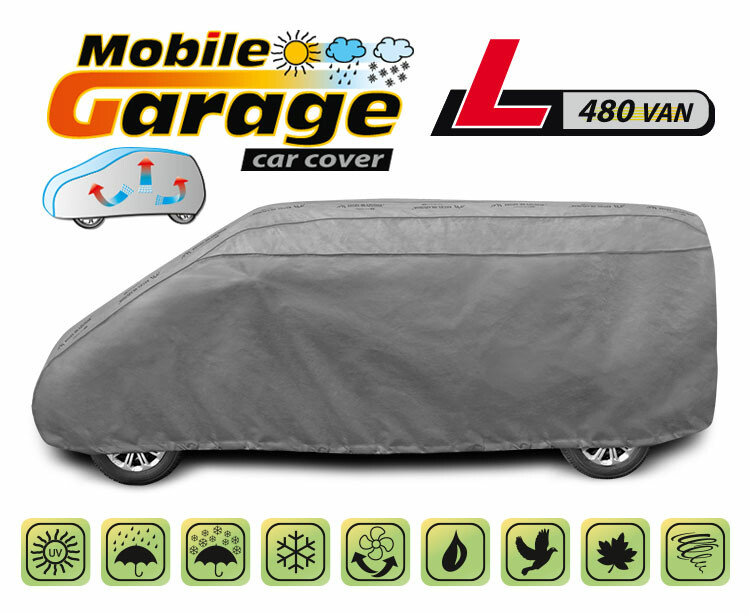
Another utility model, Complete car cover Mobile Garage - L480 - VAN, uses a similar circular cord tightening system for vans. The driver can complete the installation individually, without additional technical assistance. The entire protective weather layer folds compactly into a textile bag after use.
What level of mechanical and climatic protection does the bodywork receive?
Bodywork protection against weather depends on how each solution manages mechanical contact and moisture transfer. The technical difference between a car cover or mobile garage consists of the presence or absence of direct contact with the car exterior clear coat.
A foldable mobile garage completely eliminates friction forces. The structure creates a physical barrier at a distance from the vehicle, suppressing the mechanical friction of dust driven by gusts on the exterior clear coat. In addition, this folding tent-type structure takes over harsh climatic loads, preventing direct hail impacts or heavy snow accumulations.
Directly applied covers require technical multilayer materials to avoid paint damage. A car body exposed to the exterior benefits from specific advantages through the use of composite materials:
Technical covers made of triple-layer polypropylene actively protect against ultraviolet radiation, corrosive deposits, snow, and everyday dirt.
The fine inner lining cushions vibrations caused by wind and prevents fine particles from shaking the transparent layer.
Advanced models allow the evaporation of trapped water underneath, stopping rust during prolonged rest.
Advanced breathable constructions such as Complete car cover Membrane Garage completely waterproof and breathable - XL - SUV/Off-Road maintain rain impermeability and prevent condensation under the material.
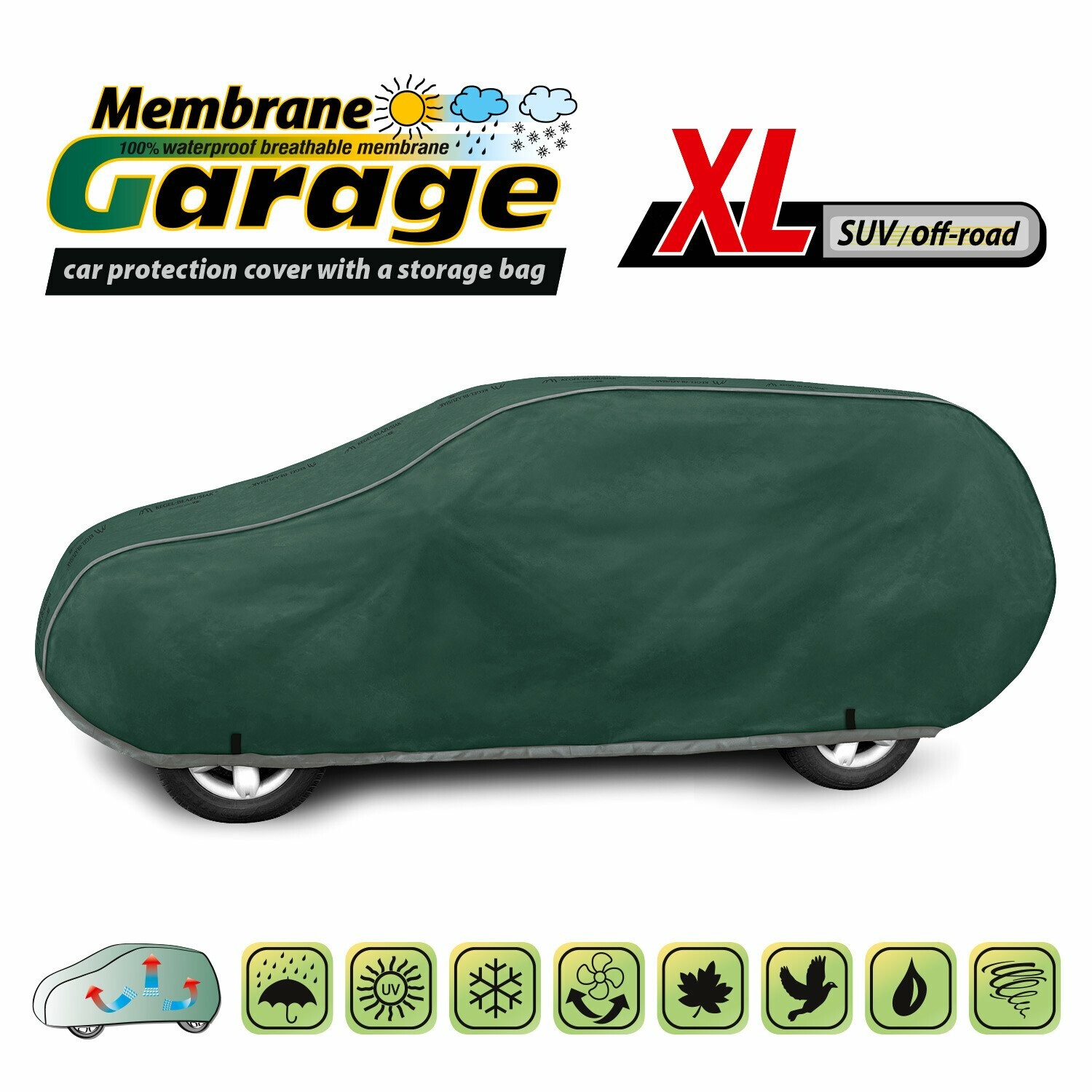
This protective weather layer blocks the penetration of liquid water from the outside. At the same time, membrane pores allow vapors resulting from thermal differences to escape freely into the atmosphere. A correctly stretched installation reduces textile movements on the bodywork, keeping the paint intact in any season.
When does the mobile garage become a more practical choice than the cover?
A mobile garage becomes the superior choice when the vehicle is parked long term in a spacious private yard. This folding tent-type structure protects the bodywork without time-consuming daily manipulations.
The technical dilemma between a car cover or mobile garage is settled in favor of the rigid structure in a few precise scenarios:
Long seasonal parking: When a car does not leave the yard for weeks, the metal skeleton offers continuous climatic protection without direct mechanical wear.
Fresh paint or collector finishes: A car body recently exposed to repainting cannot withstand friction forces caused by wind on the raw clear coat.
Generous ground space: The construction requires a dedicated footprint on flat terrain for stable anchoring.
The absence of physical contact between the cover and sheet metal remains the main technical argument for dismantlable garages. Air currents cannot rub abrasive dust against the vehicle painted surface. Classic vintage models benefit the most from this ventilation free space.
When the available perimeter does not allow a temporary construction, the technical cover returns as the only feasible option. Narrow spaces in crowded residential areas exclude the erection of bulky frames. In that situation, the owner applies a flexible cover molded directly on the vehicle profile. Such a compact textile membrane functions as a protective weather layer without blocking yard access paths. The driver obtains immediate protection against ultraviolet rays, rain, and atmospheric dust.
How to avoid the traps of cheap and tight car covers?
Viable alternatives to cheap covers involve materials with a microporous technical membrane, capable of eliminating internal condensation through active diffusion. Rigid products from simple rubberized foils trap moisture under the cover. Solar heat transforms this captive water into hot vapors, which triggers rapid rusting and fading processes of the exterior clear coat.
For a car body exposed long term, the protective material must solve two opposite problems:
To completely stop rain, snow, and fine dust from the outside.
To ensure vapor permeability, preventing the greenhouse effect on the paint.
To avoid lining sticking to body elements at high temperatures.
The technical dilemma between a car cover or mobile garage frequently stems from the fear of paint damage through direct contact. Advanced models, however, solve this problem through a stratified structure. A protective weather layer functions optimally only if it allows water evaporation from the metal.
The product Complete car cover Optimal Membrane Garage completely waterproof and breathable - L - SUV/Off-Road integrates such a vapor-permeable membrane, alongside complete precipitation tightness.
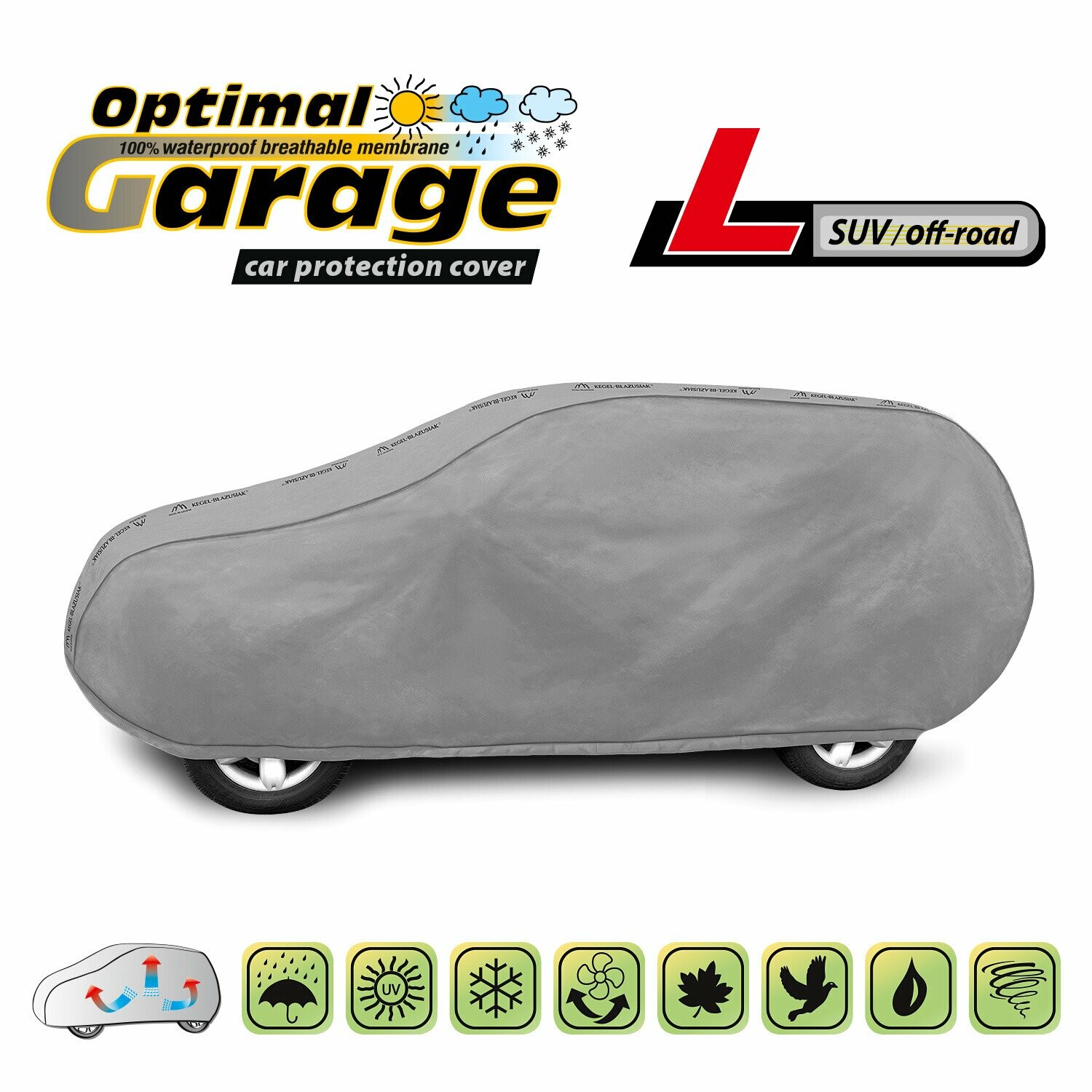
This type of technical equipment keeps the surface dry without humid heat accumulation. For drivers who do not have the space necessary to erect a temporary folding tent-type construction, certified breathable covers eliminate chemical risks generated by poor-quality tight foils. The solution helps protect the vehicle during external parking, reducing risks of affecting the OEM finishing transparent layer.
Decision guide for choosing exterior protection
Misure the available ground footprint before ordering a shelter solution. If you have a generous private yard for long parking, the independent tent offers total freedom of movement. When parking space is limited to the car contour, the breathable technical cover remains the only practical option.
The final choice between a car cover or mobile garage depends directly on the vehicle usage regime. Always check the exact body length before adding the desired product to the cart. The Cridem team offers you technical assistance to confirm the compatibility of the chosen model. Fast delivery in 1-2 business days helps you immediately secure the bodywork against any fickle season.
FAQ
How does a multilayer membrane compare to a simple polyethylene cover?
Multilayer polypropylene materials allow the evacuation of moisture accumulated under the bodywork, preventing condensation. Simple polyethylene foils act as a tight barrier, favoring medium-term corrosion.
What main criterion should decide the choice between the two systems?
Availability of a dedicated space and trip frequency represent the determining criterion. In the car cover or mobile garage analysis, the cover is chosen for flexibility and tight spaces, and the tent for long parkings on extensive properties.
When is the use of a mobile garage structure not recommended?
automóviles / The mobile garage is not suitable in common spaces, narrow parking lots, or areas subject to temporary urban planning restrictions. Also, it is not justified if the vehicle is used daily and ground space is limited.
What installation error can lead to paint damage under the cover?
Applying the cover over a dusty bodywork or without a firm fixation of the elastic cords causes abrasive particles to rub against the clear coat under the action of the wind.


