






















Clear Windows on Autumn Mornings: Better Visibility on Every Drive

Window defogging: how to choose the right solution for your car
Verdict in brief
Window fogging occurs due to the temperature difference and high humidity in the cabin, which condenses on the cold glass.
Interior anti-fog solutions apply a fine hydrophilic layer that prevents condensation droplets from forming on the windshield.
Exterior covers protect the windshield against frost and snow buildup, but do not stop condensation formed on the inside.
Proper use of the car's climate control system and regular glass cleaning are essential for maintaining optimal visibility.
Why does condensation appear on the inside of the windshield?
The appearance of car condensation on the inner surface of the windows is the direct result of a simple physical phenomenon triggered by temperature and humidity differences. When warm, moisture-laden air from the cabin comes into contact with the cold windshield glass, exposed to low outside temperatures, the gas cools suddenly and turns into a liquid state. This physical transformation blocks visibility and directly affects driving safety.
Humidity in the cabin comes from multiple sources, often hard to avoid during the cold season. Wet footwear, snow brought in on floor mats, passengers' damp clothes, and even their breath rapidly increase the concentration of vapor in the air. Also, hidden technical issues, such as water leaks through worn seals or a clogged pollen filter that restricts fresh airflow, maintain a high level of moisture in the car.
Cleaning the windshield on the inside plays a decisive role in preventing this phenomenon. Dust particles, fingerprints, cigarette smoke, and residue from the dashboard create a microscopic film on the glass, providing perfect adhesion points for water droplets. On a perfectly clean window, water molecules disperse much more slowly, significantly reducing the risk of vapor adhering and forming that opaque layer that obstructs the driver's visibility.
Interior sprays vs. exterior covers: what problem does each solve?
Treatments intended for optimal visibility in winter are divided into two distinct categories, depending on the place of application and how they intervene with the elements of nature. On one hand, chemical solutions applied to the inner surface of the windows act directly on the cabin's microclimate, preventing condensation. On the other hand, physical accessories mounted on the exterior of the vehicle protect the glass against solid deposits, such as ice or snow, without influencing the humidity level inside.
An anti-fog spray applied to the interior windshield creates a microscopic hydrophilic film that prevents water vapor from gathering into fine droplets. This chemical treatment disperses moisture into an invisible layer, maintaining clear visibility even when the car's climate control system is overloaded by passengers' breath or damp clothes. In contrast, an exterior cover acts as a physical barrier against nocturnal frost. It eliminates the need for mechanical cleaning of the windshield on cold mornings, but has no effect on the condensation phenomenon that occurs on the inside of the glass.
Comparison criterion | Interior anti-fog spray | Exterior protective cover |
|---|---|---|
Application area | Inner surface of the windshield | Outer surface of the window |
Mode of action | Hydrophilic chemical layer | Protective physical barrier |
Main problem solved | Preventing fogged windows | Preventing ice and snow buildup |
Effect on internal humidity | Disperses condensation on glass | Does not influence cabin humidity |
Usage method | Spray application / Spray gun application | Mechanical mounting and fixing on the body |
Choosing between these car products depends directly on where the vehicle is parked and the driver's daily priorities. To effectively combat the physical effects generated by temperature differences while driving, the interior chemical treatment remains the appropriate option, while exterior protection is ideal for cars parked outdoors in freezing temperatures.
How does an anti-fog spray act on the glass surface?
Preventing the accumulation of condensation on interior glass surfaces is based on modifying the surface tension of water. Naturally, water vapor in the cabin turns into isolated micro-droplets when it hits the cold window, a phenomenon that obstructs visibility due to the chaotic dispersion of light. A quality anti-fog solution acts by creating a microscopic hydrophilic layer on the glass surface. This extremely thin layer causes the rapid fusion of water particles into a continuous, transparent, and uniform film, which no longer blocks the driver's field of vision and allows for safe driving.
The efficiency of this technology depends directly on how the surface is prepared. For the active molecules to adhere correctly and form a durable barrier, the glass must be rigorously cleaned beforehand, removing any trace of grease, dust, or cigarette smoke residue. Applying the treatment to a perfectly dry window guarantees optimal fixation of the chemical compounds and prevents the appearance of unsightly streaks.
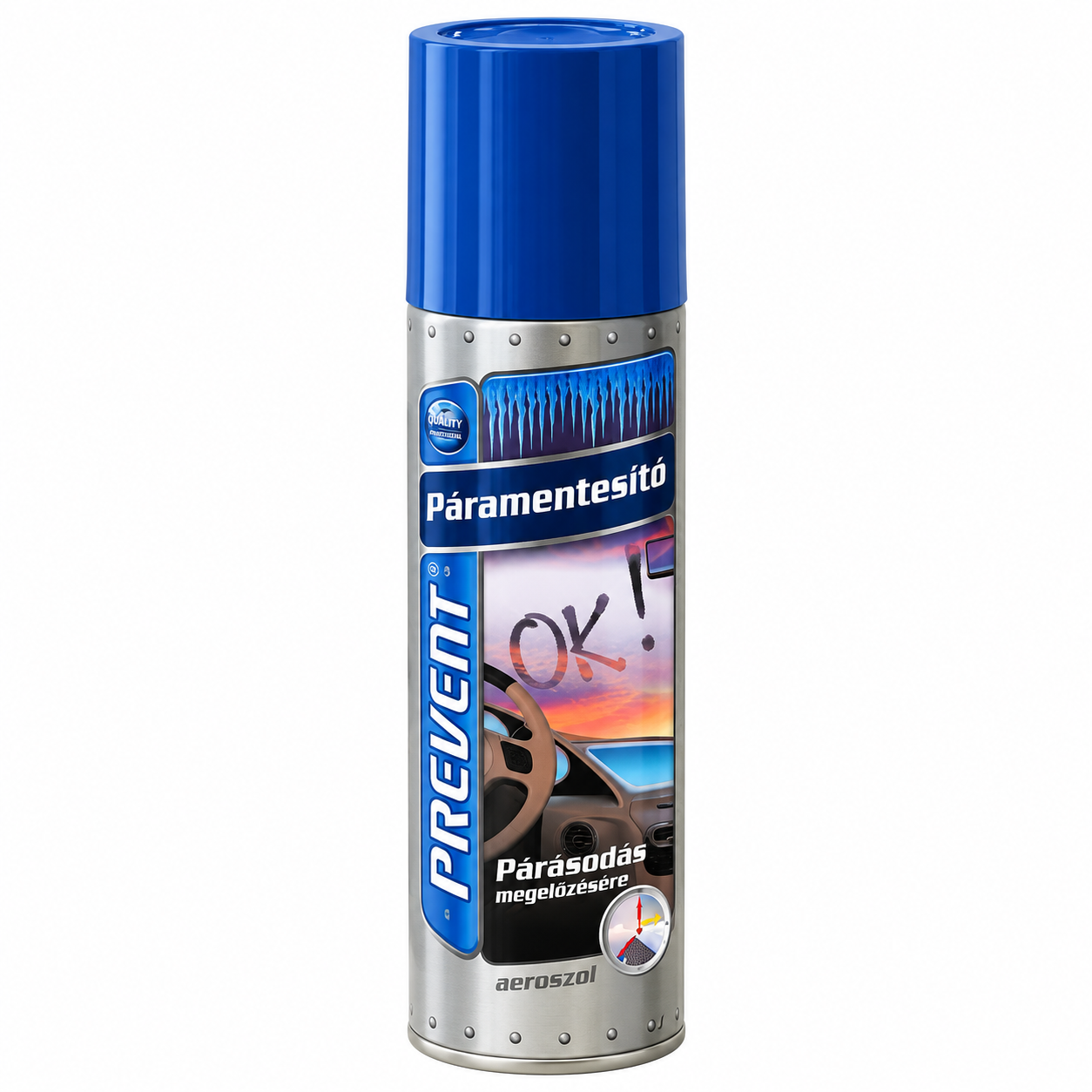
For quick and precise application on interior surfaces, using a dedicated product such as Prevent windshield anti-fog spray 300ml ensures uniform coverage. This product is designed to help disperse moisture on interior glass surfaces, contributing to maintaining visibility.
When is an exterior thermal insulation cover more useful?
When temperatures drop below the freezing point, preventing moisture accumulation in the cabin becomes a daily challenge, and physical exterior protection of the windshield represents the most effective barrier against the elements. An exterior thermal insulation cover is especially useful for vehicles parked long-term outdoors during winter nights, when the risk of ice formation is at its highest.
This physical barrier limits the deposition of frost, ice, and snow on the glass surface, reducing the need for mechanical cleaning and the time required to prepare the car in the morning. By preventing the glass from cooling excessively, it also limits the appearance of that severe car condensation on the inside, which occurs when warm cabin air meets extremely cold glass.
Choosing the right size is essential to ensure complete coverage and secure fixation on the windshield. Depending on the vehicle class, dedicated options are available for a correct fit:
4Cars windshield anti-frost cover - 156x70cm or 4Cars windshield anti-frost cover - 176x90cm, available for various types of vehicles.
4Cars windshield anti-frost cover - 156x70cm or 4Cars windshield anti-frost cover - 176x90cm, available for various types of vehicles.
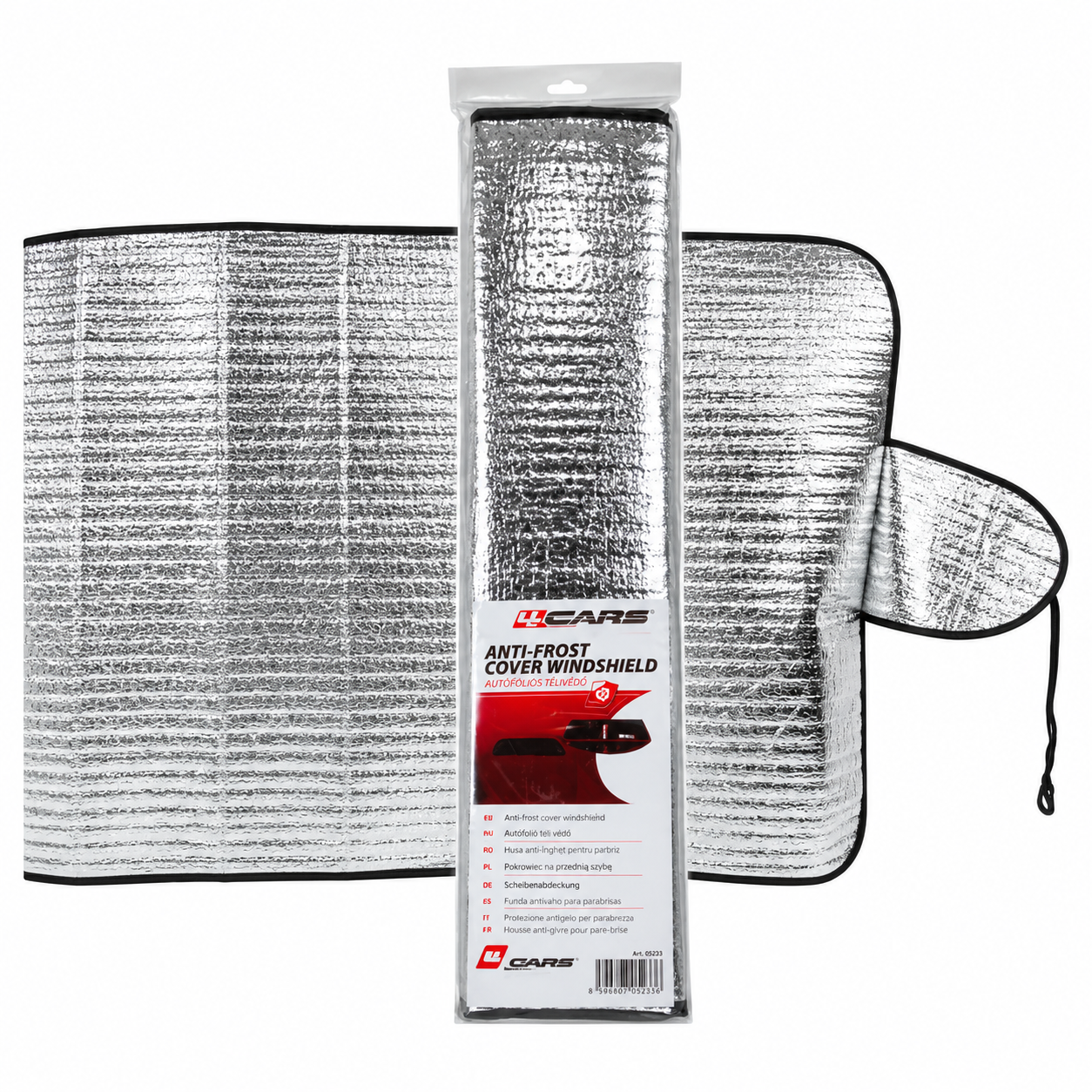
Constant use of such external protection reduces wiper blade wear and prevents scratching the glass while trying to remove accumulated ice. Also, by keeping the windshield dry and clean on the outside, the car's climate control system will be able to eliminate the fine film of moisture from the inside much faster, ensuring optimal visibility from the first minutes of the trip.
How do rapid de-icing products help when an exterior cover is missing?
Fast-acting formulas represent an effective alternative to tedious mechanical cleaning when the windshield has frozen on the outside in the absence of a protective cover. Using a classic scraper on a surface covered with ice and abrasive dust can scratch the glass, while applying a liquid chemical agent helps remove the frozen crust, reducing the risk of windshield damage.
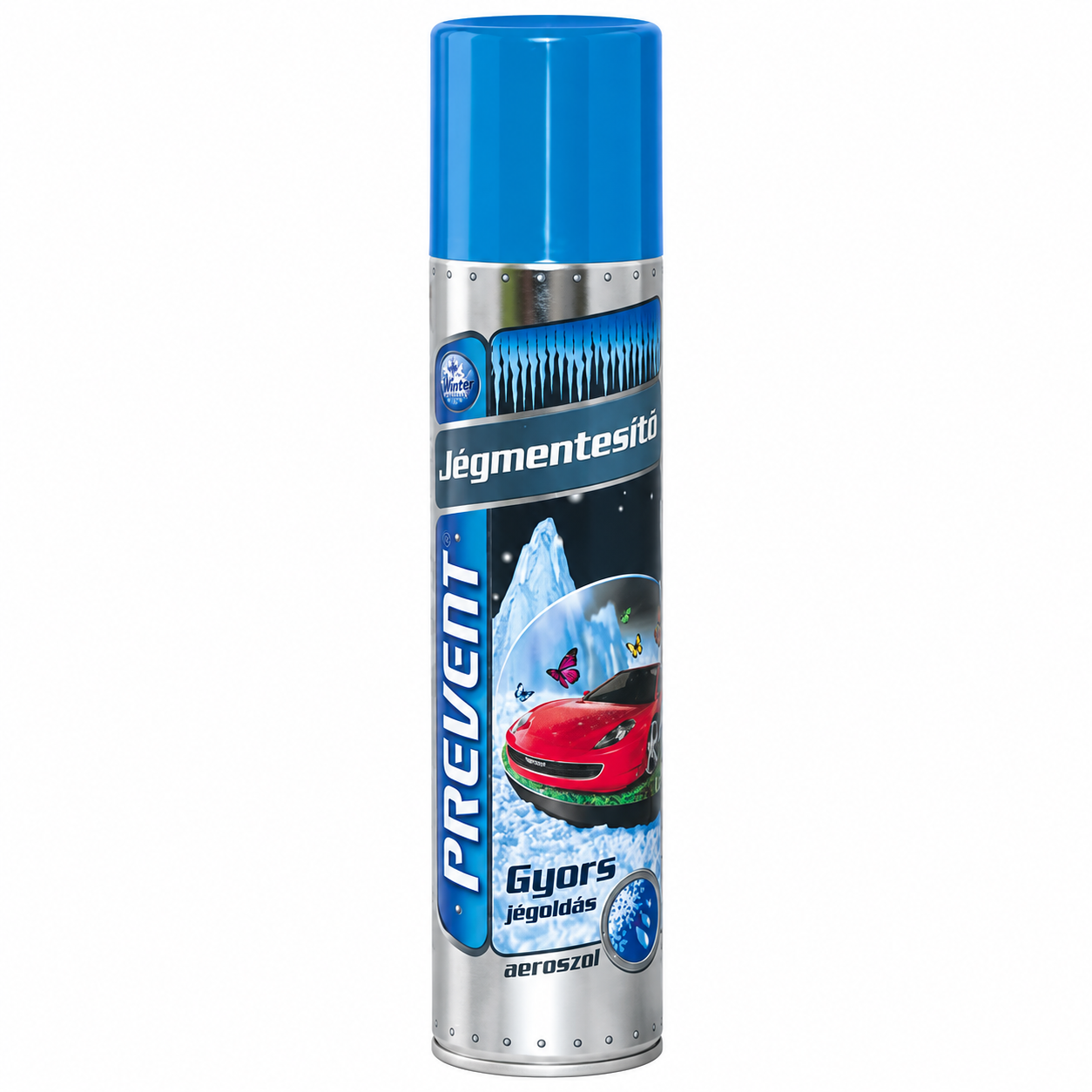
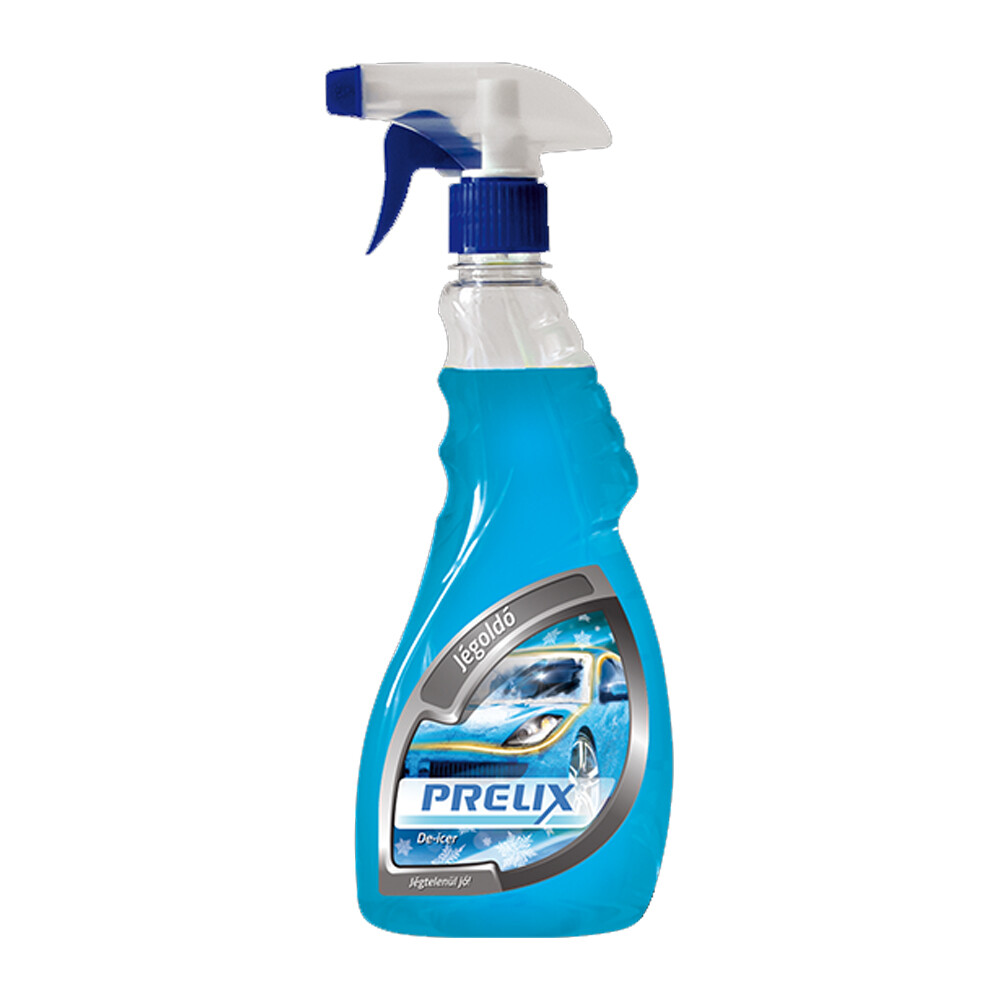
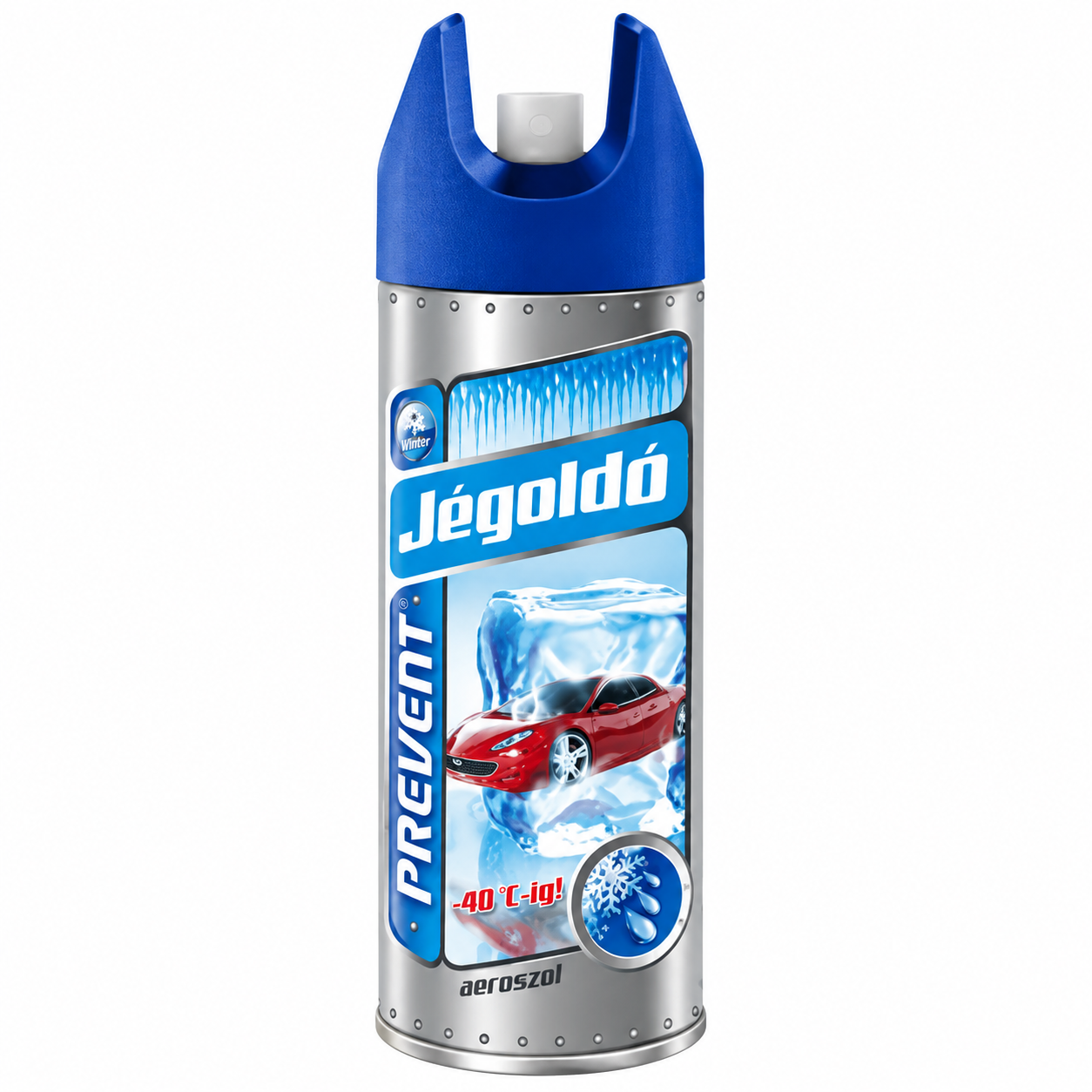
For cars, using dedicated products ensures optimal visibility without physical effort. Prevent windshield de-icer spray 300ml acts quickly to dissolve ice on glass surfaces. Another practical option is Prelix windshield de-icer solution with spray gun 500ml, which allows for uniform spraying on large surfaces, being easy to apply during blizzards.
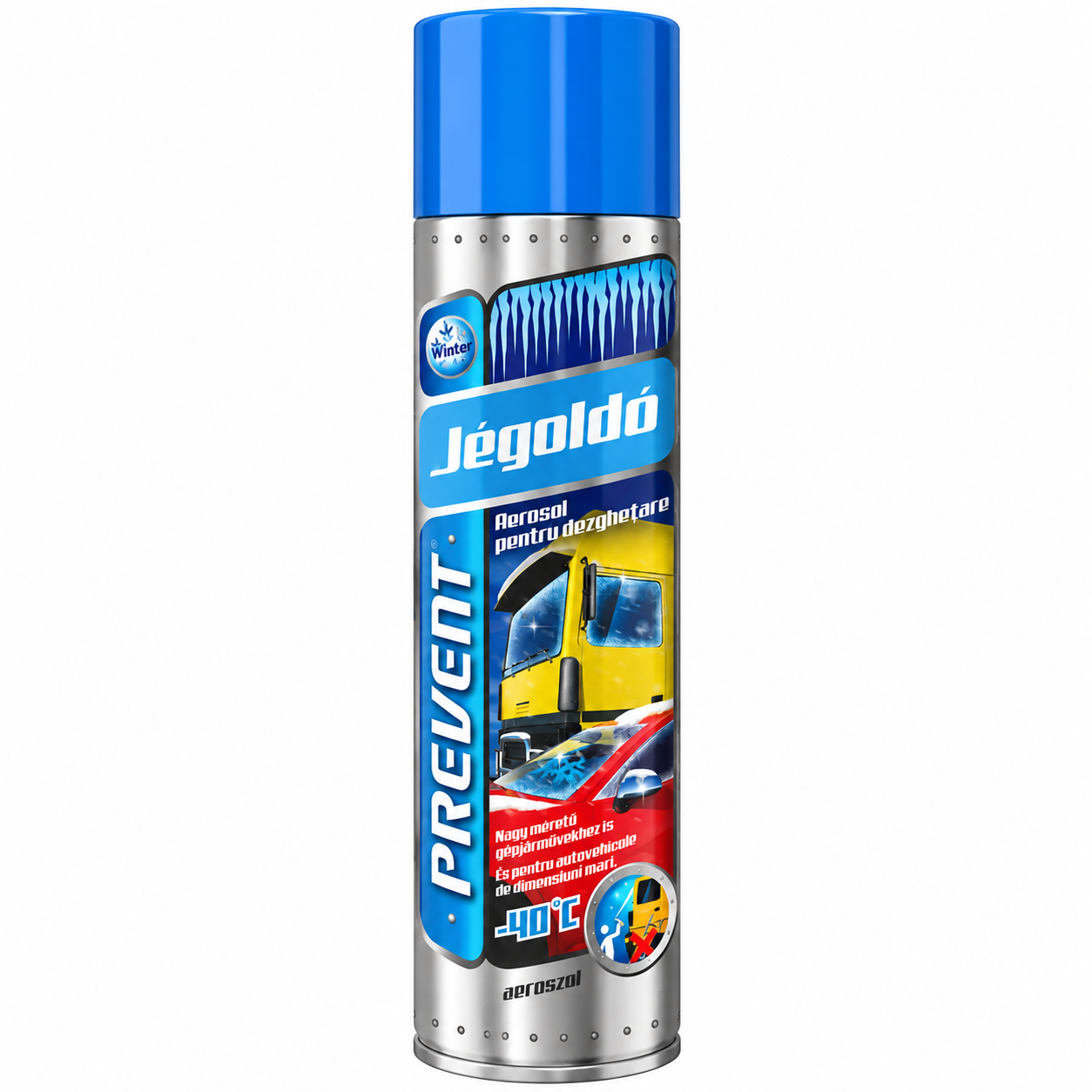
In the case of large vehicles, where the glass surface is considerable and hard to reach, high-volume solutions with increased frost resistance are needed. Prevent truck/bus windshield de-icer spray -40°C 600ml is formulated to act at temperatures down to -40°C, having a powerful jet for extreme temperatures and helping to remove ice from glass surfaces.
For situations where the ice layer is particularly thick, the PREVENT DE-ICING SPRAY + SCRAPER 400ml package offers an integrated mechanical accessory, allowing for the rapid removal of the crust softened by the active substance, without damaging the glass surface.
How does the car climate control system influence condensation accumulation?
The car climate control system is the most effective tool for controlling cabin humidity, playing a role that goes beyond simple temperature regulation. Many users associate air conditioning exclusively with hot days, but its utility is major in cold or rainy seasons, when the windshield quickly covers with condensation. The correct operation of the system directly influences visibility through the following technical mechanisms:
Active air dehumidification: the air conditioning system efficiently extracts water vapor from the cabin, even when the system is set to a high temperature for heating.
Avoiding internal recirculation: activating the recirculation function traps humid air inside, leading to the rapid accumulation of car condensation on cold glass surfaces.
Pollen filter permeability: a clogged cabin filter drastically reduces airflow and retains moisture in the system, favoring the appearance of fogged windows shortly after starting the engine.
To keep the windshield clean, it is recommended to constantly use the climate control function together with fresh air intake from the outside. This setting ensures a continuous flow of dry air, preventing vapor deposition on the glass. When the system's efficiency drops, checking the condition of the pollen filter is the first technical step required before applying anti-fog solutions to the interior surface of the windows.
What is the verdict for optimal visibility in the cold season?
Choosing the ideal method for maintaining visibility in the cold season depends on the location of the humidity and how the vehicle is used. The anti-fog spray is the optimal solution for combating internal condensation, acting directly on the film of water that forms on the glass due to temperature differences. In contrast, exterior covers or protective hoods are intended exclusively for preventing exterior frost, sparing the user from mechanical cleaning of the windshield on frosty mornings.
Protection method | Action area | Main benefit | Major limitation |
|---|---|---|---|
Anti-fog spray | Interior surface | Prevents condensation formation via hydrophilic layer | Requires periodic reapplication on clean glass |
Exterior cover | Exterior surface | Blocks ice and snow buildup | Does not solve cabin humidity |
For complete vehicle preparation during winter, the specialists' recommendation is to combine the two methods. Applying a chemical treatment to the inside of the windshield, correlated with protecting the exterior with a dedicated cover, significantly reduces the time required to prepare the car before departure. This dual approach eliminates both the need for scraping ice and the prolonged wait for the air in the cabin to dry.
Beyond the use of these car products, traffic safety remains conditioned by following basic technical hygiene rules. Maintaining rigorous cleanliness of the glass on the inside eliminates impurities that water vapor clings to, reducing the risk of fogged windows. Also, the correct use of the car's climate control system, by turning off the recirculation function and activating the air conditioning even in heating mode, ensures rapid dehumidification of the air and maintenance of a perfectly clean windshield.
FAQ
How does an interior anti-fog spray compare with an exterior windshield cover?
The anti-fog spray is applied to the inside of the glass to prevent condensation from forming inside the vehicle, while the exterior cover protects the windshield against ice and snow on the outside.
What criterion should determine the choice of an exterior windshield cover?
The size of the windshield is the deciding factor. It is important to choose a suitable size, such as the 156x70 cm model for compact cars or the 176x90 cm model for larger vehicles.
When should anti-fog treatments not be applied to windows?
Treatments should not be applied to dirty, dusty, or damp surfaces, as the coating will not adhere properly and may leave streaks that can reduce visibility at night.
What are the limitations of an exterior thermal windshield cover during winter?
The exterior cover only prevents ice and snow from accumulating on the outside of the windshield, but it has no effect on condensation or fogging that forms on the inside of the windows.


