






















Car Sunshades: How to Choose the Right Protection

Front sunshades: how to choose sun protection for your car
Verdict in brief
Direct sun exposure can raise the temperature of interior components, such as the steering wheel or upholstery, to values exceeding 70 degrees Celsius.
Multi-layer heat-reflective materials and umbrella-style structures offer the most effective methods for repelling ultraviolet radiation through the windshield.
Choosing the correct sunshade size is essential to ensure full coverage of the glass and the stability of the accessory while parked.
Why is car sun protection necessary during the summer?
Parking a vehicle directly under the sun's rays causes a rapid accumulation of heat in the cabin, turning the air inside into an extremely uncomfortable environment. Using a protective accessory can help limit the temperature rise in the cabin when the vehicle is parked in direct sunlight. This phenomenon affects not only the immediate thermal comfort of passengers upon entry but also the structural integrity of the dashboard components.
Ultraviolet radiation constantly degrades interior materials, causing the dashboard to dry out, upholstery to fade, and exposed plastic to become brittle. In the absence of a physical barrier, surfaces in direct contact accumulate temperatures that are dangerous to the skin. Surfaces exposed directly to the sun can reach high temperatures, causing discomfort upon touch.
Using a protective screen significantly reduces the greenhouse effect and effectively protects these sensitive surfaces. To prevent premature material degradation and maintain a breathable atmosphere, drivers can opt for modern screening solutions. A practical option is an umbrella-style windshield sunshade, which protects the car's interior and keeps it cool on hot days. For covering glazed areas, a 4Cars elastic car sunshade set large size - 1x Front 150x70 cm 1x Rear window 4x Side offers protection against heat and UV rays for the car's interior, ensuring increased comfort on hot days.
Umbrella-style car sunshade vs. classic foldable screen: how do they differ?
Choosing the right car sun protection accessories is an important decision for maintaining an optimal temperature in the cabin and preventing the degradation of dashboard materials. Vehicle owners looking for an effective method to reduce car temperature have two distinct constructive approaches at their disposal, each with specific advantages in daily use.
The innovative umbrella-style windshield sunshade stands out with a stable metal structure and extremely fast manual installation, acting exactly like a classic umbrella that opens directly under the windshield.

In comparison, traditional foldable screens made of polyester require fixation with suction cups or support from the car's sun visors. The umbrella system offers quick coverage and folds compactly, while foldable screens require space for storage.
Comparison criteria | Umbrella-style sunshade | Classic foldable screen |
|---|---|---|
Structure and construction | Foldable metal frame with support ribs | Flexible polyester panel without a rigid frame |
Fixation system | Self-supporting quick opening under the windshield | Variable depending on the model |
Heat reflection efficiency | Reflects UV radiation directly from the glass level | Covers the surface but may slide without firm fixation |
Storage space occupied | Ultra-compact format, similar to a pocket umbrella | Requires rolling or folding flat, occupying generous space |
Recommended usage mode | Quick daily mounting and dismounting in urban traffic | Long-term use in long-stay parking lots |
While the polyester foldable screen remains a traditional option, the new umbrella-style car sunshade offers high installation speed and structural stability that reduces the risk of detachment associated with suction cup systems.
How to choose the right size for the windshield?
Physical compatibility is the most important criterion in selecting a protective screen, because an accessory that is too small leaves vital areas exposed to radiation, while one that is too large cannot be fixed correctly between the vehicle's interior pillars. The size of the windshield varies significantly depending on the car's class, which is why the exact measurement of the glass length and width must be performed before purchase. Choosing an uncalibrated model leads to either the constant collapse of the screen from the windshield or light penetration through the remaining gaps, nullifying the heat reflection effect.
The Laser Sun range of sunshades offers options calibrated to standardized sizes to cover various types of windshields, including premium 12V bulbs, adapted for various car needs.
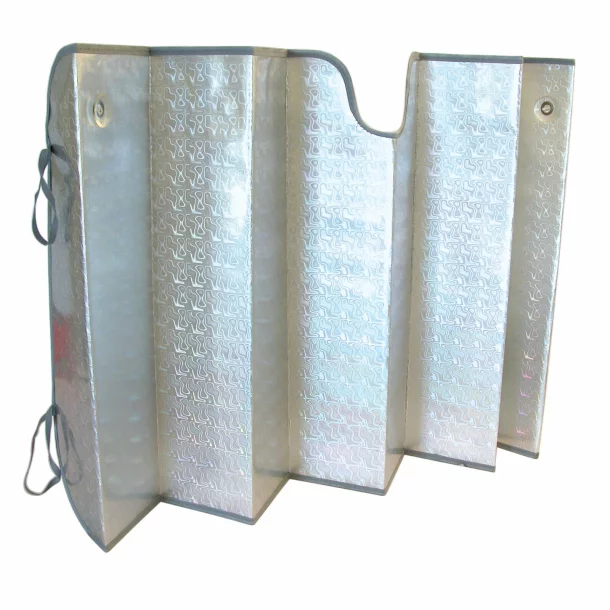
Models in this range use, depending on the variant, structures with foam thermal insulation to help reduce heat transfer to the vehicle's interior. This material barrier prevents the overheating of directly exposed components, such as the steering wheel or dashboard.
To guide the purchasing decision, the table below presents the main types of structures available on the market and how they meet car sun protection needs:
Structure type | Material composition | Main purpose | Fixation differences |
|---|---|---|---|
Bubble and double foil screen | Polyethylene layered with aluminum | Standard daily protection | Requires suction cups for glass attachment |
Thermal insulation foam screen | Dense foam with reflective layer | Intense thermal insulation | Fixed by pressing under the car's sun visors |
Umbrella-style sunshade | Metal frame with polyester fabric | Quick and compact use | Opens directly on the windshield with support on the dashboard |
Choosing correctly ensures the maintenance of an optimal temperature in the cabin and protects sensitive interior car materials against premature degradation caused by ultraviolet radiation.
When is a complete protection set more effective?
For vehicles parked for long periods in areas completely exposed to direct sun, protecting only the windshield leaves the side windows and rear window completely vulnerable. The air inside the cabin can record significant temperature increases when the car is left directly under solar radiation, and unprotected surfaces, such as the steering wheel or upholstery, accumulate extreme heat.
Using a 4Cars elastic car sunshade set large size - 1x Front 150x70 cm 1x Rear window 4x Side ensures a thermal barrier all around the cabin, completely covering all sensitive glazed areas. This extended configuration helps limit the penetration of UV radiation, helping to protect materials inside the car.
Elastic fixation and extended UV protection on all glazed surfaces minimize heat penetration into the car, maintaining a significantly lower temperature compared to using a single front screen. The polyester used in the structure of these car accessories offers excellent heat reflection capacity, effectively repelling thermal energy before it penetrates the cabin. Complete protection is the optimal solution for drivers who frequently park in lots without natural shade or in open spaces throughout the day.
Correct mounting of the protective screen: preventing accessory damage
Proper installation of a protective screen on the windshield directly determines its efficiency in reducing the temperature inside the car and protecting interior components. Incorrect fixation not only diminishes the heat reflection capacity but can also lead to the repeated falling of the accessory, exposing the dashboard to degradation. To ensure optimal adhesion and long-lasting operation, the mounting process requires following a few simple but essential technical steps.
Thorough cleaning of the windshield on the inside before applying the suction cups, eliminating dust and the accumulated grease film to guarantee a firm hold.
Extremely tight positioning of the reflective material directly on the glass, eliminating gaps to block the formation of a hot air pocket between the sunshade and the windshield.
Additional securing of the upper edges by lowering the vehicle's foldable sun visors, keeping the structure stable even when the car's temperature rises significantly.
By applying these fixation measures, the polyester material or reflective layer fulfills its role as a thermal barrier without sliding off the windshield. This simple method prevents the excessive heating of the steering wheel and upholstery, maintaining the integrity of the materials inside the car throughout the entire summer.
How the sunshade material influences thermal protection efficiency
Choosing a protective screen for the windshield involves a direct evaluation of the materials from which it is manufactured, because the textile structure determines the capacity to repel infrared radiation. Screens made of multiple layers of aluminum foil doubled with air bubbles offer a superior thermal barrier compared to simple textile variants, reflecting sunlight before it penetrates the cabin.
For effective protection and increased durability in extreme temperature conditions, it is recommended to use dedicated products, such as the umbrella-style windshield sunshade model, which uses a reflective surface optimized for heat rejection. Similarly, for vehicles with large windshields, the umbrella-style windshield sunshade option ensures full coverage of the glass, preventing the excessive heating of the dashboard and protecting plastic materials against peeling or premature fading.
Constant use of these accessories considerably reduces the air temperature inside, diminishing the initial effort of the climate control system when starting the vehicle.
How to keep the car sunshade in optimal condition long-term
Correct use of a protective screen also involves a minimal maintenance routine to prevent the premature degradation of reflective materials. Constant exposure to ultraviolet radiation and extreme temperatures in the cabin can affect the structure of the insulating layers if the product is not cleaned and stored properly. For cleaning reflective surfaces, it is recommended to use a slightly dampened microfiber cloth, avoiding aggressive detergents or abrasive chemical substances that can destroy the protective film.
Proper storage during periods when the accessory is not mounted on the windshield prevents the formation of permanent creases and damage to the edges. Foldable models must be folded exclusively along the predefined folding lines, while umbrella-type variants require increased attention to the opening mechanism. In the Cridem range, durable options are available such as the umbrella-style windshield sunshade and the foldable sunshade, both being designed to withstand repeated cycles of folding and intensive use.
Keeping the accessory in its original protective cover, away from moisture and sharp objects during travel, guarantees the maintenance of heat rejection capacity for several consecutive seasons.


