





















Ready for Snow? Don't Hit the Road Without Snow Chains!

Snow chains for cars: how to choose them correctly and when you need them in the cold season
This guide details how to choose snow chains for cars to maintain grip on roads covered in packed snow and ice. Winter tires are not always sufficient on steep slopes or snowy mountain routes. Drivers will discover the exact dimensional compatibility criteria, adapted construction types, and safe installation procedures for conventional or all-wheel-drive vehicles.
Why are additional mechanical devices necessary in winter?
Additional mechanical devices are necessary because the rubber compound of winter tires cannot generate sufficient friction on compacted snow or slick ice. In such critical situations, the controlled movement of the vehicle depends exclusively on the physical penetration of the slippery layer by the alloy steel elements.
Preparing the car for the cold season begins in the second half of autumn. Unstable weather rapidly brings heavy snowfall, black ice, and blocked road sections. Dedicated tires function optimally by accumulating snow within the sips of the tread profile. However, on steep slopes or frozen road surfaces, the friction force of the rubber becomes insufficient to support the mass of the automobile.
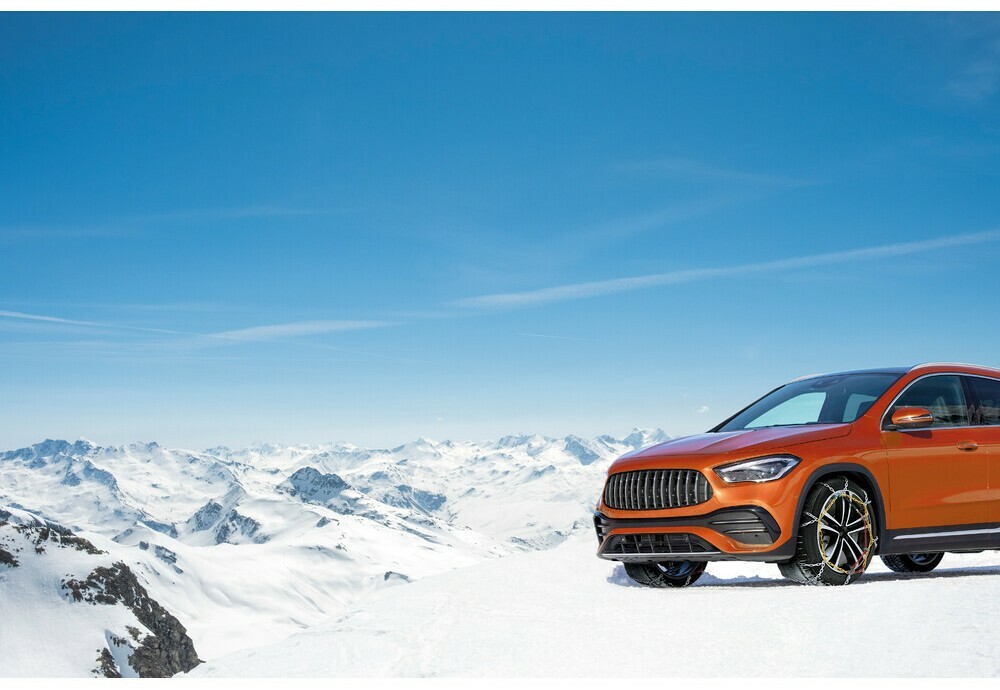
Snow chains solve this functional limitation through metal links. The links mechanically penetrate the hard layer of ice. They transmit the forces generated by the engine directly to the running surface:
They ensure direct mechanical grip when pulling away and climbing slopes.
They maintain directional stability during maneuvers performed on slippery roads.
They shorten braking distance by anchoring firmly into the ice.
They help protect transmission components by reducing wheel spin.
Mechanical grip remains indispensable even for all-wheel-drive cars. 4x4 systems distribute torque to all wheels, but they cannot compensate for the lack of direct contact with the ground when tires slide freely. Without snow chains mounted on the technically indicated axle, the transmission is subjected to repeated mechanical shocks due to sudden losses of grip.
Early purchase of anti-skid equipment helps reduce the risk of getting stuck on mountain roads. Prepared drivers reduce their risk of immobilization in isolated areas and more easily maintain direction in difficult weather conditions. Consistent driving, without repeated losses of grip, supports travel safety and reduces wear on the running gear.
When must you install these traction systems on your wheels?
Installing snow chains is necessary when the road surface features a consistent layer of packed snow, continuous ice, or difficult snowy patches. These traction devices provide the indispensable mechanical grip on steep ramps, narrow mountain roads, and access routes to alpine resorts.
Equipping the wheels becomes a practical measure as soon as the running surface prevents conventional tires from moving forward. Typical use cases include:
Mountain ramps covered in black ice or packed snow where tire grip becomes insufficient.
Routes to ski resorts, characterized by dense snow accumulations.
Road sectors featuring specific road signs for winter driving.
Use on dry roads or cleared asphalt sections must be stopped immediately. Driving without snow produces premature wear of the steel links, negatively affects the tread band, and transmits damaging vibrations to the suspension elements.
Keeping a compatible set in the trunk helps continue the journey on demanding mountain routes. The systems are mounted exclusively on the drive axle while traversing slippery sections and are removed as soon as the road returns to a dry state.
How do you decode tire size to choose suitable snow chains for cars?
Exact compatibility for snow chains is established by reading the standardized numeric sequence on the sidewall of the tire mounted on the vehicle. Each group of characters describes a physical dimension of the wheel, essential for mechanical fit:
The first numeric section indicates the nominal width of the tire tread profile.
The next number represents the percentage ratio between the sidewall height and the tread width.
The letter R indicates the radial construction of the used tire casing.
The last number specifies the inner diameter of the tire and the rim size.
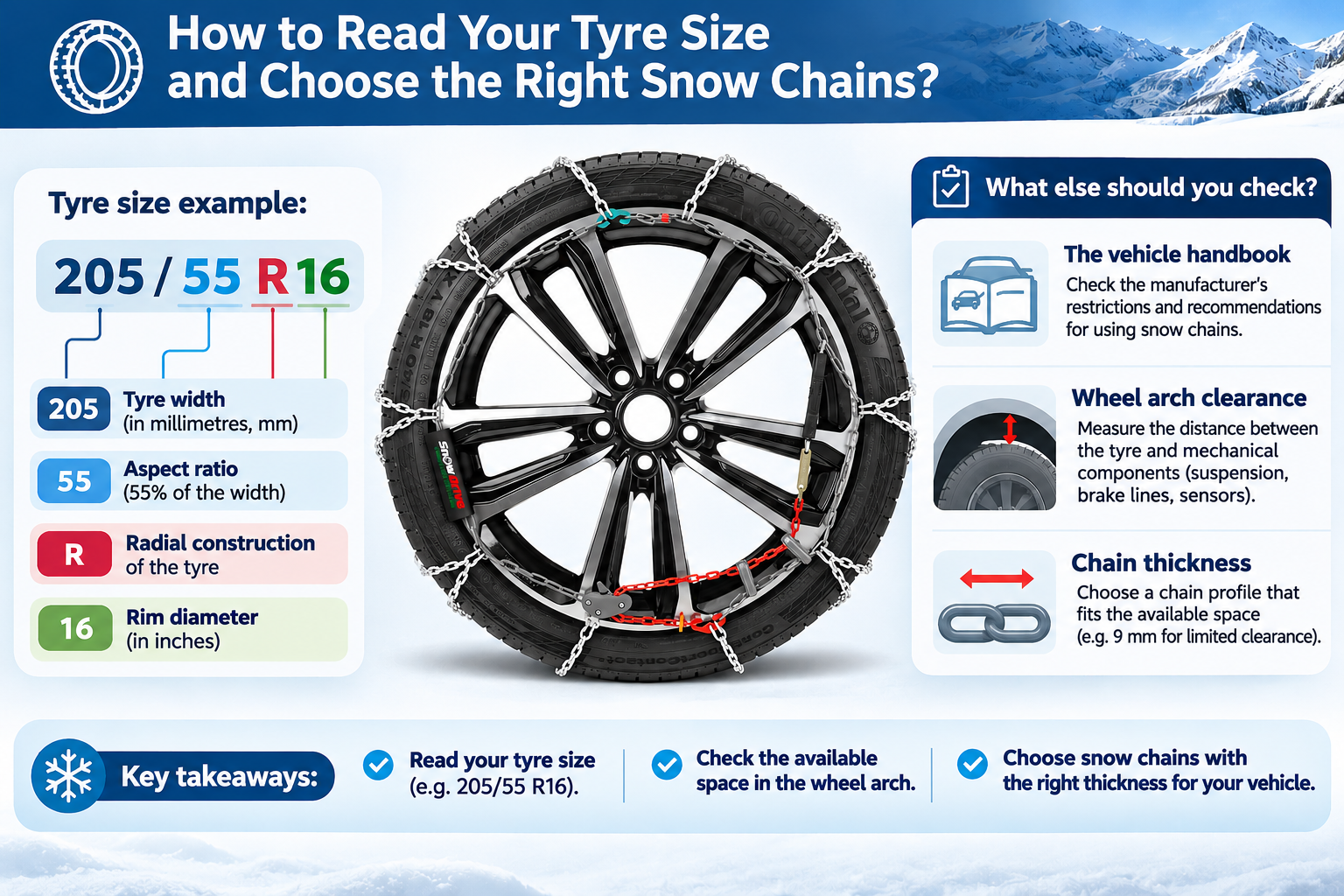
The free technical space in the wheel well dictates the thickness of the links needed on that respective axle. A reduced distance between the tire and mechanical components requires anti-skid equipment with a low profile. Oversized links can strike suspension arms, brake lines, or braking system sensor wiring. A visual check of the clearances behind the wheel helps protect steering elements during full turns or spring compression.
For passenger cars with strict design tolerances, low-profile traction devices are recommended. Models such as R-9 - Car snow chains - 4 cover compact tires by offering thin links for tight passages. The correct size favors grip on icy roads and reduces the risk of contact with the bodywork well.
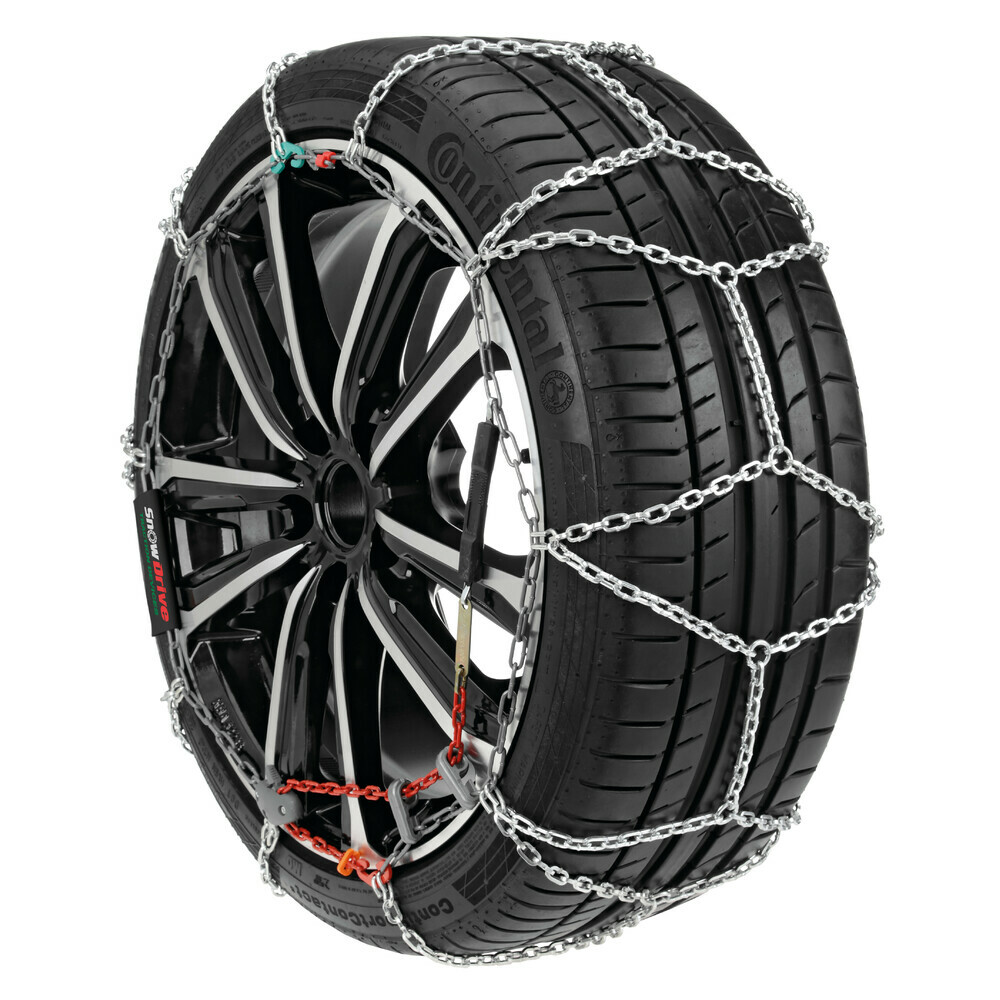
Before fixing, consult the vehicle manual to check space restrictions at the drive axle. The correspondence table of each set validates whether the tire size is included in the approved product list.
What differentiates passenger car options from those for SUVs and vans?
The main difference consists of link thickness and mechanical load resistance adapted to the mass of each vehicle.
Standard passenger cars require compact traction devices to protect sensors or suspension elements in the wheel well. In contrast, heavy vehicles need thick links to withstand forces exerted on rough terrain. The two main ranges cover these technical requirements:
The Slim-Fit R Series uses 9 mm links, specially designed for passenger cars with limited space in the wheel well, to limit the risk of friction against brake lines or shock absorbers.
The Heavy-Duty S Series features 16 mm links for enhanced durability, being intended for SUV, 4x4, and VAN vehicles.
For large bodies, the Cridem offer includes 4x4 accessories and van accessories, such as S-16, SUV and vans snow chains - 20.
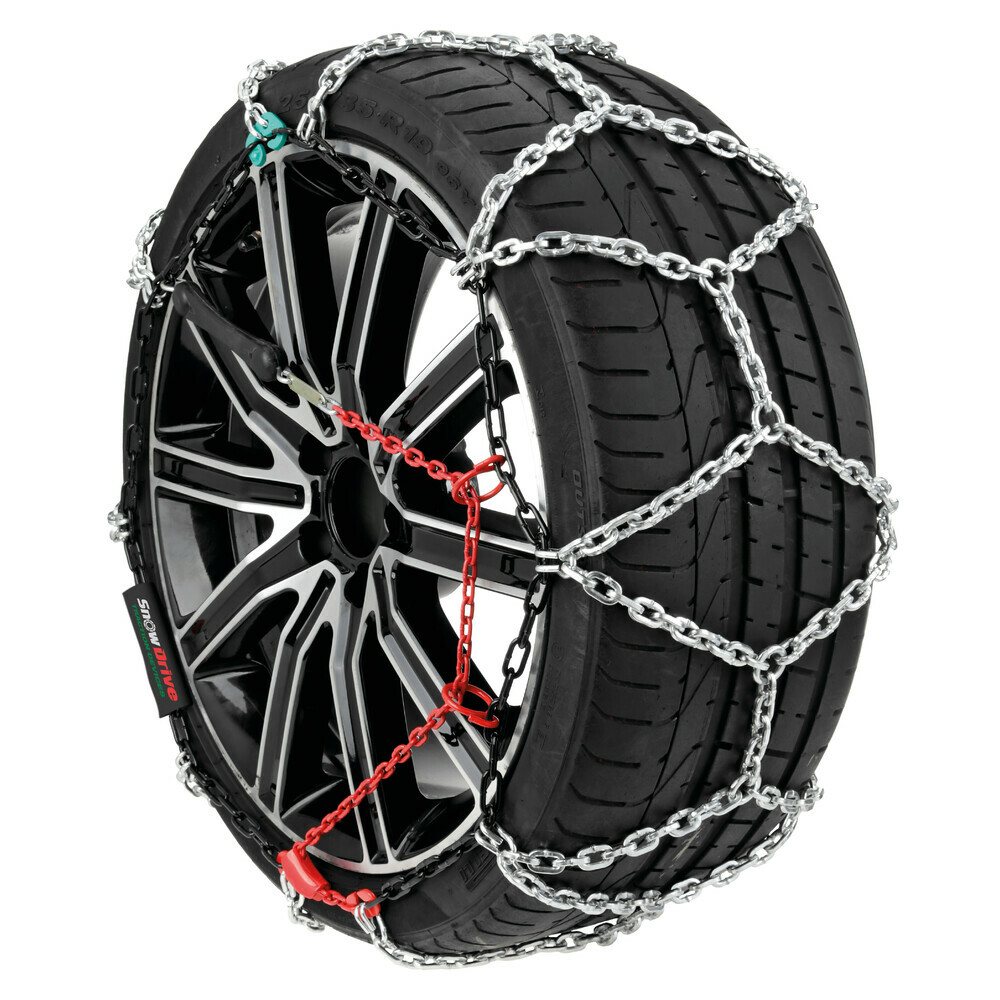
This anti-skid equipment comes from renowned manufacturers like Lampa. Their construction ensures adequate traction on surfaces covered with dense snow. Always choose the variant that complies with axle weight and body interior space.
How is the equipment correctly mounted on the drive axle?
Correct installation of snow chains is carried out exclusively on the drive axle of the vehicle, after coming to a complete stop on a flat surface away from active traffic. This placement guarantees grip on iced roads and ensures control of steering or propulsion in difficult winter conditions. The fixing procedure goes through several precise technical stages:
Stopping the vehicle is performed in a safe refuge, on level ground, with the handbrake pulled and the engine turned off.
Unpacking the transport case provides access to the equipment, with the standard package including the two traction devices, the inner flexible cable, protective gloves, and spare links.
Passing the flexible cable behind the tire allows the symmetrical positioning of the metal net over the tread profile without twisting the components.
Fixing the closure system on the outer side of the rim is executed by coupling special hooks and locking the tightening mechanism.
Mounting is applied to the front wheels for front-wheel-drive vehicles, and to the rear wheels for rear-wheel-drive ones.
All-wheel-drive or 4x4 vehicles require consulting the car technical manual to identify the axle indicated by the manufacturer.
After driving a very short distance, stopping the car becomes mandatory to check the even seating of the links. The forces during rotation move the metal segments toward the center of the tread, allowing additional tensioning on the wheel. A tightly stretched metal net reduces the risk of accidental detachment and limits the possibility of moving parts hitting internal elements in the wheel well, sensors, or lines.
Where can you order certified equipment?
Certified anti-skid equipment can be ordered in Romania directly from Cridem, an importer and distributor active on the auto market since 1997. Purchase is made quickly through the online store cridem.ro or directly from the showroom located at 58 Borsului Road in Oradea. The company serves both individual drivers and B2B partners who need seasonal stocks of snow chains.
Placed orders benefit from efficient processing and flexible transaction completion methods:
Fast delivery: shipment of packages takes 1-2 days in Romania and 2-3 days in Hungary.
Diverse payment methods: buyers can opt for online payments, bank transfer, cash on delivery, or installment purchases through TBI Bank.
Dedicated assistance: the technical team offers support and clarifications regarding part compatibility in Romanian, Hungarian, and English.
Customers can check tire dimensions and free space in the wheel well to place a correct order on the online platform or directly at the headquarters.
What safety and maintenance rules prevent wheel damage?
Driving with snow chains requires reducing speed and removing them as soon as the road becomes clear. Direct contact between metal links and dry asphalt produces accelerated premature link wear, destroys the tire tread profile, and affects the road surface.
The recommended speed while traveling with these traction devices is moderate, without sudden direction change maneuvers or violent accelerations. Any dynamic shock applied to the wheels can produce uneven tension in the links, risking the detachment of metal elements and striking components in the wheel well, such as brake lines or ABS sensors. After driving through a difficult section, a visual check of the links confirms whether the tensioning system maintains its optimal position.
After each use, anti-skid equipment accumulates salt and mud deposits that favor corrosion. Thorough cleaning of the links with warm clean water removes chemical residues before they attack the metal surface. Complete drying of the equipment helps limit oxidation of flexible steel components before placing them in the transport case. Storing them in a ventilated and dry space in the trunk helps maintain the good operating condition of the mechanisms during the next mounting on the drive axle.
How do you choose the right solution for your winter route?
The final choice always depends on the planned route and the technical particulars of your car. When analyzing how to choose snow chains for cars, first check the free space in the wheel well. For a compact passenger car driven toward mountain areas, thin variants protect sensors and steering elements. In contrast, off-road vehicles or loaded vans demand thick links capable of supporting weight on steep slopes.
Compare tire markings on the sidewall with the technical data of the equipment before departure. Add the suitable model to the cart on cridem.ro or come directly to the showroom to receive the correct recommendation. A set checked in advance in the trunk helps you drive more safely on icy roads.
FAQ
What is the difference between steel chains and textile traction covers?
Alloy steel chains offer mechanical traction by penetrating ice and dense snow, featuring high wear resistance on difficult surfaces. Textile covers are easy to mount on vehicles with minimal space in the well, yet they deteriorate rapidly on ground lacking consistent snow.
What accessories are found in the delivery package of an anti-skid set?
A complete set contains the two chains intended for one axle, the flexible tensioning and locking system, protective gloves for mounting in a blizzard, spare links for quick remediation, and the rigid transport case.
What is the recommended speed when driving with metal devices on wheels?
Travel speed must be kept at a low and prudent level when the car is equipped with such devices. High speeds generate intense vibrations, can destabilize locking mechanisms, and increase the risk of damaging steering and bodywork elements.
What criterion establishes the optimal link thickness for a personal passenger car?
The free distance between the inner tire and suspension elements or brake lines determines the appropriate thickness. Passenger cars with tight passages require reduced 9 mm profiles, while off-road vehicles and vans support robust 16 mm profiles.
How are these elements mounted on vehicles equipped with permanent all-wheel drive?
Mounting on 4x4 automobiles is carried out by following the technical recommendations in the vehicle guide, which indicate the axle with predominant force distribution. In the absence of a distinct specification, mounting on the front axle ensures the preservation of directional control and grip.
In what situations must the equipment be removed from the tires?
The equipment is removed when the road becomes clear and the asphalt surface no longer features patches of snow or black ice. Direct contact between steel and asphalt increases braking distance and accelerates tread degradation.


