


The Right Car Cover for Your Vehicle, Before Winter Arrives

Car Cover for Autumn: How to Choose the Right Size for Your Car Body Type
Autumn brings damp mornings, frequent rain, fallen leaves and increasingly significant temperature differences between day and night. For cars parked outdoors, a car cover can be a practical protection solution. But before choosing the material or colour, there is one detail that makes all the difference: the correct fit for your car's body shape.
A cover that is too small can strain the seams and leave certain areas exposed. One that is too large can move excessively in the wind, increasing friction between the material and painted surfaces. And two cars with almost identical lengths may require different covers, depending on the shape of the roof and rear section.
In this guide, we explore how to choose the right size and fit for your car, what to check before buying and which mistakes to avoid during October and November.
Why Does Body Shape Matter More Than You Might Think?
Imagine two cars parked next to each other: a saloon and an estate. They are approximately the same length, but their profiles are different. The saloon has a separate boot and a roof that slopes down towards the rear window, while the estate maintains its roofline almost all the way to the tailgate.
If you choose a car cover based solely on the overall length, without checking the body type, the material may not fit evenly. On an estate, a cover designed for a saloon may be too short at the rear, even if the stated length appears suitable.
During the rainy season, these differences become even more important. An unsuitable fit can create large folds where water collects and allow the material to shift when the wind picks up.
That is why choosing the right cover starts with identifying the body type, rather than simply selecting the first available size.
Sedan, Hatchback, Estate or SUV: What Differences Should You Look For?
Saloon and Sedan: Pay Attention to the Shape of the Boot
Saloons generally have a three-box body design, with a separate boot. The cover should follow the transition between the roof, rear window and boot lid without leaving excessive loose material at the back.
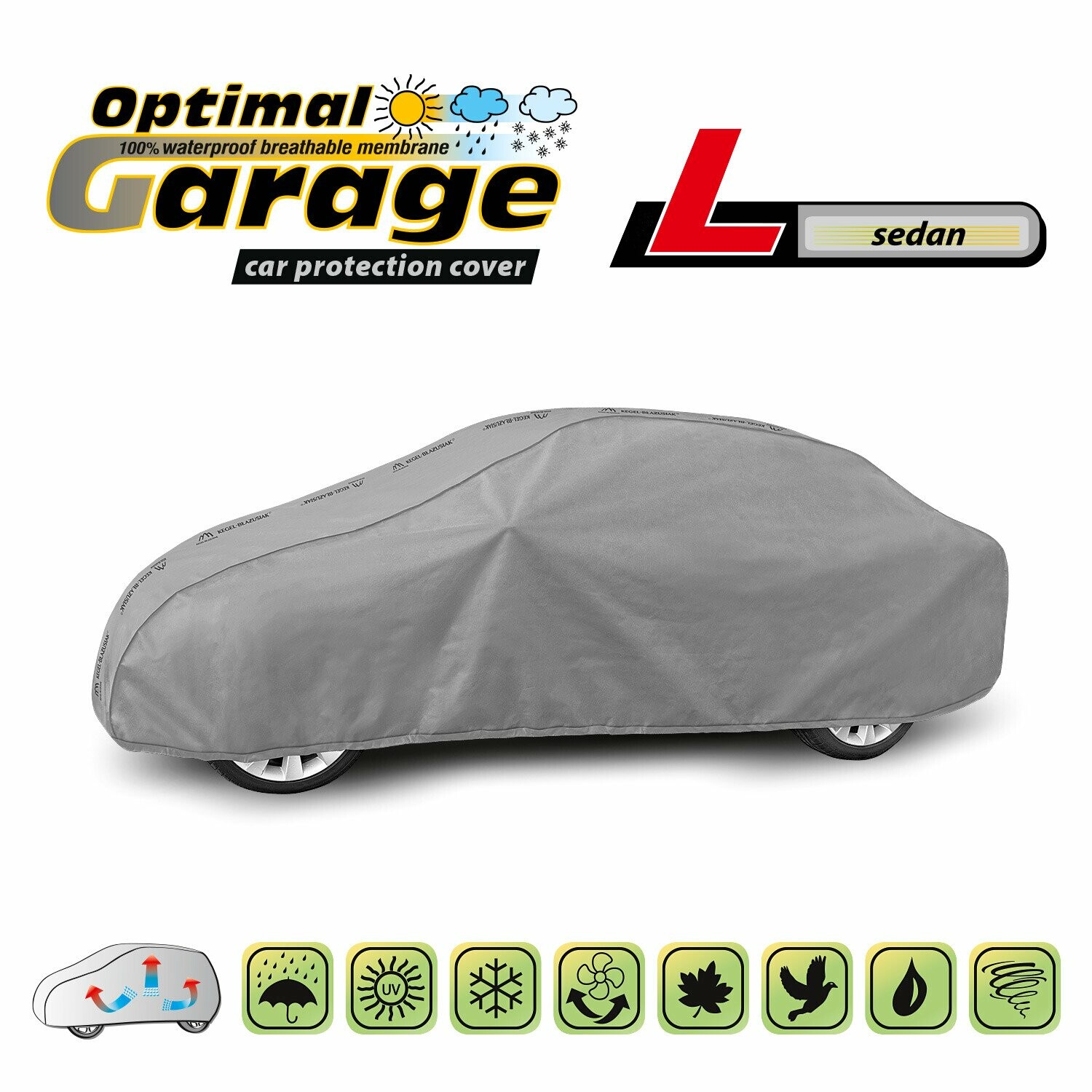
When choosing a cover, check the vehicle's overall length, width and height, as well as the shape of the side mirrors. If the model has a spoiler or other exterior accessories, these may affect compatibility.
Hatchback: A Compact Body with Its Own Particularities
A hatchback may seem easier to cover because of its smaller dimensions. However, the almost vertical tailgate and relatively short roof can mean that a cover designed for a saloon will not fit correctly.
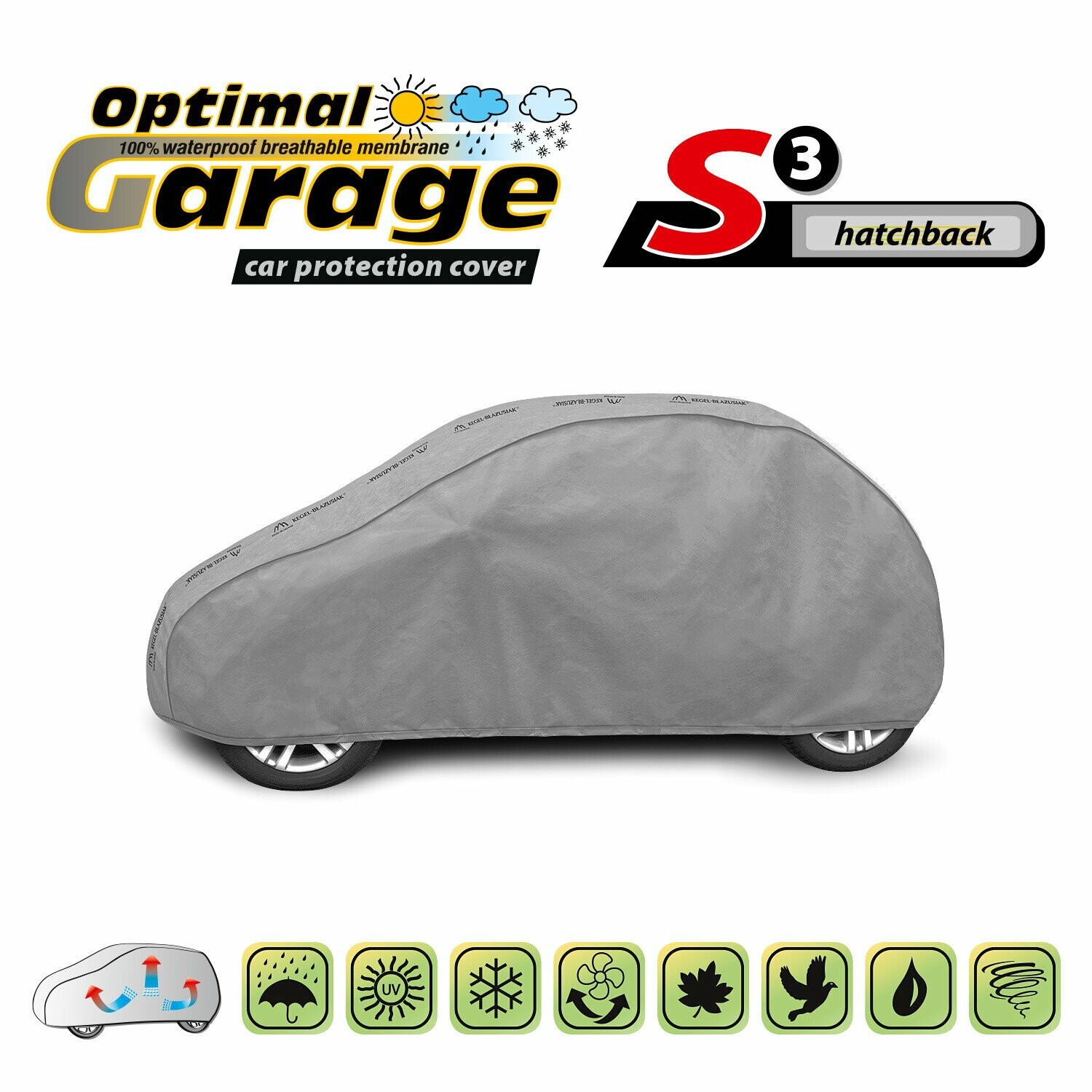
It is important to choose a cover compatible with the hatchback profile, especially if the product is available in versions designed for different body styles.
Estate and Station Wagon: The Extended Roof Changes the Fit
On estate cars, such as the Audi A4 Avant or Volkswagen Passat Variant, the roof extends towards the rear of the vehicle. A suitable cover must protect this area without excessively stretching the material over the upper corners of the tailgate.
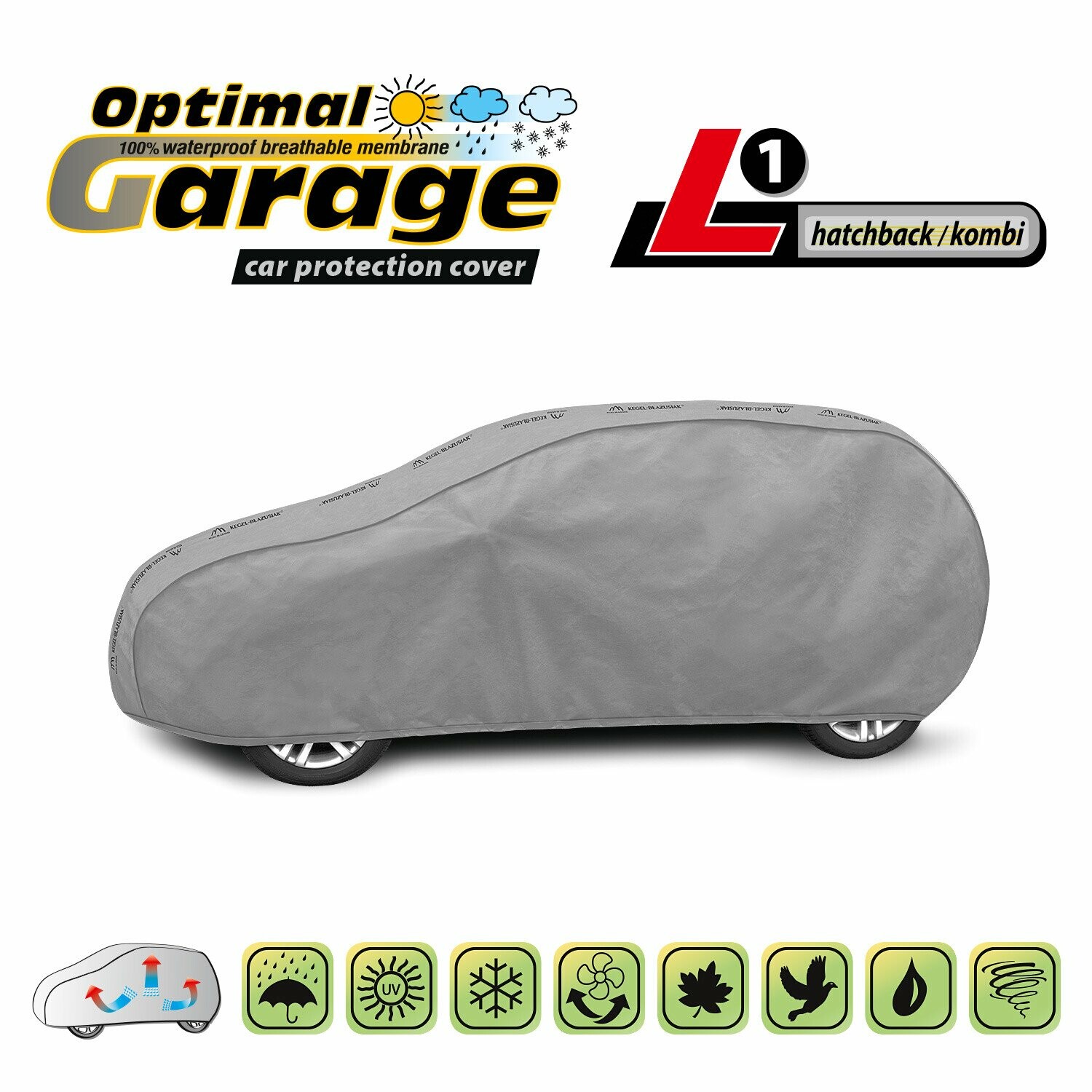
Do not assume that every XL cover is suitable for an estate. Size letters may represent different dimensional ranges depending on the manufacturer.
SUV and Crossover: Height Is Just as Important as Length
SUVs and crossovers have taller bodies, and some models are equipped with roof rails, spoilers or other exterior components.
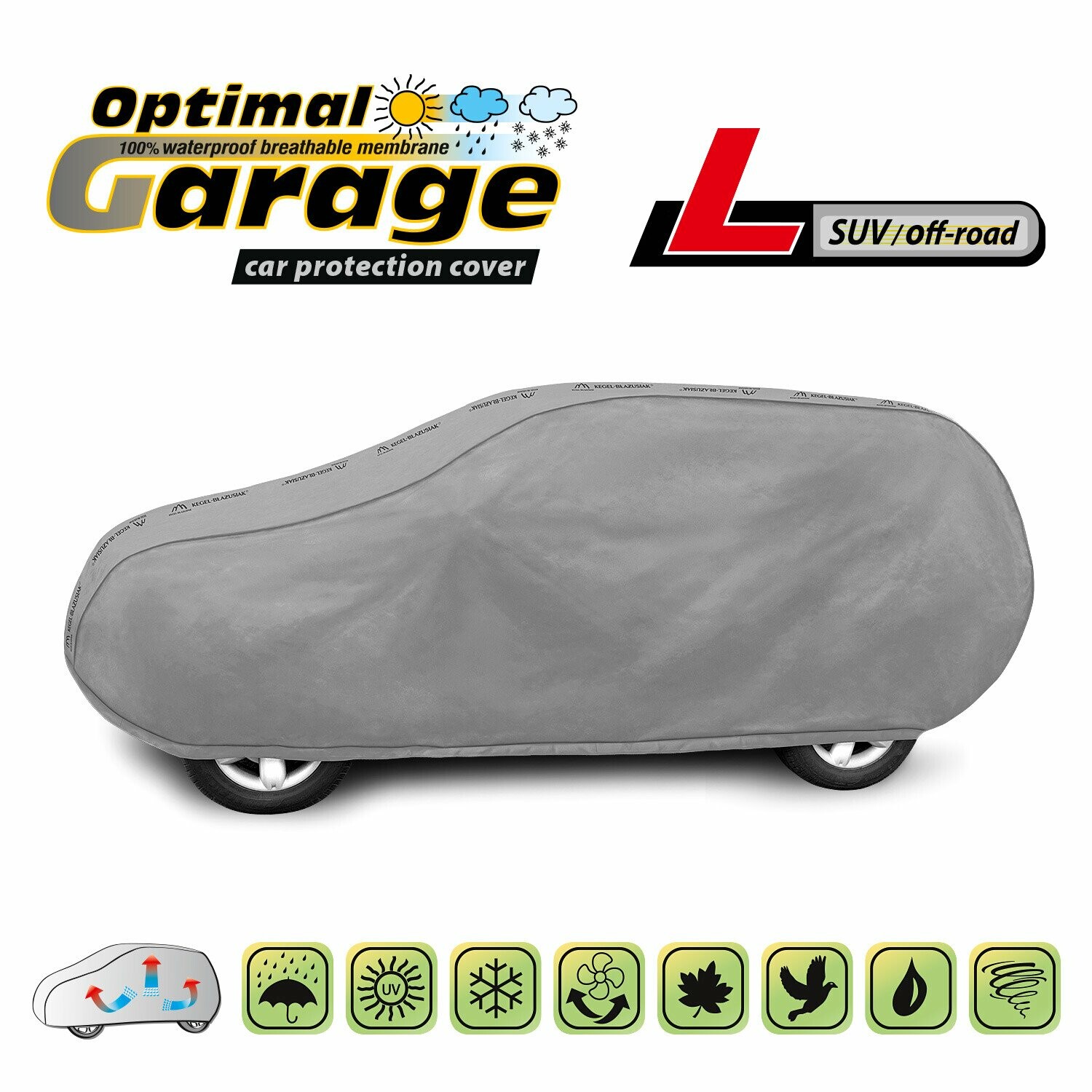
A cover designed for a conventional passenger car may have the correct length but still be too small to cover the sides of an SUV. Check all dimensions and the manufacturer's stated compatibility, not just the product's commercial category.
How to Measure Your Car Correctly Before Buying a Cover
On a November morning, when your car is covered in dew and fallen leaves, the last thing you want is to discover that the cover you ordered does not fully protect the bodywork.
To avoid this situation, check three main dimensions: the vehicle's overall length, width and height. These measurements can be found in the car's technical documentation, while measuring the vehicle directly is useful when additional accessories have been installed.
Length is measured from the outermost point of the front bumper to the outermost point of the rear bumper. Width and height should be compared with the way the cover manufacturer defines the product's dimensions.
For example, if a particular XL car cover is designed for vehicles measuring between 455 and 485 cm in length, a 470 cm car falls within that range. However, this dimensional match does not automatically guarantee compatibility: the body shape and other measurements must be checked separately.
Practical tip: Do not deliberately buy a much larger cover just to make sure it covers the car. Excess material can encourage flapping in the wind and repeated contact with the paintwork.
Autumn Rain and Condensation: What Should You Check in the Material?
In October and November, cars parked outdoors are frequently exposed to moisture. Rain may alternate with sunny periods, while low overnight temperatures encourage condensation to form.
That is why, in addition to dimensional compatibility, it is worth checking whether the material is designed for outdoor use and whether it allows water vapour to pass through.
Covers with breathable membranes are designed to limit rain penetration while helping moisture escape. However, breathable material does not guarantee the absence of condensation, especially when the car is covered while wet or remains covered for a long period without inspection.
Multilayer models, such as certain products from the Membrane Garage range, can be an option for outdoor parking, depending on each product's specifications.
Before buying, check the intended use, the material's stated properties and the manufacturer's instructions.
A Properly Fitted Cover Should Stay in Place Even When It's Windy
Wind is one of the factors that quickly reveal a poorly chosen car cover.
If the material is too loose, it can form folds that repeatedly move across the bodywork. If it is too tight, the fastening systems and seams may be subjected to excessive tension.
One example of a product with a fastening system is the 4Cars Full Car Cover, Size XL, which, according to the catalogue description, features four lower attachment points.
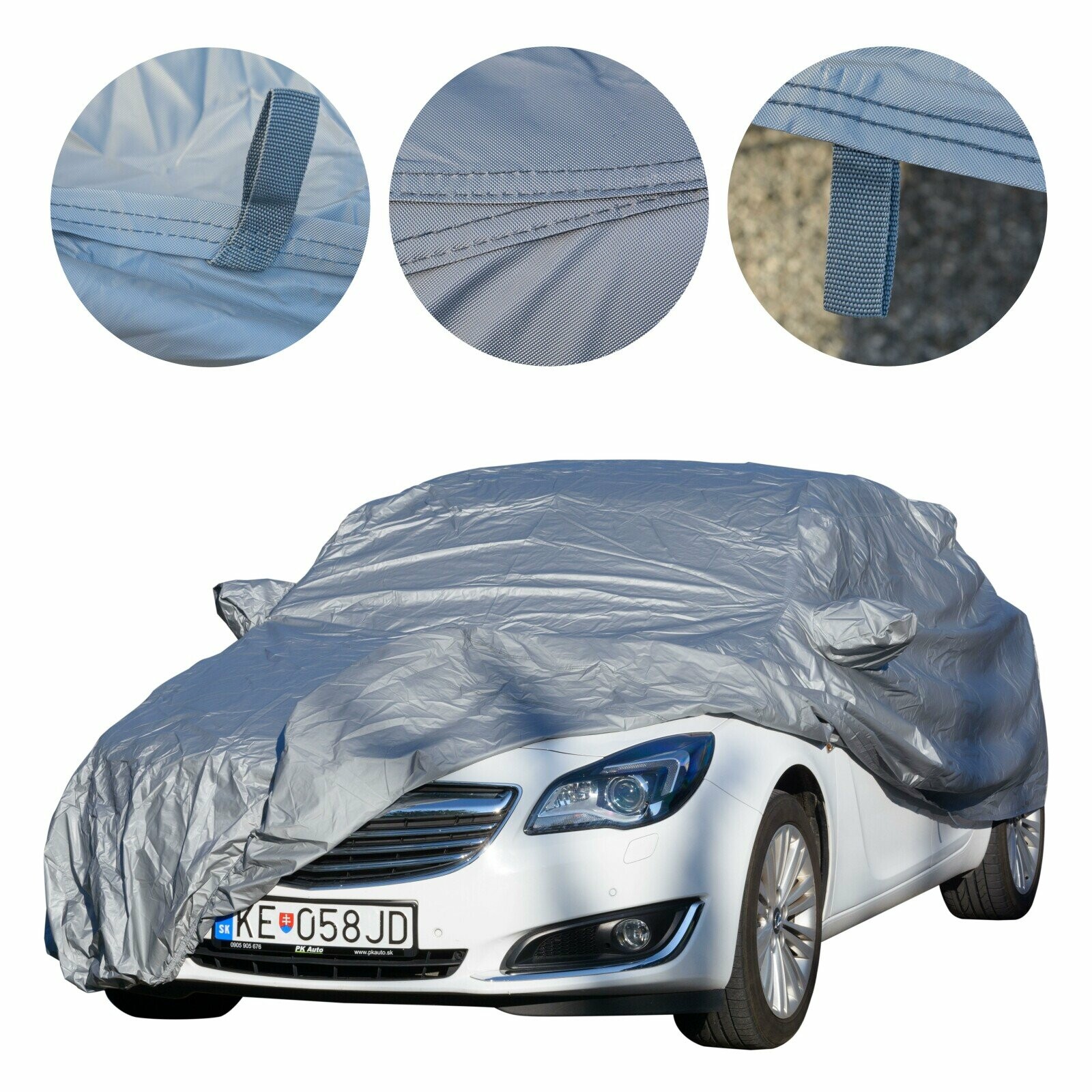
During installation, make sure the material is evenly distributed and that the fastening elements are used according to the instructions. Avoid improvised solutions that could damage the wheels, components underneath the car or painted surfaces.
Before a period of strong winds, check the fastening system and the manufacturer's recommendations regarding use in such conditions. A car cover should not be considered safe in every wind intensity.
Three Common Mistakes When Using a Car Cover in October and November
1. Covering the Car Immediately After Driving in the Rain
You have arrived home, parked and want to protect your car before the next rainfall. The intention is good, but placing a cover over wet bodywork can trap moisture underneath the material.
Allow the surfaces to dry and follow the product's instructions for use. Check periodically whether condensation has formed beneath the cover.
2. Leaving Fallen Leaves and Dirt Under the Material
In autumn, leaves quickly accumulate at the base of the windscreen, around the wipers and on the roof. Together with dust and abrasive particles, they can cause friction when the cover moves.
Before installation, clean the bodywork and remove any debris. Simply brushing away visible leaves is not enough if the surface remains covered in sand or dust.
3. Choosing a Universal Size Without Checking the Dimensions
Size labels such as S, M, L, XL or XXL are useful as a guide, but they do not represent identical dimensional standards across all brands.
Consult the product's size chart and check whether the car's body shape is compatible with the chosen model.
But What If You Need Protection Against Hail?
A standard cover designed for rain and dust should not be confused with a hail protection cover.
Specialised covers may include cushioning sections designed to reduce the impact of hailstones on certain body panels. The level of protection depends on the product's construction and the severity of the weather event.
If you live in an area where hailstorms are frequent, check whether dedicated models are available. Do not assume that every thick car cover automatically provides hail protection, and do not expect such a cover to prevent all possible damage.
Regardless of the type, dimensional compatibility remains important for ensuring the cover fits correctly on the vehicle.
How to Choose the Right Car Cover on Cridem.ro
Before ordering, start with your car's exact model and body type. Check the exterior dimensions and compare them with the information in the product specifications.
On Cridem.ro, you can explore car cover options for different vehicle types. Depending on the product, you may find models for outdoor protection, multilayer versions or covers designed for specific purposes.
Pay attention to compatibility, material, fastening systems and maintenance instructions. If your car has roof bars, a spoiler or other accessories that change its exterior dimensions, check whether the cover can be used with them.
Making the right choice is not just about completely covering the car, but also about reducing unnecessary movement of the material while the vehicle is parked.
A Good Choice Now, Fewer Worries in the Months Ahead
In October and November, protecting your car starts with paying attention to the details. Wet leaves, frequent rain and wind can make an unsuitable cover more inconvenient than useful.
You do not automatically need to choose the largest model or the thickest material. Start with the body shape, check the dimensions and select a product designed for the conditions in which you park.
Discover the available options on Cridem.ro and review each cover's specifications before ordering. A few minutes spent checking compatibility can help you avoid making the wrong choice.
Frequently Asked Questions (FAQ)
Can I Use the Same Car Cover for a Saloon and an Estate of the Same Length?
Not always. Even if the length is identical, the shape of the roof and rear section may differ. Check the body type for which the cover was designed.
How Do I Know Whether I Need an L or XL Car Cover?
Compare your vehicle's length, width and height with the manufacturer's size chart. L and XL sizes do not have universal measurements across all product ranges.
Can I Fit a Car Cover If My Car Is Wet from the Rain?
Generally, it is preferable to wait until the bodywork has dried before fitting the cover. Moisture trapped beneath the material can encourage condensation. Always follow the product's instructions.
Do Roof Bars Affect the Choice of Car Cover?
Yes. Roof rails, crossbars and other accessories can change the vehicle's exterior profile. Check whether the product is compatible with these components or whether they must be removed before covering the car.
Does a Waterproof Car Cover Prevent Condensation?
Not completely. Waterproofing and water vapour permeability are different properties. Even breathable materials may allow condensation to form under certain temperature and humidity conditions.
Is It Recommended to Leave a Car Cover on for Several Weeks?
It depends on the product's specifications and parking conditions. For extended periods, periodically check the condition of the material, the fastening system and any accumulation of moisture or dirt.
Does a Standard Car Cover Also Protect Against Hail?
This should not be assumed. Specially designed models are required to reduce hail impact, and the protection they provide has limits depending on the severity of the weather event.


