



















12V or 24V? How to Choose the Right Electrical Accessories for Your Truck

12V or 24V systems: what changes when you equip a truck
Learn the differences between 12V and 24V systems. See which 24V truck accessories are compatible and how to choose the right inverter for your cabin.
Key points
Large commercial vehicles use 24V systems to reduce current intensity and the thickness of the wiring required to start high-displacement engines.
Connecting a 12V accessory directly to a 24V source leads to the instant burnout of the device due to overvoltage.
Powering a 24V device in a 12V socket will cause the device to malfunction or operate with extremely low efficiency.
Choosing a voltage inverter for a truck must take into account the continuous power absorbed by the appliances used in the cabin.
Why do large commercial vehicles use a 24V system?
Properly equipping a truck with 24V accessories starts with understanding how the electrical system of large commercial vehicles is designed. Unlike standard passenger cars, trucks use a 24V system because high-displacement diesel engines require extremely powerful starter motors. A double voltage allows the electric current intensity to be halved while delivering the same total power to consumers.
By reducing the required amperage, electrical conductors are no longer subjected to the same thermal stress. This simple physical principle brings major structural advantages for large vehicles:
Thinner cables: Halving the current intensity allows for the use of copper cables with a much smaller cross-section throughout the commercial vehicle's structure.
Reduced weight: Thinner conductors significantly decrease the total weight of the wiring installed on the chassis and in the cabin.
Energy efficiency: Energy losses in the form of heat along long circuits are reduced, ensuring stable power for all electrical equipment.
12V system vs 24V system: what happens during incorrect installation?
Devices intended for passenger cars cannot be used directly with the supply voltage of a large commercial vehicle without adaptation equipment. Connecting a 12V accessory to a 24V cigarette lighter socket destroys the internal circuits of the device through overvoltage, often generating smoke and causing irreparable damage to electronic components. Conversely, using a 24V accessory in a 12V network does not provide enough voltage, which causes the device to shut down automatically or suffer from severe underpowering that prevents proper operation.
Avoiding these connection errors protects the vehicle's fuses and prevents the risk of short circuits in the cabin. To ensure compatibility, users must check the technical specifications of each electrical consumer before plugging it in.
Accessory voltage | Power source | Equipment behavior | Impact on safety |
|---|---|---|---|
12V | 24V socket | Instant destruction via overvoltage | Major risk of short circuit and blown fuse |
24V | 12V socket | Severe underpowering or malfunction | Automatic shutdown, no major direct damage |
For the safe use of household appliances, a 24V 230V inverter is the correct solution to power electrical equipment in trucks directly from the vehicle battery, maintaining comfort in the truck cabin without endangering the original system.
How do you correctly choose bulbs and lighting systems for a truck?
Exterior and interior lighting systems must correspond exactly to the nominal voltage of the commercial vehicle to ensure proper operation and traffic safety. Choosing 24V truck bulbs with the intention of installing them on a passenger car with a 12V network is a major technical mismatch, as the insufficient voltage will produce an extremely weak light, almost imperceptible and useless at night.
Conversely, using 12V bulbs on a 24V network is even more harmful. The double voltage will instantly overload the components, leading to the burnout of the filament or internal LED chip in the first seconds of operation. For this reason, the selection of light sources must be made strictly according to the vehicle's technical specifications. To facilitate the correct choice, the differences between the two systems are clearly structured:
Bulb type | Compatible voltage | Behavior on 12V network | Behavior on 24V network |
|---|---|---|---|
Standard 12V bulb | 12V | Optimal nominal operation | Instant destruction via burnout |
Standard 24V bulb | 24V | Extremely low light intensity | Optimal nominal operation |
Purchasing 24V truck accessories intended for lighting guarantees direct compatibility with the original electrical system, preventing premature failure of optical components.
How are sockets, splitters, and electronics power managed?
A 24V cigarette lighter socket in a truck delivers the cumulative voltage of the vehicle's batteries directly, which requires the use of dedicated adapters capable of supporting this value without the risk of destruction. Connecting a device designed exclusively for passenger cars to such a source can lead to the instant burnout of the device due to overvoltage.
Socket splitters must be carefully checked before use to confirm that they can operate safely at a 24V supply voltage without overheating. Many standard accessories are designed only for 12V networks, and using them on trucks can cause the plastic casing to melt or even lead to short circuits in the electrical system.
Modern phone chargers often have flexible operating ranges, compatible with both 12V and 24V, but checking the technical label of each charger remains mandatory before plugging it in. This label must clearly specify the input range, for example, Input: 12-24V, to guarantee safe power. When purchasing 24V truck accessories, the nominal compatibility of each connector is the primary selection criterion for protecting personal electronics.
Voltage inverters: how do you transform current for 230V appliances?
Using standard household appliances in the cabin requires a 24V 230V inverter connected correctly to the vehicle's network to transform direct current into alternating current. The choice of equipment depends directly on the power of the consumers that the driver wants to power during breaks or while driving.
For low-consumption devices, such as laptops or televisions, compact models are ideal. The Kamar 24V to 230V 1200W power inverter offers a continuous power of 800W, being a technical solution for powering electrical equipment in the cabin.
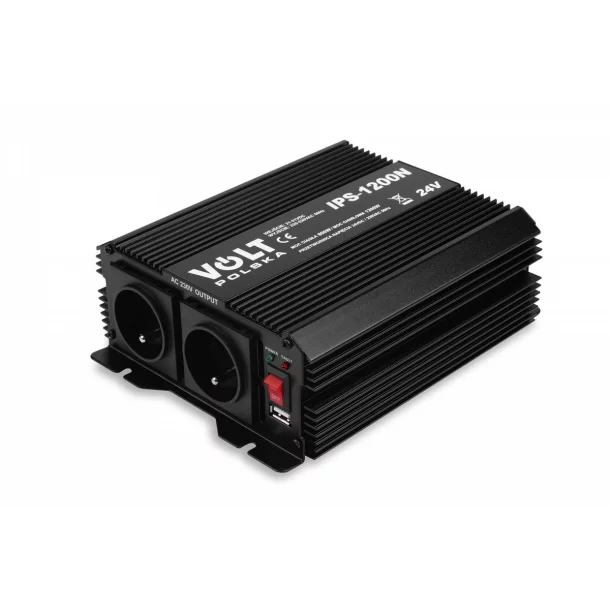
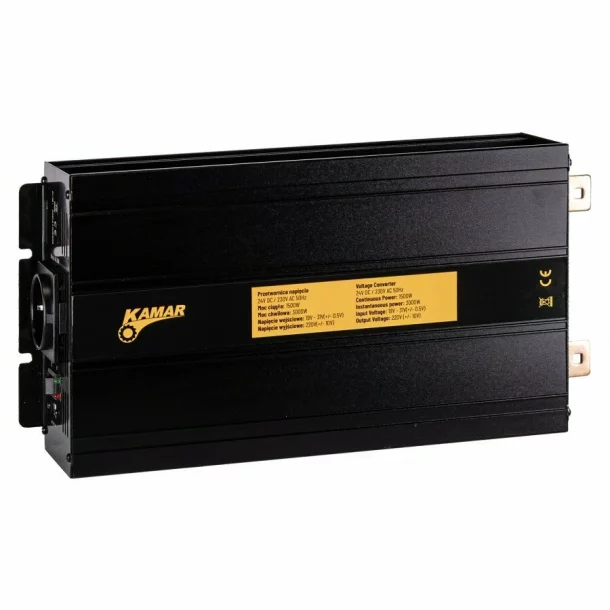
When more complex household appliances are used, a higher energy reserve is needed. In these situations, equipment such as the KAMAR 24V-230V 1500/3000W voltage inverter or KAMAR 24V-230V 2000W/4000W voltage inverter ensures the current necessary for the startup and safe operation of large consumers.
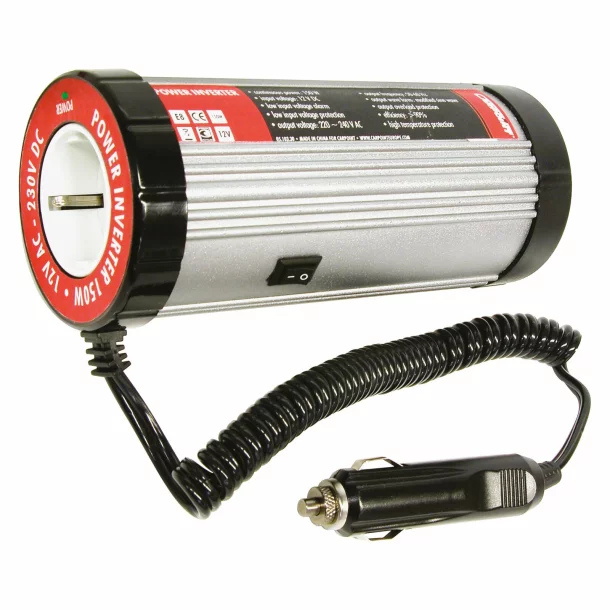
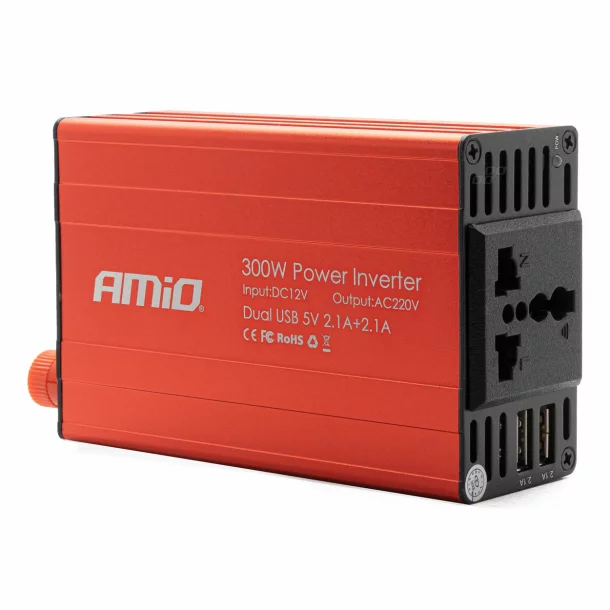
If power is supplied from a 12V platform, variants dedicated to this voltage are used, such as the Amio 12V to 220V 300/600W 2xUSB power inverter or the Carpoint 12V to 220V 150W socket-type power inverter.
Options include models such as the Amio 12V to 220V 300/600W 2xUSB power inverter, suitable for small accessories, or the 12V to 220V 1000W power inverter for medium demands.
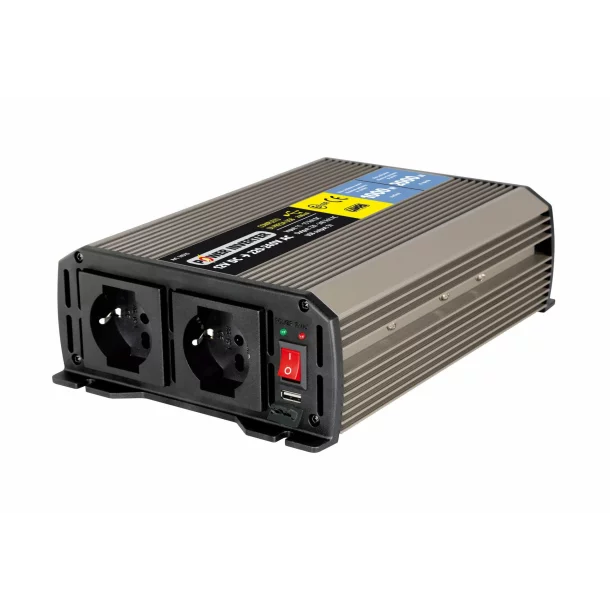
Inverter model | Input voltage | Continuous power | Recommended use |
|---|---|---|---|
Kamar 1200W | 24V | 800W | Laptops, TVs, chargers |
KAMAR 1500/3000W | 24V | 1500W | Medium appliances, power tools |
KAMAR 2000W/4000W | 24V | 2000W | Large consumers, kitchen equipment |
Amio 300/600W | 12V | 300W | Mobile devices, tablets, small electronics / varies by model |
Amio 1000W | 12V | 1000W | Medium appliances |
How do you estimate appliance consumption and why does inverter power matter?
A 24V 230V inverter is the technical solution by which the truck's direct supply voltage is transformed into alternating current, allowing the use of standard household appliances in the cabin. To ensure the stable operation of equipment, it is essential to distinguish between the continuous power and the peak power of the inverter.
The continuous power of the inverter represents the maximum load that the device can support long-term without interruption. This value must cover the cumulative consumption of all appliances operating simultaneously. In contrast, peak power is necessary to absorb the initial startup shock of appliances with electric motors, such as car refrigerators or compressors, which temporarily require a current several times higher than in normal operation.
Exceeding the nominal capacity of the inverter triggers the automatic overload protection, cutting off power for safety and preventing damage to the system. To correctly estimate consumption, add the wattage of each device used, ensuring a power reserve of at least 20% above this sum. Choosing an appropriate 24V 230V inverter prevents unwanted interruptions and protects both the vehicle's batteries and the connected appliances.
Fans and cooling systems: how do you maintain the optimal temperature?
Cabin fans must be selected strictly according to the supply voltage available on board, as ignoring this technical specification leads to rapid equipment failure. A 12V fan connected directly to the truck's 24V network will rotate at a dangerous speed, generating intense vibrations and loud noise before its electric motor burns out due to overvoltage. Conversely, a device designed for 24V will not receive enough energy from a 12V socket, operating at an extremely low speed or refusing to start.
Cooling systems dedicated to trucks ensure a constant airflow without overloading the commercial vehicle's original electrical system. These devices are specially designed to withstand constant vibrations while driving and to optimize current consumption during stationary periods. To maintain an optimal temperature in the cabin, professional drivers use compatible 24V truck accessories, which guarantee a long service life and safe operation on the road.
Cabin comfort and maintenance: where are products common to both voltages?
Comfort in the truck cabin does not depend entirely on the vehicle's electrical network, as many essential items are completely independent of the supply voltage. Dashboard organizers, seat covers, physical phone holders, and ergonomic accessories for lumbar support can be used without any restrictions, regardless of whether the vehicle operates on 12V or 24V.
Also, products intended for cleaning and maintaining cabin surfaces, such as cloths, dashboard cleaning solutions, or brushes, are universal and suitable for any type of cabin. Properly and efficiently equipping the workspace combines dedicated 24V electrical accessories, such as cabin lighting systems or specific cooling appliances, with these universal organizational elements. This mixed approach ensures an optimal, comfortable, and orderly work environment during long routes, without overloading the truck's electrical system and without risking technical incompatibilities between components.
FAQ
Can I use a 12V inverter on a 24V truck system?
No, an inverter designed for 12V will deteriorate rapidly or enter overvoltage protection if connected to a 24V source. For trucks, a dedicated 24V inverter is required.
What happens if I put a 12V bulb in a 24V truck headlight?
The 12V bulb will burn out almost instantly due to the double voltage that will overload the filament or internal LED circuits.
How can I safely use 12V appliances in a 24V truck?
To use 12V accessories, it is necessary to use a 24V to 12V voltage reducer, which lowers the voltage to the correct value without endangering the devices.
Why is the continuous power of a truck inverter important?
Continuous power indicates the actual value that the inverter can support constantly for the operation of appliances, while peak power is only for short-term startup.


