



















Choosing the Perfect Car Roof Box: A Complete Guide

Optimizing Car Space for Safe Travels
Learn how to choose the right roof box for your car by analyzing the capacity, materials, and mounting systems available.
Key Points
Choosing the right roof box depends on the required volume, with models available between 320 and 530 liters.
Materials such as impact-resistant polypropylene and ABS with acrylic methacrylate ensure luggage protection against the elements.
Mounting systems with brackets or U-hooks allow the boxes to be fitted to most roof bars on the market.
Storing the box when not in use is optimally achieved with adjustable telescopic wall mounts.
Analyze capacity for an efficient roof box choice
An efficient roof box choice depends directly on the volume required for sports equipment or bulky luggage, offering capacities ranging from 320 liters to 530 liters. Selecting the optimal model is done by correlating the interior space with the specifics of your trips, ensuring superior organization of the transported items.
For users who need compact solutions, the 320-liter or 330-liter variants are ideal for smaller luggage, while the 400-liter, 430-liter, 480-liter, and 530-liter options are intended for transporting sports equipment or for extended vacations. Differentiating between these storage options allows for adaptation to any type of vehicle.
Model | Capacity | Finish |
|---|---|---|
320L, 400L, 480L | Carbon texture | |
330L | Glossy or embossed | |
430L | Glossy or embossed | |
Box 480 Nordrive | 480L | Glossy black |
530L | Glossy or embossed |
Models such as Box 430 offer increased rigidity, while Box 530 maximizes the space available for generous loads. Careful planning of the interior volume prevents overloading, respecting the 75 kg safety limit. Correct use of the included accessories, such as fastening straps, guarantees the stability of the luggage during travel, regardless of the capacity chosen for transport.

Polypropylene vs. ABS with methacrylate: comparing resistant materials
Choosing the right materials is the decisive factor for long-term durability when making a roof box choice. Mechanical resistance and the ability to cope with external factors depend directly on the composition of the shell.
Polypropylene, used in models such as Gran-Pree, offers high elasticity, being ideal for users who prioritize flexibility in varying temperature conditions. This synthetic polymer absorbs mechanical shocks without suffering permanent deformation, maintaining structural integrity during transport.

On the other hand, 4 mm ABS with acrylic methacrylate, present in the Box 330 or Box 530, brings extra rigidity and protection against ultraviolet radiation. This combination of materials ensures a glossy, scratch-resistant surface that retains its aesthetic appearance after many years of intensive use.

Model | Material | Main advantage |
|---|---|---|
Gran-Pree | Polypropylene | High flexibility |
Box 330 | ABS with methacrylate | Structural rigidity |
Box 530 | ABS with methacrylate | Advanced UV protection |
Both technical solutions are designed to offer safety, but the final choice depends on the mode of use. While polypropylene excels in its ability to absorb mechanical stress, ABS structures with methacrylate offer superior protection against environmental factors, having a higher hardness of the outer layer. Evaluating road conditions and frequency of use will guide the decision toward the optimal model for your needs.
Explore aesthetic finishes for a personalized roof box choice
Colors and finishes available for roof boxes are designed to complement the aesthetics of various vehicle models, offering matte, glossy, or textured options. A suitable roof box choice depends on visual preferences and how the texture interacts with light on the car body.
Carbon Look finishes offer a sporty appearance and a distinct tactile texture, being preferred for their complex design which masks small scratches more efficiently than glossy surfaces. In contrast, glossy variants reflect ambient light, creating an elegant and uniform look that integrates naturally with the finish of modern car paint.
Finish | Visual impact | Maintenance | Aesthetic fit |
|---|---|---|---|
Carbon Look | Sporty, textured | Low | Cars with dynamic accents |
Glossy | Elegant, reflective | Medium | Vehicles with premium finishes |
Matte | Subtle, discreet | High | Minimalist design |
Aesthetic integration of standard colors, such as black, white, or silver, allows the accessory to be coordinated with the vehicle's color palette. Black remains the most versatile option, being compatible with over 3 base car body colors, while shades of white or silver can accentuate the design lines of cars with a lighter profile. The final choice must balance personal preference with the car's exterior design for a unified and coherent look.
Mount accessories correctly for increased safety
Mounting a roof box is achieved by securely fixing these accessories to the vehicle's roof bars, using compatible systems that ensure the stability of the entire assembly. A suitable roof box choice must always be accompanied by checking the mounting system to prevent any movement during travel.
For correct installation, it is recommended to use fixing sets adapted to the type of bars, following these technical instructions:
Use brackets or U-hooks with a 60 mm opening for narrower standard bars.
Choose mounting systems with 92 mm hooks for wide-profile bars, thus ensuring a firm grip.
Periodically check the tightening of the screws, considering that there are 4 main anchor points for most models.
Respecting the maximum permitted load is essential for the structural integrity of the equipment. Exceeding the weight limit specified by the manufacturer can lead to damage to the mounting system or deformation of the contact points with the roof bars.
System type | Opening (mm) | Bar compatibility |
|---|---|---|
Standard bracket | 60 | Narrow bars |
Wide bracket | 92 | Wide bars |
Quick system | Variable | Various profiles |
Constant monitoring of how the accessories interact with the car roof guarantees incident-free transport. Correct fixing eliminates unnecessary vibrations and maintains the dynamic balance of the vehicle during long trips.
Store equipment for a durable roof box choice
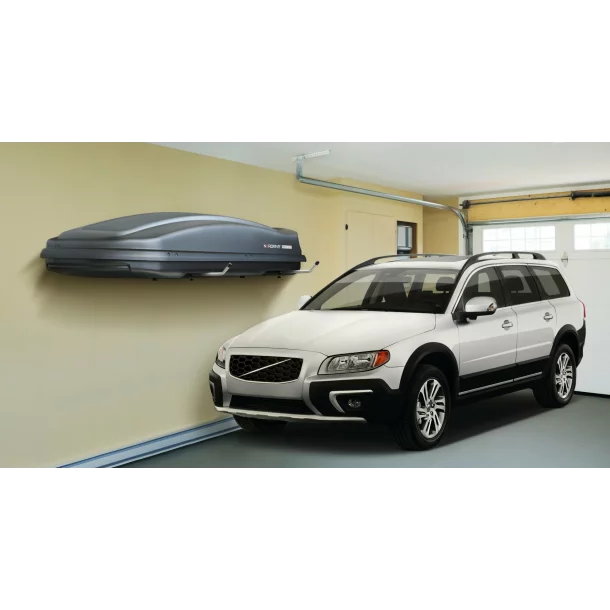
Proper storage of a roof box requires the use of telescopic wall mounts to optimize the space available in the garage and keep the equipment suspended safely. This method prevents base deformation and facilitates quick access when mounting on the car roof is needed.
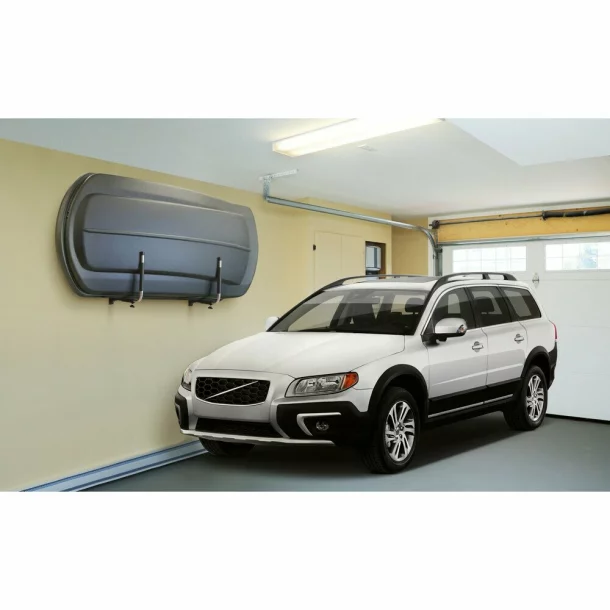
To avoid scratches during long periods of inactivity, it is recommended to protect the shell with rubberized foam sleeves. These accessories absorb mechanical shocks and protect the product's exterior finish against direct contact with the metal elements of the mounting systems. A durable roof box choice involves not only the quality of the materials but also the attention paid to how structural integrity is preserved. The following table compares different storage methods to ensure equipment longevity:
Storage method | Surface protection | Space optimization | Accessibility |
|---|---|---|---|
High | Maximum | Easy | |
Fixed shelves | Medium | Low | Difficult |
Pulley suspension | High | Maximum | Medium |
Equipment must be kept in a temperature-controlled environment, avoiding direct exposure to ultraviolet rays which can degrade polymers over time. Periodic checking of the anchor points ensures the long-term stability of the entire system. Following these simple steps contributes to maintaining optimal functionality for at least 3 seasons of intensive use. Proper storage eliminates the risk of dust accumulation and protects the locking mechanisms against corrosion or accidental jams.
Check compatibility with roof bars: ensuring stability on the roof
Choosing a roof box requires a careful check of the mounting system, as not all models are compatible with every type of roof bar. Cridem recommends consulting the vehicle's technical manual to identify the correct distance between the fixing points, which must be at least 50 centimeters to guarantee uniform weight distribution.
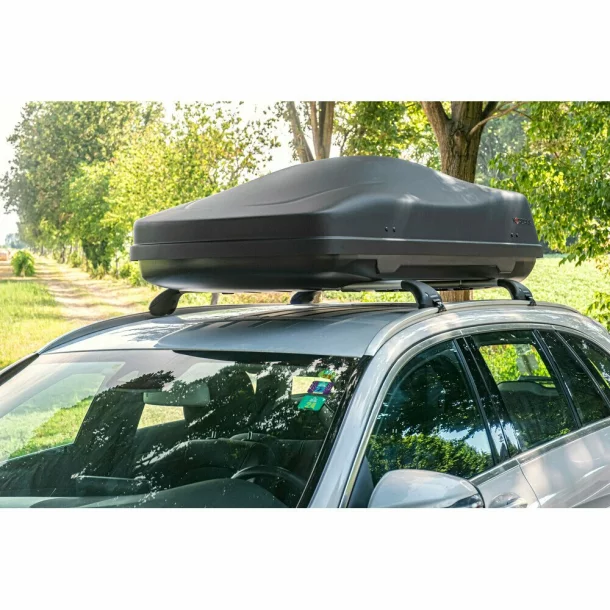
Most modern transport systems accept bars with widths of up to 80 millimeters, but users must ensure that the claw or screw mounting mechanism closes hermetically on the chosen profile. Correct installation prevents excessive vibrations at cruising speeds, thus protecting the structural integrity of the equipment in the long term. In addition, periodically checking the 4 anchor points after the first 100 kilometers traveled is an essential practice for traffic safety.
The adaptability of the accessories offered by Cridem allows mounting on steel or aluminum bars, as long as they comply with the maximum load specifications permitted by the car manufacturer. By precisely aligning the box with the longitudinal axis of the car, drag forces are reduced, optimizing fuel consumption during long trips. A correct configuration eliminates the risk of accidental displacement, offering full confidence during the transport of sports equipment or bulky luggage over extended distances.
Check road regulations: ensuring legal compliance
Compliance with traffic rules is an essential step for any driver using an external transport system. Within the European Union, legislation requires that any accessory mounted on the roof must not exceed the total width of the vehicle, a measurement that must include the car's side mirrors. Also, the total payload distributed on the roof must not exceed the maximum limit of 75 kilograms, a standard value found in most car manufacturer user manuals.
Cridem recommends consulting the car's technical manual to identify the permitted dynamic load, as exceeding it can compromise vehicle handling in curves or during sudden braking. In addition, to avoid unforeseen situations in traffic, it is necessary to periodically check all fixing points every 500 kilometers traveled, thus ensuring that the system remains stable regardless of weather conditions.
Another important rule concerns visibility, as the roof box must not in any way obstruct the driver's view or the car's light signaling. Compliance with these legal and technical parameters guarantees a safe transport experience, while also avoiding possible contraventional sanctions that may arise in case of non-compliance with the maximum dimensions allowed for road vehicles.
FAQ
Is the Gran-Pree roof box compatible with standard roof crossbars for safely transporting sports equipment?
The Gran-Pree model is designed to be compatible with most roof crossbars available on the market, using versatile mounting systems for safe and secure installation on the vehicle.
What are the main differences between the Box 430 and Box 480 Nordrive regarding luggage access?
While the Box 430 uses a U-bolt mounting system that provides increased rigidity, the Box 480 Nordrive offers quick access through its side-opening design and a two-point central locking system.
Is the Box 530 suitable for transporting the luggage of a family during a long holiday trip of more than 1,000 kilometers?
With its generous 530-liter capacity, the Box 530 provides ample space for a family's luggage and equipment. It is optimized for long journeys thanks to its three-point central locking system, ensuring excellent luggage security.
In which situations should you avoid using the Box 330 roof box on your vehicle?
Avoid using the Box 330 if the total weight of the luggage exceeds the maximum load capacity of the roof bars or if the vehicle does not allow the correct installation of the spring-assisted mounting system.
How durable are the materials used in Cridem roof boxes under intensive long-term use?
Products such as the Box 430 are manufactured from 4 mm ABS with acrylic methacrylate, providing excellent resistance to impacts and UV rays. Their durability is further supported by GS-TÜV safety certification for many years of reliable use.


