



















Enhanced Security for Commercial Vans: Vigilant Anti-Theft Kit

Increased security for commercial vehicles without vulnerabilities
Verdict in brief
Securing the cargo compartment requires additional mechanical systems because factory-installed van locks can be compromised quickly.
Mechanical locking systems applied directly to rear or sliding doors provide a visible barrier and discourage rapid break-in attempts.
Choosing a security device depends on the frequency of cargo access, the type of commercial vehicle doors, and the mounting method on the bodywork.
Correct installation of mounting points on the van's metal structure prevents the additional locks from being ripped off or forced open.
Cargo security: who faces the risk of break-ins?
Fleet owners and delivery drivers face the daily risk of cargo theft during unloading stops or in unsupervised parking lots. Every stop represents a vulnerability, and quickly securing the vehicle becomes a critical priority to prevent direct financial losses and supply chain disruption.
Security guides for road freight transport recommend closing and locking cargo compartment doors immediately after loading or unloading operations are completed, in accordance with best practices documented by maplefleetservices.co.uk. This simple measure limits exposure in crowded urban areas or transit points where thieves act quickly, often in just a few dozen seconds.
Standard central locking systems on commercial vehicles are often vulnerable to modern electronic bypass methods or physical force. Factory mechanisms use cables and connections that can be neutralized relatively easily by drilling the bodywork at key points or by manipulating the remote control's radio waves. For this reason, installing additional commercial vehicle anti-theft devices with independent mechanical locking is essential to provide a real physical barrier against break-in attempts.
Mechanical locks vs. electronic alarms: what protects the cargo compartment better?
Commercial transport safety depends directly on how the loading space is secured, a critical decision that fleet managers and independent carriers must make to prevent financial losses. Although the temptation to base all protection on digital systems is high, operational reality shows that physical and electronic barriers fulfill completely different roles when facing break-in attempts.
A classic car alarm acts as a secondary warning system, triggering a siren only after the vehicle's perimeter has already been breached or the shock sensor has been activated. In contrast, an additional mechanical lock mounted on swinging or sliding doors physically blocks access, turning the bodywork into a barrier that is difficult to penetrate even for attackers equipped with power tools.
Electronic systems present a major vulnerability related to the commercial vehicle's power supply. If an attacker manages to cut the battery cables or use radio frequency jamming devices, the alarm becomes completely useless. Mechanical locking devices operate independently of the van's electrical network, remaining active in all conditions and eliminating the risk of battery drain during prolonged periods of inactivity.
Comparison criteria | Additional mechanical locks | Electronic car alarms |
|---|---|---|
Mode of action | Physical prevention by rigidly locking doors | Audible and visual warning after break-in |
Power dependency | Completely independent, mechanical operation | Dependent on car battery and GSM connection |
Sabotage resistance | Immune to electronic jamming or cable cutting | Can be deactivated by cutting power |
Primary efficiency | Actively delays and stops entry into vehicle | Alerts owner and discourages via noise |
Right choice | Excellent for parking in unsupervised areas | Useful as a complementary remote alert system |
For securing transported goods, a physical barrier is an effective solution because it discourages theft attempts and hinders intrusion, while electronics signal an incident already in progress.
How do we evaluate an additional security kit for van doors?
Correctly evaluating an additional security kit for van doors requires analyzing clear technical criteria, beyond aesthetics or general marketing promises. The actual level of protection against break-in attempts is determined directly by the design, material quality, and the mounting system on the bodywork. The following technical aspects are essential to determine the efficiency of a security system:
Mounting points on the bodywork: Resistance to attempts to rip them off with levers, crowbars, or other heavy tools depends directly on the number and positioning of the anchor points, which distribute the force of physical impact over a larger area of the metal structure.
Reinforced metal plates: The presence of stainless steel backing plates or similar materials on the inside of the bodywork prevents the vehicle's sheet metal from deforming or tearing during a violent attack on the lock.
Complexity of the locking cylinder: The key profile and the presence of protective elements against drilling or fine manipulation with lock picks determine resistance to rapid technical attacks.
Choosing a security kit adapted to transport activity prevents cargo loss and costly damage to the commercial vehicle. For complete fleet protection, the integration of additional van locks must be carried out taking into account the frequency of daily access and the type of door opening, whether sliding or swinging doors.
The Vigilant kit: a robust solution for swinging and sliding doors
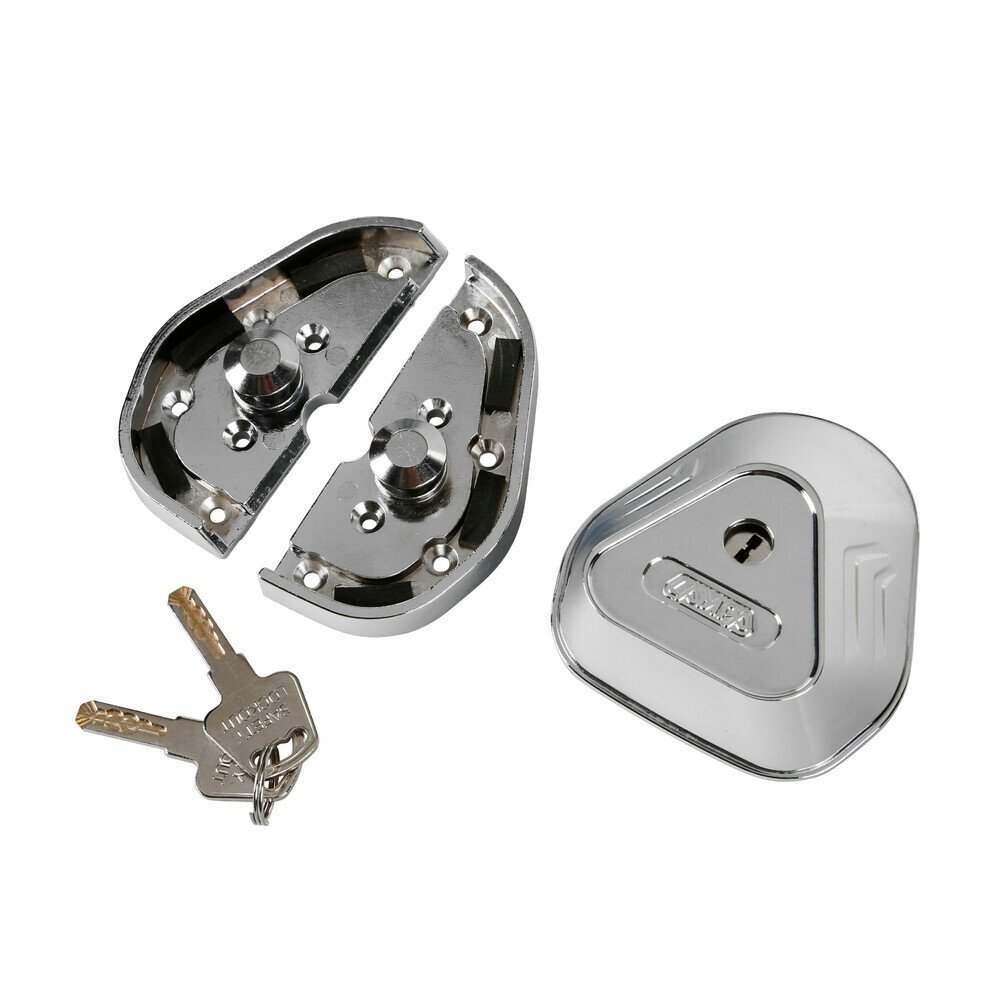
Cargo security in commercial vehicles depends directly on the quality of the locking points, and the Vigilant additional lock kit for commercial vehicles 1 piece represents a technical option adapted for the daily protection of goods. This mechanical device is designed to secure van doors, with specific compatibility determined by the vehicle model, offering a physical barrier that is difficult for unauthorized persons to force.
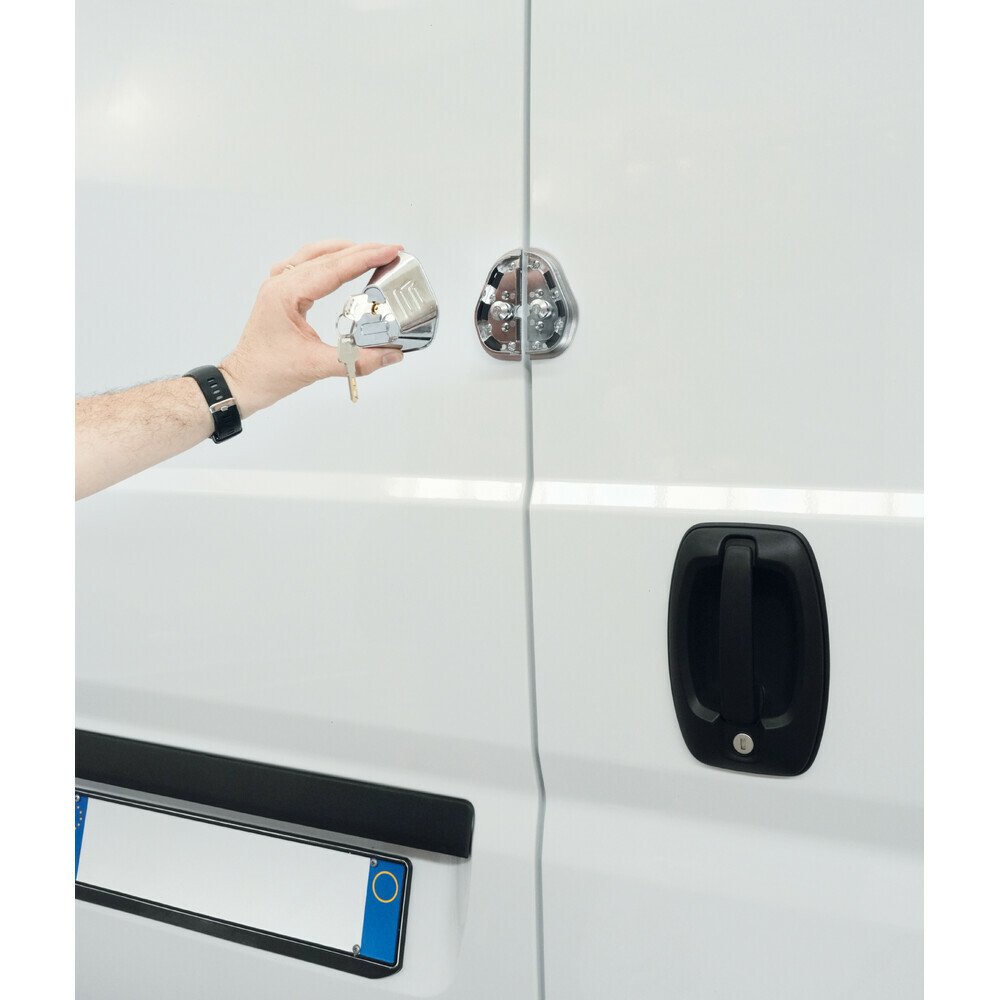
The rigidity of the mounting on the vehicle's metal structure is ensured by the six dedicated mounting points. These work together with the reinforced metal plates included in the package, evenly distributing the force exerted on the bodywork in the event of a break-in attempt and preventing the device from being ripped off. Thanks to this solid anchoring, the Vigilant additional lock maintains its stable position even under intense mechanical shock.
The delivery package contains two keys specially designed to operate the safety cylinder. This feature allows for simple and controlled management of access to the cargo space, being useful for companies that divide their activity between delivery drivers and warehouse staff responsible for loading vehicles. Using these car accessories reduces the risk of material loss during stops in crowded urban areas or unsupervised parking lots, ensuring constant protection for vans.
When is an automatic lock more suitable, or when can we skip installation?
The choice between an automatic and a manual lock depends on the daily dynamics of transport and the specifics of the distributed goods. For express courier operators, who make dozens of stops per hour and frequently open the cargo space, a system with automatic locking upon closing can be more efficient than a manual version, depending on the chosen model. This eliminates the risk of the driver forgetting the door unlocked during a quick delivery. However, this automation requires strict discipline in key management to prevent accidentally locking them inside the vehicle.
Conversely, if a van exclusively transports materials without commercial value or if it only parks in secure private premises and guarded parking lots, the investment in an additional lock can be postponed. In these specific scenarios, the vehicle's factory locking systems provide a sufficient level of protection for the daily routine.
To facilitate the right decision based on the activity profile, the table below compares the two construction approaches available for commercial vehicle security:
Comparison criteria | Automatic locking lock | Manual locking lock |
|---|---|---|
Operating mode | Locks automatically upon slamming the door | Requires active use of the key to lock |
Ideal user profile | Use with frequent stops | Use with rare stops |
Main operational risk | Accidental locking of keys inside | Neglecting to lock when leaving the vehicle |
User task | Requires increased attention to keeping the key | Requires manual operation at every stop |
Correctly evaluating the workflow and the level of risk exposure is the essential step before purchasing an additional lock kit for sliding or swinging doors.
How is the installation performed correctly to ensure maximum efficiency?
Correct installation of an additional lock kit directly determines the level of protection against break-in attempts and the long-term durability of the security system. To guarantee flawless operation and optimal mechanical resistance, the installation process requires strict adherence to a few essential technical steps:
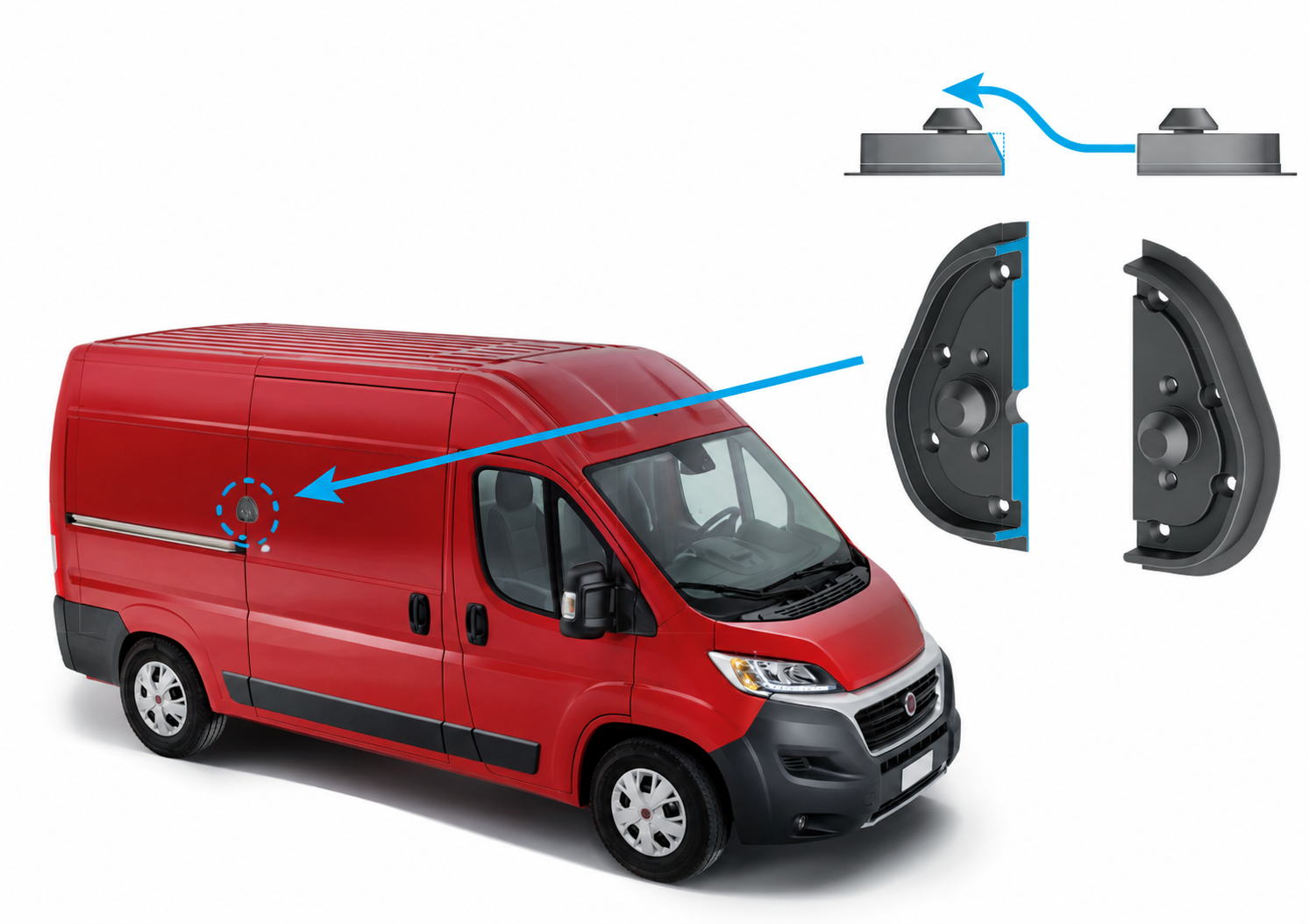
Precise positioning of the mounting plates on the seam line of the rear doors or the side sliding door, ensuring a uniform distance that allows for smooth closing.
Anti-corrosion treatment of the holes made in the bodywork before final tightening of the screws, a critical measure to prevent premature degradation of the steel sheet.
Controlled tightening of the mounting elements with appropriate tools to ensure perfect alignment of the two halves of the additional lock, thus avoiding accidental jamming or premature wear of the cylinder.
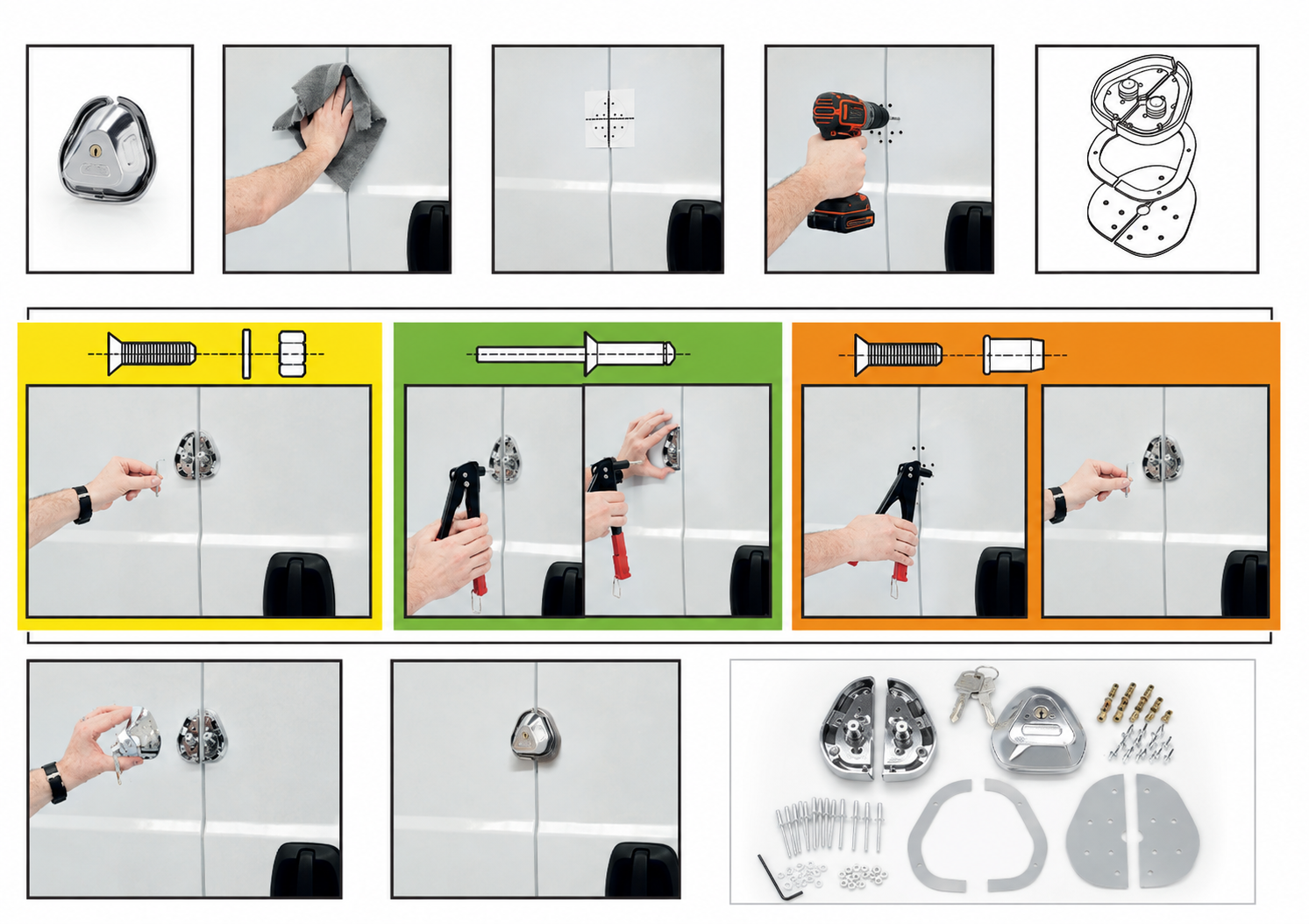
Each of these steps prevents the occurrence of mechanical play that could be exploited by unauthorized persons using levers. Correct alignment ensures that contact points evenly absorb external shocks, maintaining the structural integrity of the commercial vehicle during cargo transport.
Criteria for choosing between active and passive security for vans
The choice of the correct protection system for a commercial vehicle depends directly on the frequency of cargo compartment access and the type of activity performed by the carrier. For urban express distribution, where rear doors are opened dozens of times throughout a single day, an additional lock with automatic locking prevents human errors caused by inattention or haste.
In contrast, for long-distance transport, where unloading is done exclusively at the destination, a system with manual locking offers total control and avoids accidentally locking keys inside the vehicle. However, there are also situations where adding a physical lock is not the best decision, such as in the case of vehicles used occasionally for transporting negligible value goods, where a simple perimeter alarm is sufficient to discourage intruders without requiring mechanical modifications to the bodywork.
Careful evaluation of these work habits ensures an efficient investment, adapted to the real risks in the field.
FAQ
Can the Vigilant kit be mounted on both the rear doors and the side sliding door?
Yes, the design allows for installation on the swinging or sliding doors of commercial vehicles, depending on compatibility with the vehicle's structure.
What happens if someone tries to drill the locking cylinder?
Professional security systems use cylinders with drill protection and reinforced metal plates that deflect the drill bit, preventing rapid opening.
How do we choose between an additional manual lock and an automatic one?
The choice depends on the frequency of deliveries. Manual locking offers total control and prevents accidentally locking keys in the van, while automatic locking is ideal for express courier services.
When should we avoid installing an additional lock on a commercial vehicle?
Installation is not recommended if the metal structure of the doors is already deformed or severely affected by corrosion, as the mounting points will not be able to ensure the necessary resistance against being ripped off.


