



















Bad Smell from the Air Conditioning? Learn How to Clean Your Car’s AC System Properly

Unpleasant smell from the ventilation: how to clean your air conditioning system
Get rid of that car air conditioning smell by properly sanitizing the evaporator. A practical guide to cleaning your automotive air conditioning system.
Key points
Moisture accumulated on the air conditioning evaporator promotes the growth of bacteria and fungi that generate unpleasant odors.
Classic air fresheners only temporarily mask the unpleasant smell without eliminating the organic source of the problem in the ventilation ducts.
Proper treatment of the system requires the use of special aerosols or foam with a tube applied directly to the internal components.
Turning off the air conditioning compressor a few minutes before reaching your destination prevents condensation from forming and odors from returning.
Why does an unpleasant smell appear in the ventilation system?
The appearance of an unpleasant car air conditioning smell is determined by a simple and inevitable physical process that occurs inside the air conditioning system. During system operation, warm and humid air from the outside meets the cold metal surface of the evaporator. This sudden thermal difference generates constant condensation, leaving the metal fins of the part covered with a film of water.
As the vehicle runs, the intake air carries fine particles of dust, pollen, and other organic impurities that manage to pass the physical barrier of the cabin filter. These particles adhere directly to the damp surface of the evaporator, forming a sticky film. This constant accumulation of moisture and organic matter, shielded from sunlight, becomes the ideal environment for the rapid development of colonies of bacteria, mold, and fungi.
The specific smell of stale air, mustiness, or mold, felt immediately after turning on the ventilation, is a direct signal that these microorganisms have actively developed on the evaporator fins. The air blown into the cabin carries vapors and fine particles from this contaminated area, affecting the olfactory comfort inside the vehicle.
How do you determine where the odor problem is coming from?
The source of the unpleasant smell in the cabin directly determines the correct method of intervention, which is why precise diagnosis is the mandatory first step. Often, stale air or a musty scent is confused with a major malfunction, although the problem can be quickly located by observing the moments when the intensity of the smell reaches its peak.
Distinguishing between a clogged cabin filter and deposits on the air conditioning evaporator is done by tracking the system's behavior:
The first seconds after turning on the fan: If the air becomes unbreathable as soon as the ventilation starts working, the main source is the accumulation of impurities and moisture directly on the surface of the cabin filter.
Immediately after turning off the compressor: When the air conditioning is turned off but the fan continues to run, the melted ice on the evaporator promotes the release of heavy odors from the bacteria that have developed on this metal part.
Before resorting to a car air conditioning spray or an air conditioning disinfectant, checking the physical condition of the cabin filter is mandatory. A deformed, damp, or dust- and leaf-clogged filter will block airflow and negate the effectiveness of any subsequent chemical treatment. To effectively solve the problem of a car air conditioning smell, active cleaning of the system must always be combined with installing a clean filter.
Step-by-step system cleaning: how to apply the products correctly?
Sanitizing the air conditioning circuit is efficiently achieved by using dedicated products, applied according to the specific instructions for each format. For quick cabin cleaning, self-releasing aerosols are an accessible and easy-to-use option.
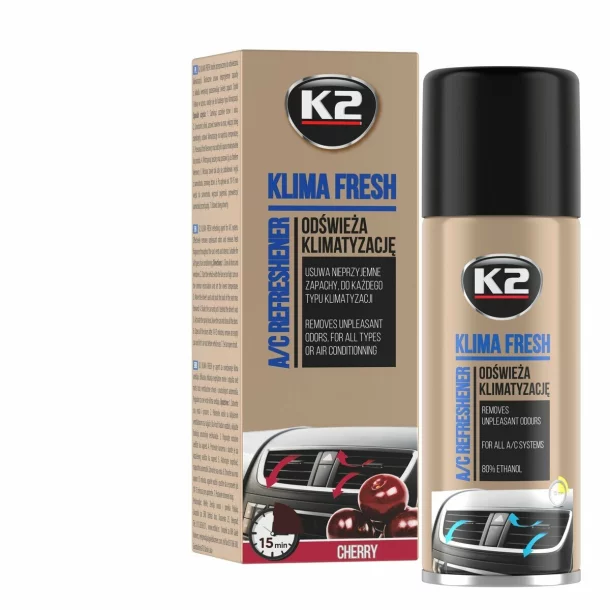
Self-releasing aerosols (auto-trigger spray type): Start the vehicle engine, activate the air conditioning system on the air recirculation mode at maximum intensity, and open the ventilation vents completely. The car air conditioning cleaner spray bottle, such as K2 Klima Fresh or one from the Prevent range, is placed on the car floor, behind the front seats, or in the passenger footwell. Press the canister tab until it locks in the open position, exit the vehicle, and close all doors. The active substance disperses into the cabin for approximately 15 minutes.
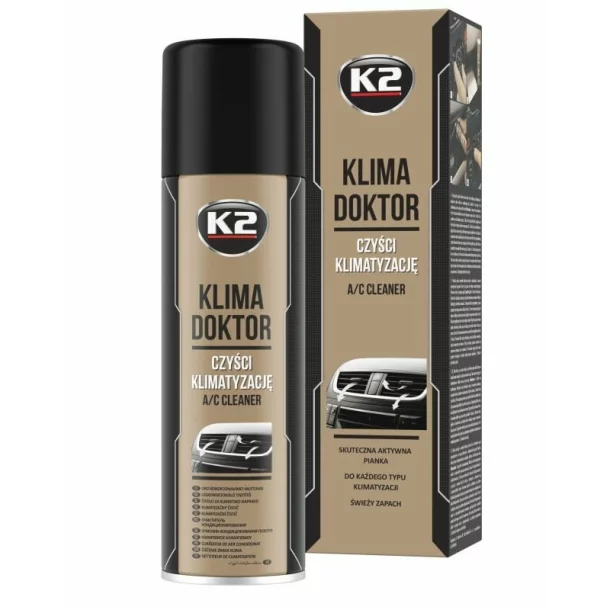
Active foam with direct application: For concentrated action on the air conditioning evaporator, use a foam canister equipped with a long tube, such as K2 Klima Doktor. The applicator tube is inserted deep into the air vents or directly through the condensation drain hole. Spray the foam until it fills the galleries, letting it act according to the time indicated on the packaging to dissolve the deposits.
After the working time for either of the two methods is complete, turn off the engine and open all vehicle doors and windows wide for a complete airing out of at least 15 minutes before driving.
Air conditioning treatment vs. cabin air fresheners: what sets them apart?
Treating the air conditioning and scenting the cabin are two completely different actions; the former eliminates the source of the bacteria, while the latter only masks the unpleasant odors. A car air conditioning disinfectant acts directly on the organic deposits on the air conditioning evaporator, neutralizing the bacteria and fungi that grow in the humid environment. In contrast, a classic car air freshener releases scented compounds that temporarily cover the stale air without stopping the proliferation of microorganisms in the system.
For complete sanitization, choosing the right product depends on the location of the problem and the method of application.
Product type | Main purpose | Mode of action | Recommended use |
|---|---|---|---|
Car AC spray | System cleaning | Aerosol with recirculation or tube | Periodic maintenance or deep cleaning |
AC cleaning foam | Direct duct sanitization | Injection through air vents | Deep cleaning of deposits |
Car air freshener | Ambient scenting | Gradual diffusion in the cabin | Refreshing after disinfection |
When the source of the unpleasant odors has already adhered deep into the car's fabrics, simple car air conditioning cleaning is not enough. In these situations, it is recommended to use complementary professional solutions for cleaning upholstery, capable of breaking down persistent odors that have entered the fibers of the seats and carpets.
What simple habits prevent unpleasant odors from returning?
The formation of bacteria and mold on the air conditioning evaporator can be prevented by applying simple rules for using the ventilation system. The most effective method is turning off the air conditioning about five minutes before the end of the trip, leaving the fan on at a medium speed. This action removes the moisture accumulated on the internal components, completely drying the exposed surfaces and eliminating the environment conducive to the development of microorganisms.
Also, periodically replacing the cabin filter is an essential step in maintaining cabin hygiene. This part retains dust, pollen, and other organic impurities that, in combination with condensation, generate heavy odors.
Periodically using a car air conditioning spray from the Cridem range helps maintain clean and fresh air in the car. These sanitizing products are excellent measures for routine maintenance and prevention, but they do not replace mechanical repairs, physical cleaning of extremely clogged components, or complex interventions in authorized service centers.
FAQ
How does a quick sanitizing spray differ from a foam with a tube in terms of application?
An aerosol of the type K2 KLIMA FRESH 150ml Cherry air conditioning system cleaner and disinfectant spray is placed in the cabin with recirculation turned on and acts on its own via automatic release, while a foam such as K2 Klima Doktor 500ml air conditioning system cleaner spray with tube requires the physical insertion of the application tube directly into the ventilation ducts for localized action.
In what situations is the exclusive use of a sanitizing spray contraindicated for resolving odors?
Chemical treatment should be avoided as a sole solution when the cabin filter is completely clogged with organic debris or when there is a mechanical fault in the condensation drain. In these cases, using a cleaning product will not eliminate the physical source of the problem, and replacing the filter or visiting a specialized car service is necessary.
How can you verify if the air conditioning system cleaning treatment worked correctly?
The effectiveness of the procedure is confirmed by the complete disappearance of the heavy, stale, or musty smell when turning on the fan to cold air. The air blown into the cabin should remain completely neutral or present only the subtle scent of the variant used, without any trace of residual pungent odor.
What product is recommended if the source of the unpleasant smell comes from the car upholstery and not the air ducts?
If the source of the smell is located in the fabrics and not in the air conditioning, it is recommended to use a product dedicated to textile surfaces, such as K2 Tapis 600ml upholstery cleaner spray, which dissolves dirt and neutralizes odors in the fibers, unlike some aerosols that are designed for the airflow in the ducts.
What is the main reason why the unpleasant smell returns shortly after using a sanitizing aerosol?
This problem usually occurs due to the massive accumulation of impurities on the evaporator that cannot be completely dissolved by just a 150ml quick aerosol, such as Prevent 150ml air conditioning system cleaner aerosol. For severe accumulations, deep cleaning with active foam or dismantling the components in a specialized workshop is necessary.


