



















Wheel Bolts – The Complete Guide to Choosing and Installing Them Safely

Wheel Bolts – How to Choose the Right Type for Safe Wheel Installation
Proper wheel installation does not depend only on the wheel size or the tightening torque applied. Wheel bolts play an equally important role. Although they may seem like simple components, they are essential for the safety, stability, and durability of the wheel-to-hub assembly. Choosing an incompatible bolt can lead to improper fastening, vibrations, premature wear, or even wheel detachment in extreme situations.
In this guide, you will learn about the main types of wheel bolts, when each type should be used, and the difference between standard wheel bolts and the longer Pilot Lampa Italy wheel bolts, which are recommended for installations using wheel spacers.
Why Are Wheel Bolts Important?
Wheel bolts secure the wheel to the hub and safely transfer all the forces generated during acceleration, braking, and cornering. They must be manufactured from high-strength, heat-treated steel with corrosion protection to withstand heavy mechanical loads and harsh operating conditions.
In addition to strength, compatibility is equally important:
the wheel seat type (conical, spherical, or flat);
thread size;
thread length;
the intended application (standard wheel or wheel combined with a spacer).
Using the wrong wheel bolt can reduce the contact area between the wheel and the hub, affecting load distribution and compromising safety.
The Most Common Types of Wheel Bolts
Depending on the wheel seat design and intended application, several wheel bolt designs are available.
Conical Wheel Bolts
Conical wheel bolts are the most common type and are used on both OEM wheels and most aftermarket alloy wheels. The standard 60° tapered seat automatically centers the wheel during installation and ensures even pressure distribution.
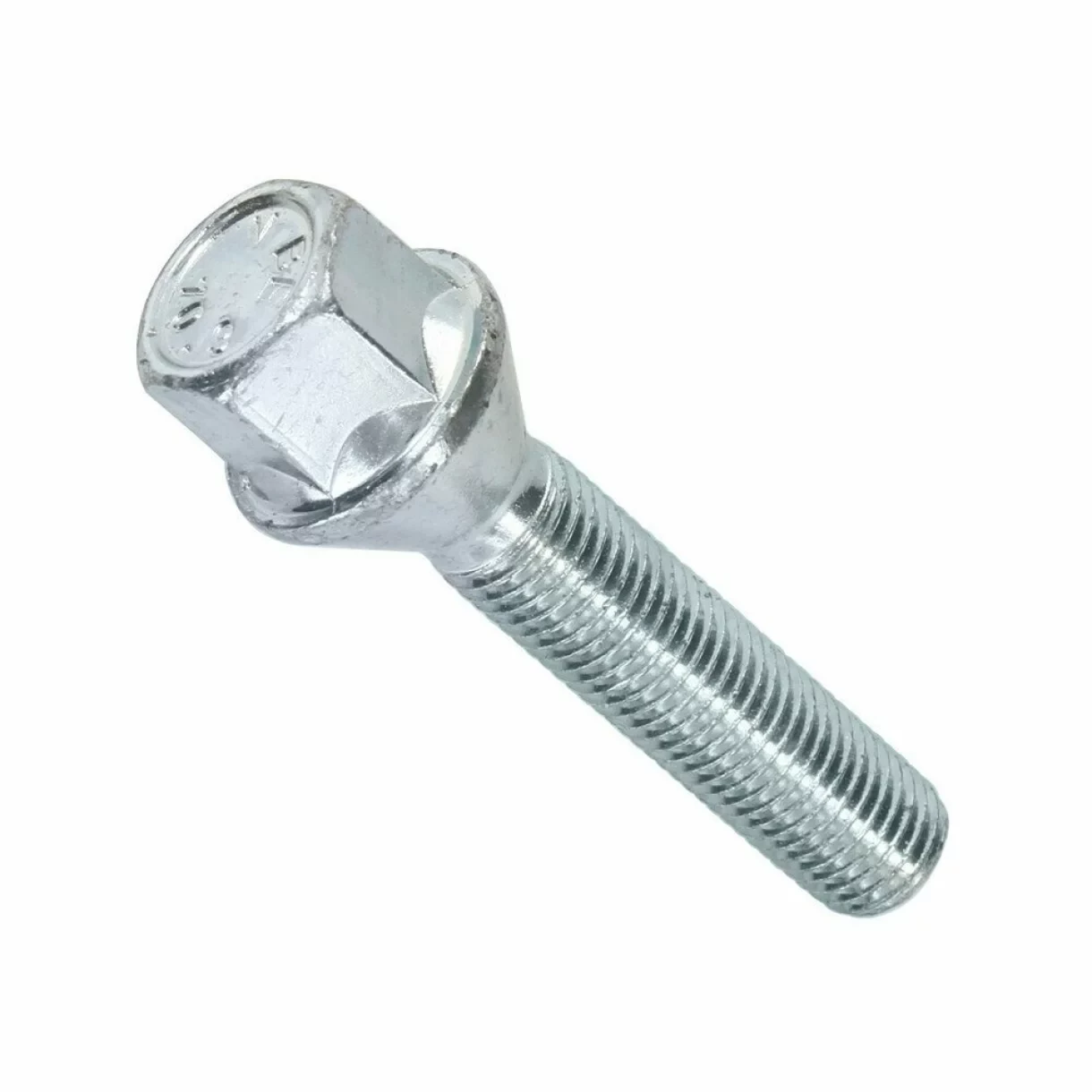
Sets typically include 10 wheel bolts manufactured from heat-treated steel with corrosion protection and a standard hex head for easy installation. They are available with different thread sizes such as M12x1.5 or M12x1.25, depending on the vehicle.
Spherical Wheel Bolts
Some original equipment wheels use a spherical (radius) seat and therefore require dedicated spherical wheel bolts. These distribute the clamping force evenly and reduce the risk of wheel deformation.
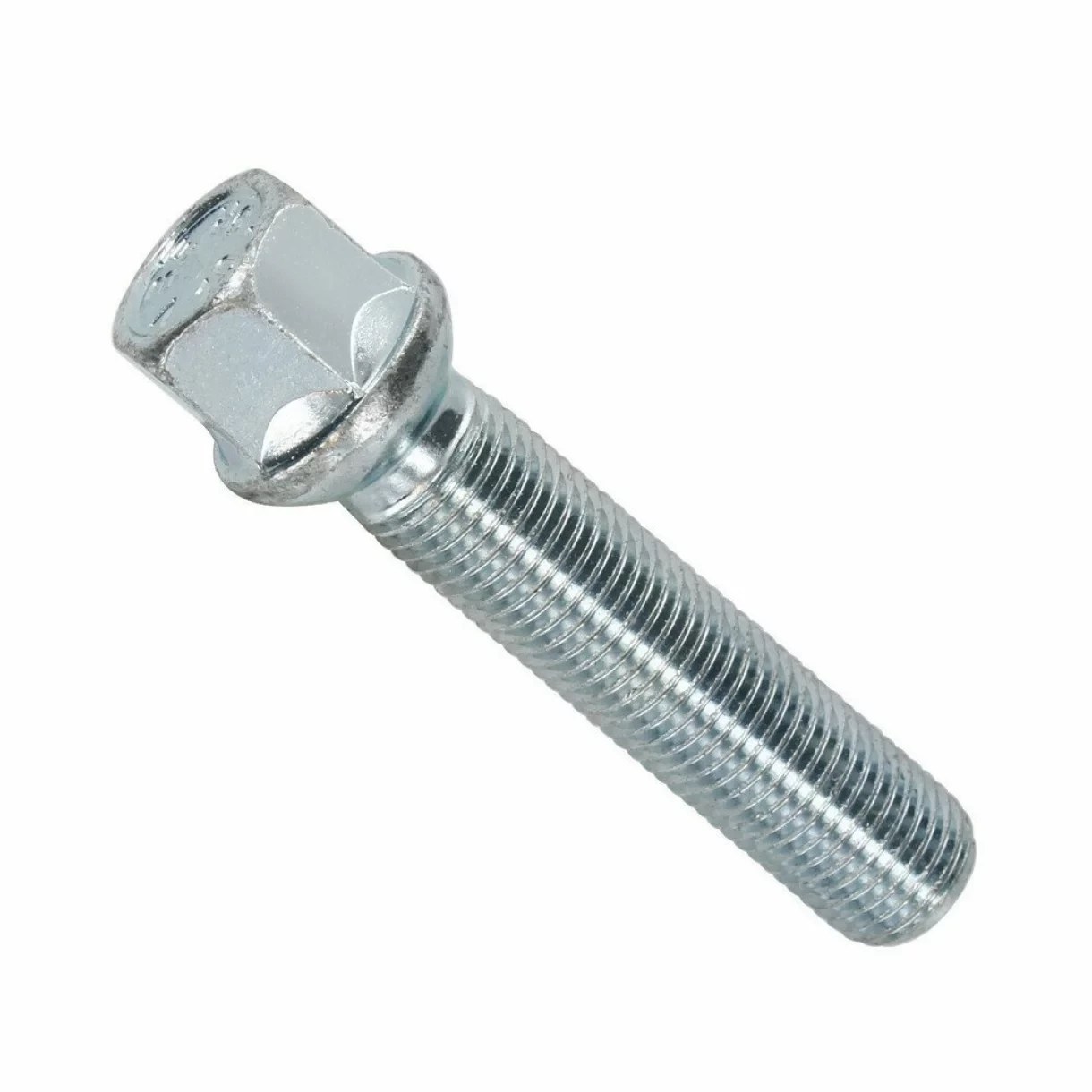
They are commonly found on many European vehicles and provide the same high level of strength as conical wheel bolts. The only difference is the contact surface geometry.
Available with various thread sizes and hex head dimensions, they are the correct choice for wheels designed with a spherical seat.
Short Conical Wheel Bolts
Some aftermarket or performance wheels feature deep bolt recesses or limited space around the mounting holes. In these situations, short conical wheel bolts are recommended.
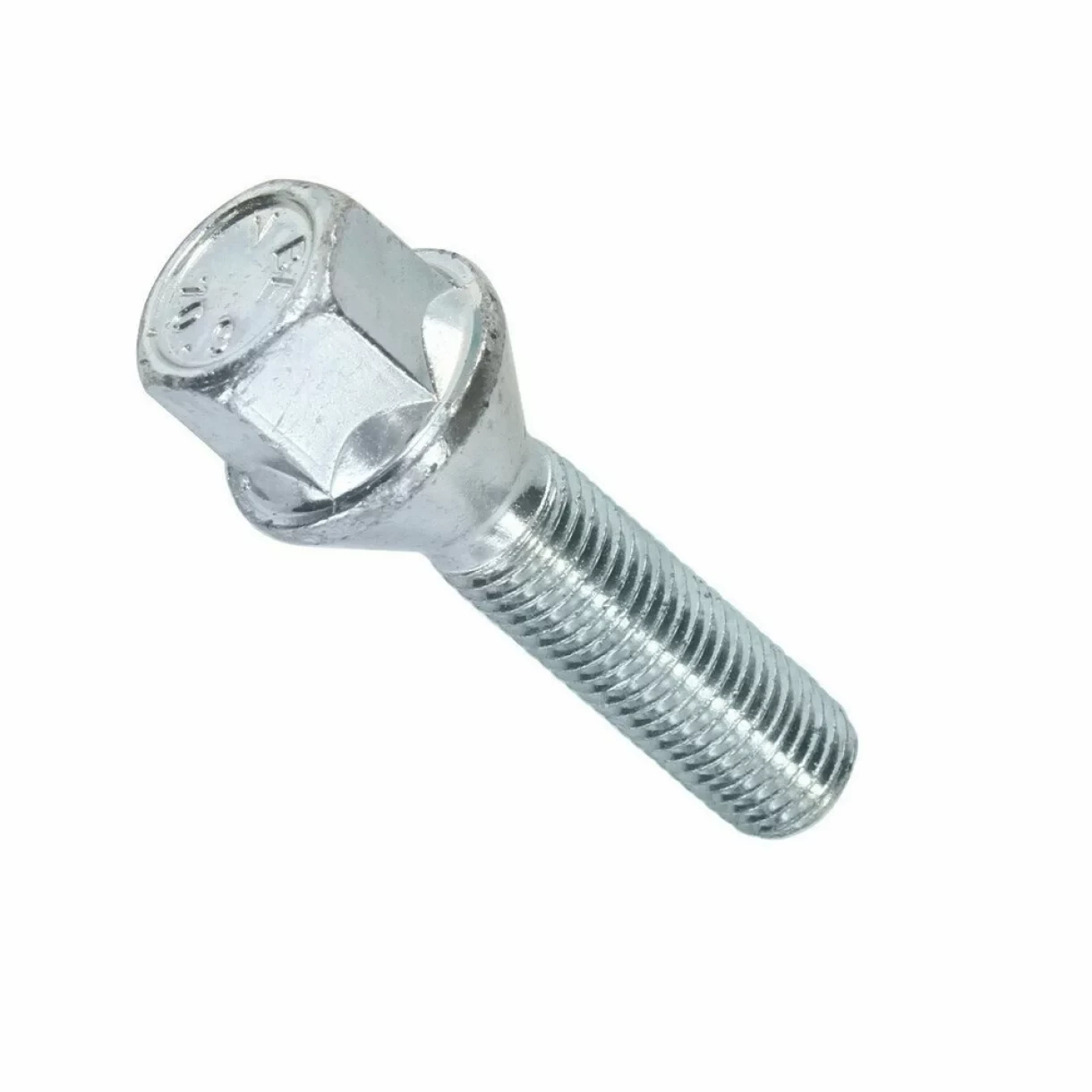
Their reduced length provides a clean and flush appearance without protruding beyond the wheel surface. From a functional standpoint, they offer the same strength and safety as standard conical wheel bolts, with the only difference being their overall length.
Flat Seat Wheel Bolts with Washers
Certain original equipment wheels require flat seat wheel bolts equipped with floating washers.
This design distributes the clamping force evenly across the wheel surface and minimizes localized stress. They are commonly used on various Renault, Peugeot, Citroën, and other vehicles designed with flat seat wheels.
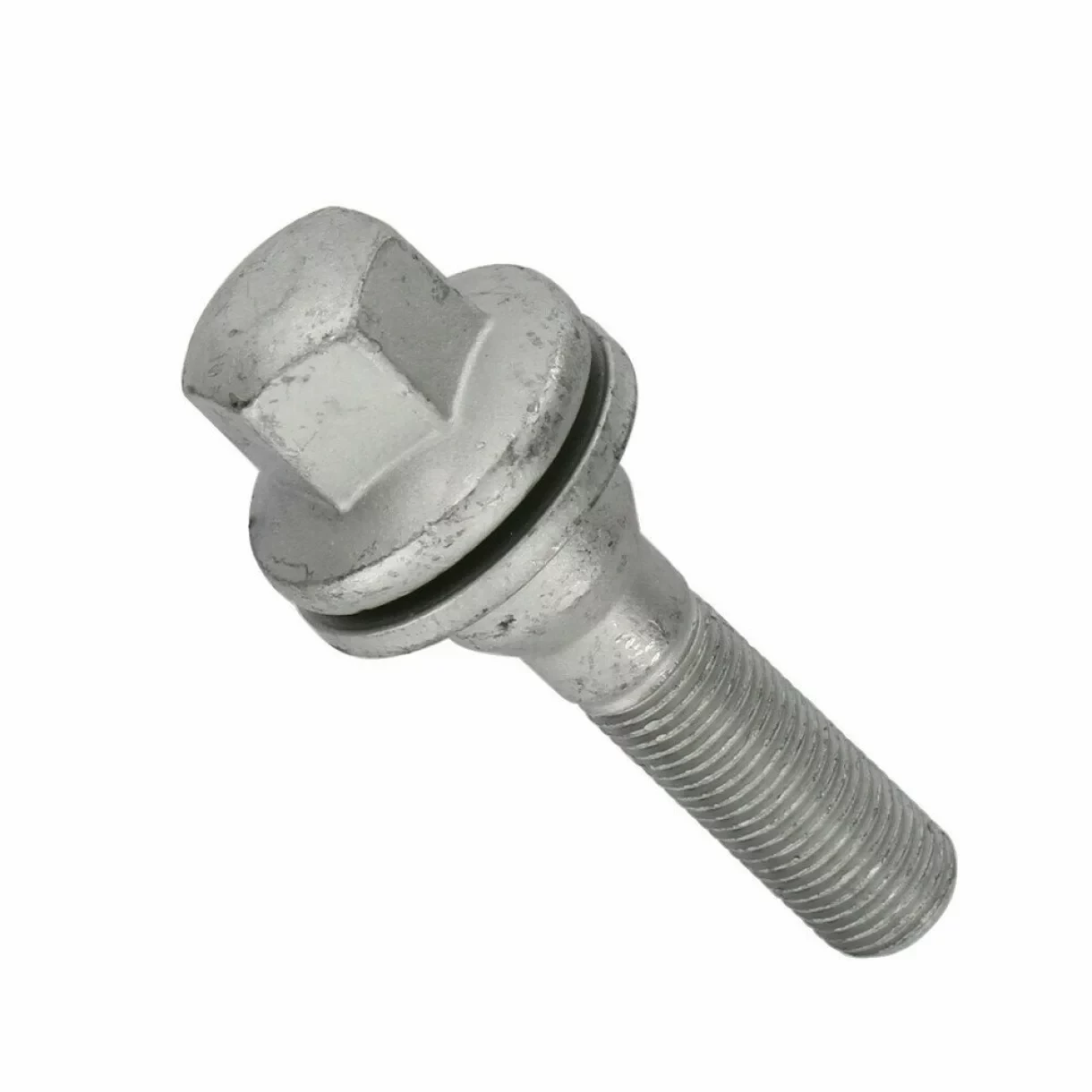
Using conical or spherical wheel bolts on a flat seat wheel is incorrect and may compromise wheel retention.
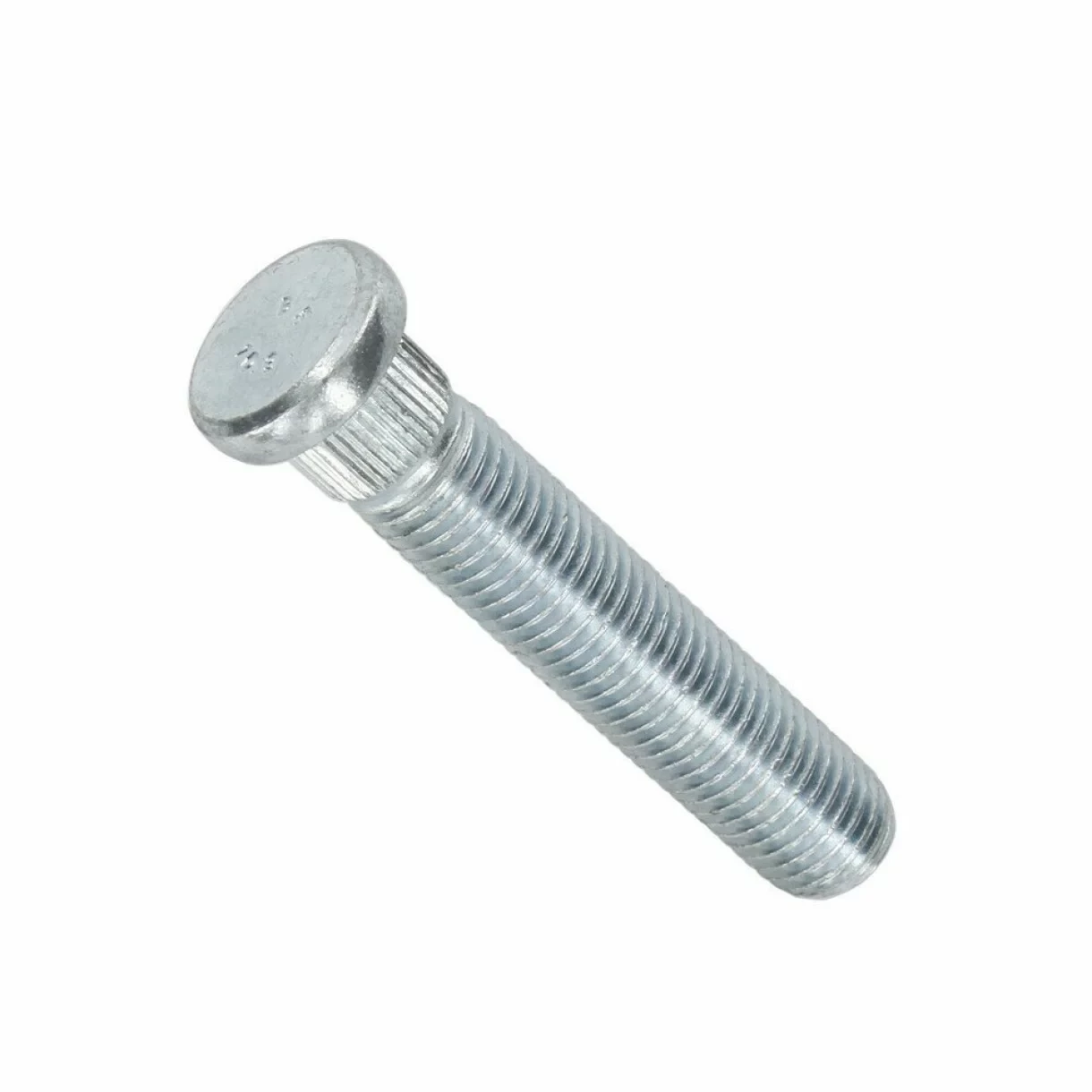
Knurled Wheel Studs
Unlike conventional wheel bolts, knurled wheel studs are not threaded directly into the hub. Instead, they are press-fitted into the hub using specially designed knurled splines.
Once installed, they remain permanently mounted in the hub, allowing the wheel to be secured with lug nuts. They are commonly used on Japanese vehicles, commercial vehicles, SUVs, and off-road applications.
Installation should be performed using a hydraulic press or appropriate equipment to prevent damage to the hub or stud.
The Difference Between Standard Wheel Bolts and Pilot Lampa Italy Wheel Bolts
Although all the wheel bolt types described above perform the same function and are available in conical, spherical, or flat seat versions, there is one important difference between the Pilot Lampa Italy range and many standard wheel bolts available on the market.
Pilot Lampa Italy Wheel Bolts Are Longer
One of the biggest advantages of Pilot Lampa Italy wheel bolts is their increased thread length.
This allows them to be used together with wheel spacers, as sufficient thread engagement remains after installing the spacer to securely fasten the wheel.
As a result, the same wheel bolt can safely secure:
hub + wheel spacer + wheel;
hub + wheel without a spacer.
This makes them particularly popular among tuning enthusiasts and drivers who install wheel spacers to improve track width or enhance the vehicle's appearance.
Standard Wheel Bolts Are Shorter
Most standard wheel bolts available on the market are designed exclusively for mounting the wheel directly to the hub.
They are ideal when wheel spacers are not used. However, when a spacer is installed, the remaining thread engagement may no longer be sufficient for safe fastening.
For this reason, standard wheel bolts should only be used with wheel spacers if the remaining thread engagement complies with the vehicle manufacturer's specifications and provides the minimum required number of engaged threads.
In summary:
Pilot Lampa Italy wheel bolts: long enough to securely fasten a wheel with or without wheel spacers.
Standard wheel bolts: primarily designed for direct wheel installation without spacers.
Apart from their length, both categories provide the same functionality and are available in conical, spherical, flat seat, or specialty versions depending on the application.
How to Choose the Right Wheel Bolt
Before purchasing, you should verify several key specifications:
wheel seat type (conical, spherical, or flat);
thread size (M12x1.5, M12x1.25, M14x1.5, etc.);
required thread length;
hex head size;
whether wheel spacers are used.
If your vehicle is equipped with wheel spacers, choosing a longer wheel bolt, such as those manufactured by Pilot Lampa Italy, is the recommended solution for maintaining safe wheel retention.
Proper Wheel Bolt Installation
Regardless of the wheel bolt selected, installation should always follow the vehicle manufacturer's recommendations.
It is recommended to:
clean the hub threads;
verify compatibility between the wheel bolt and the wheel;
tighten the bolts using a crisscross pattern;
use a torque wrench;
apply the tightening torque specified by the vehicle manufacturer;
recheck the torque after approximately 50–100 km following a new installation.
These procedures help prevent wheel loosening and ensure long-term fastening security.
Conclusion
Wheel bolts are critical safety components for every vehicle. Choosing the correct type—conical, spherical, flat seat, or knurled—should always be based on the wheel design and the vehicle manufacturer's specifications.
For drivers using or planning to install wheel spacers, Pilot Lampa Italy wheel bolts are an excellent choice thanks to their increased length, allowing safe installation both with and without spacers. Standard wheel bolts, on the other hand, are ideal for conventional direct wheel mounting.
By investing in high-quality wheel bolts and selecting the correct model for your vehicle and wheels, you ensure safe installation, longer component lifespan, and reliable driving performance.
❓ Frequently Asked Questions (FAQ)
❓ What is the difference between conical and spherical wheel bolts?
The difference lies in the contact surface with the wheel. Conical wheel bolts use a 60° tapered seat, while spherical wheel bolts feature a rounded (radius) seat. The wheel bolt type must always match the wheel design.
❓ Can I use conical wheel bolts on a wheel with a spherical seat?
No. Using the wrong type of wheel bolt can reduce the contact surface, cause vibrations, and damage the wheel.
❓ Why are Pilot Lampa Italy wheel bolts longer?
They are designed to be used both for standard wheel installation and together with wheel spacers, providing sufficient thread engagement for safe fastening.
❓ Can I install wheel spacers using standard wheel bolts?
It depends on the spacer thickness and the available thread length. In many cases, longer wheel bolts, such as those from the Pilot Lampa Italy range, are required.
❓ Which thread size should I choose?
The thread size depends on the vehicle manufacturer. The most common options are M12x1.5, M12x1.25, and M14x1.5. Always verify your vehicle's specifications before ordering.
❓ Are these wheel bolts compatible with both alloy and steel wheels?
Yes, provided that the seat type and dimensions are correct. Compatibility is determined by the wheel geometry, not by the wheel material.
❓ When are knurled wheel studs required?
They are used on vehicles that feature press-fit wheel studs installed in the hub and lug nuts for wheel fastening. They are commonly found on Japanese vehicles, commercial vehicles, and off-road applications.


