



















Effective Sun Protection for Your Car: Complete Guide to Front Windshield Sun Shades

Protect your vehicle interior with effective car sunshades
Discover how to choose effective car sunshades to reduce the temperature inside your car and protect the dashboard against harmful UV rays.
Key points
Using car sunshades significantly reduces the temperature in the cabin during prolonged exposure to the sun.
Materials with multi-layer thermal reflection and foam thermal insulation provide an effective barrier against UV radiation.
The correct size of the sunshade is essential to ensure complete coverage of the windshield and prevent dashboard degradation.
Complete sets that include protection for the windshield, rear window, and side windows provide uniform shading for the entire car interior.
Reducing cabin temperature with car sunshades
Using car sunshades is an effective method for controlling the microclimate in the cabin during hot periods. Direct exposure of the windshield to solar rays turns the car interior into a thermal trap during the summer, causing excessive heating of the air and internal surfaces.
Installing a reflective accessory on the window blocks infrared radiation before it penetrates the plastic materials of the dashboard, effectively protecting plastic elements and upholstery against premature degradation. By stopping heat accumulation in materials, the interior air temperature remains considerably lower.
Maintaining a low temperature reduces the strain on the air conditioning system when starting the vehicle. The climate control no longer has to compensate for a mass of overheated air, which optimizes fuel consumption and protects the mechanical components of the cooling system. For complete protection, drivers can opt for solutions adapted to different areas of the vehicle:
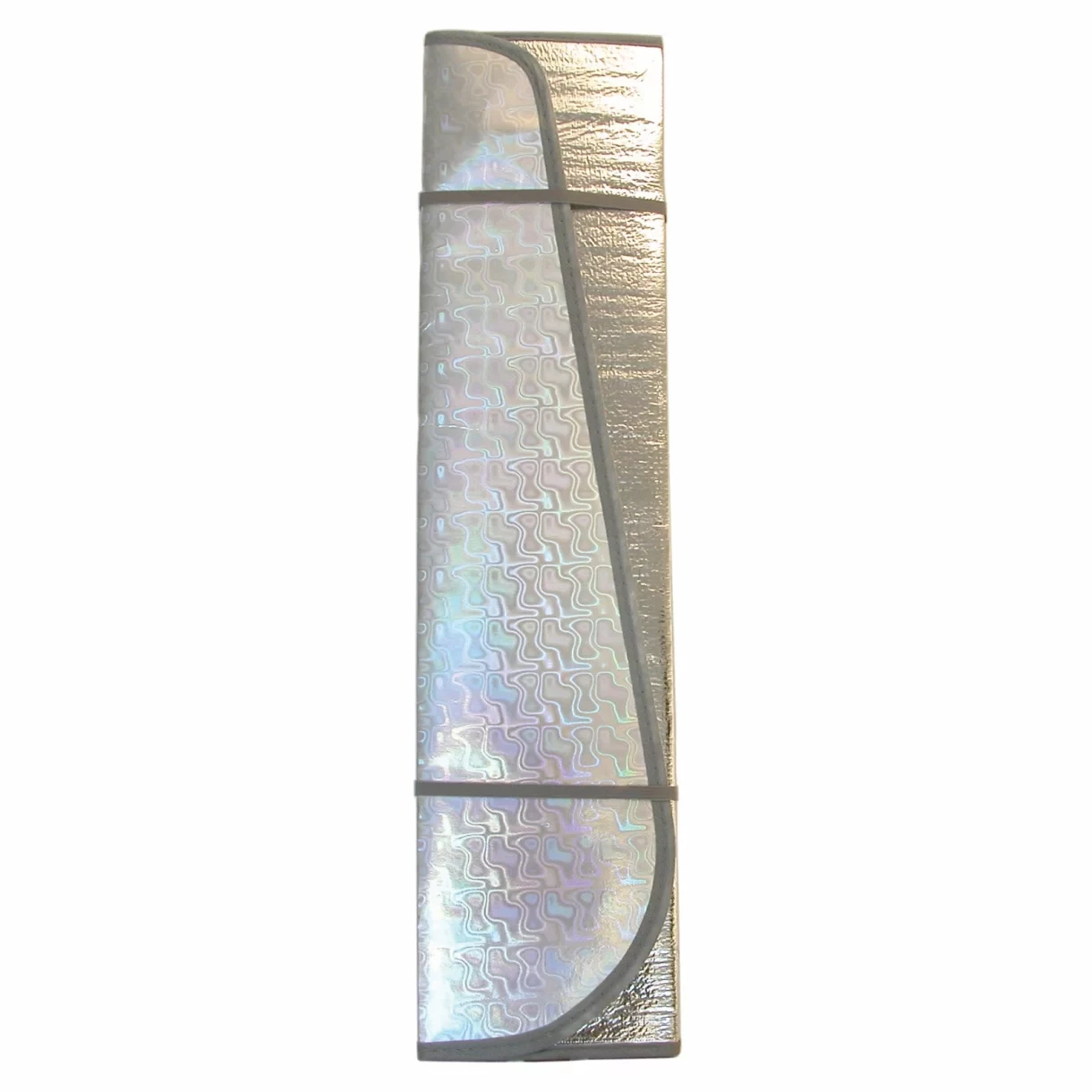
Front protection: Laser Sun front sunshade - 60x145cm - M offers an effective reflective barrier for the windshield.
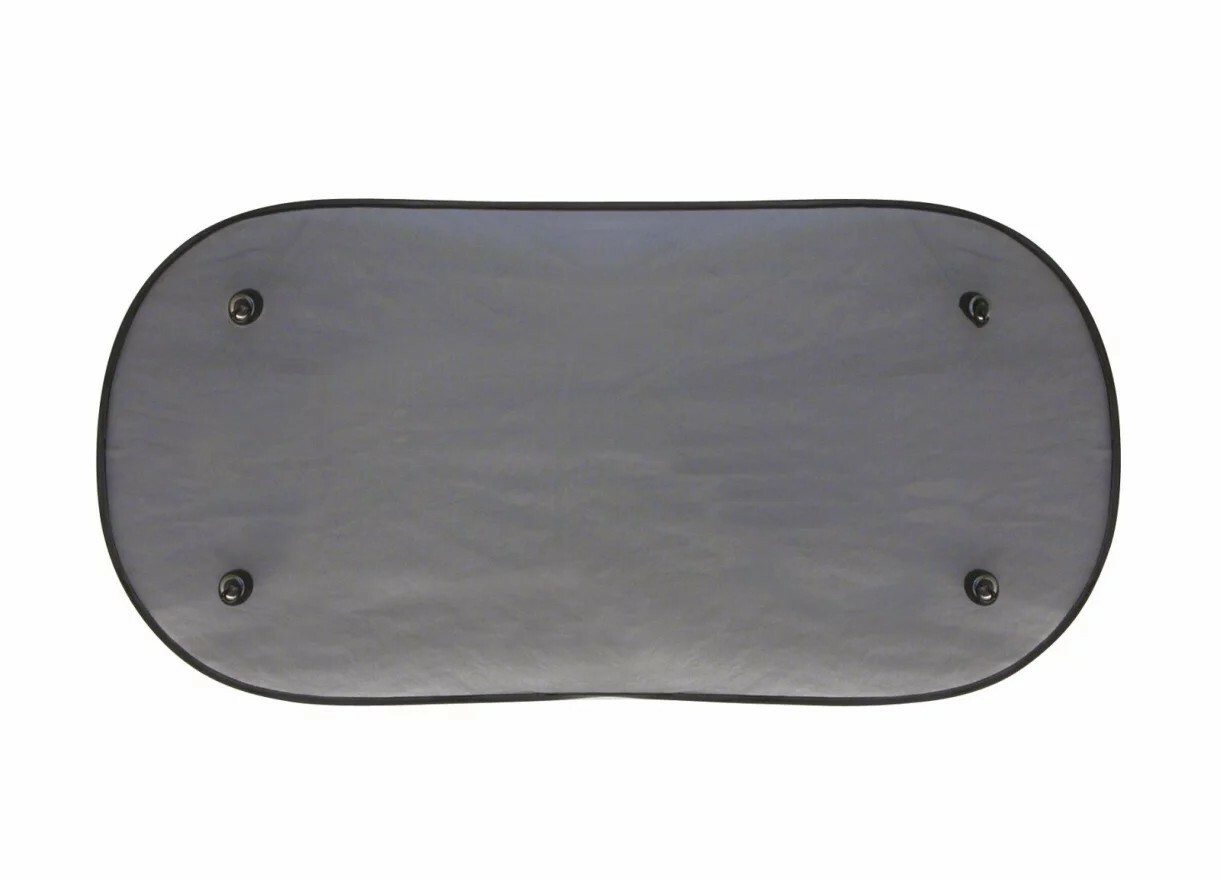
Rear protection: Carpoint rear sunshade with suction cups - 50x100cm protects the rear window area against direct light penetration.
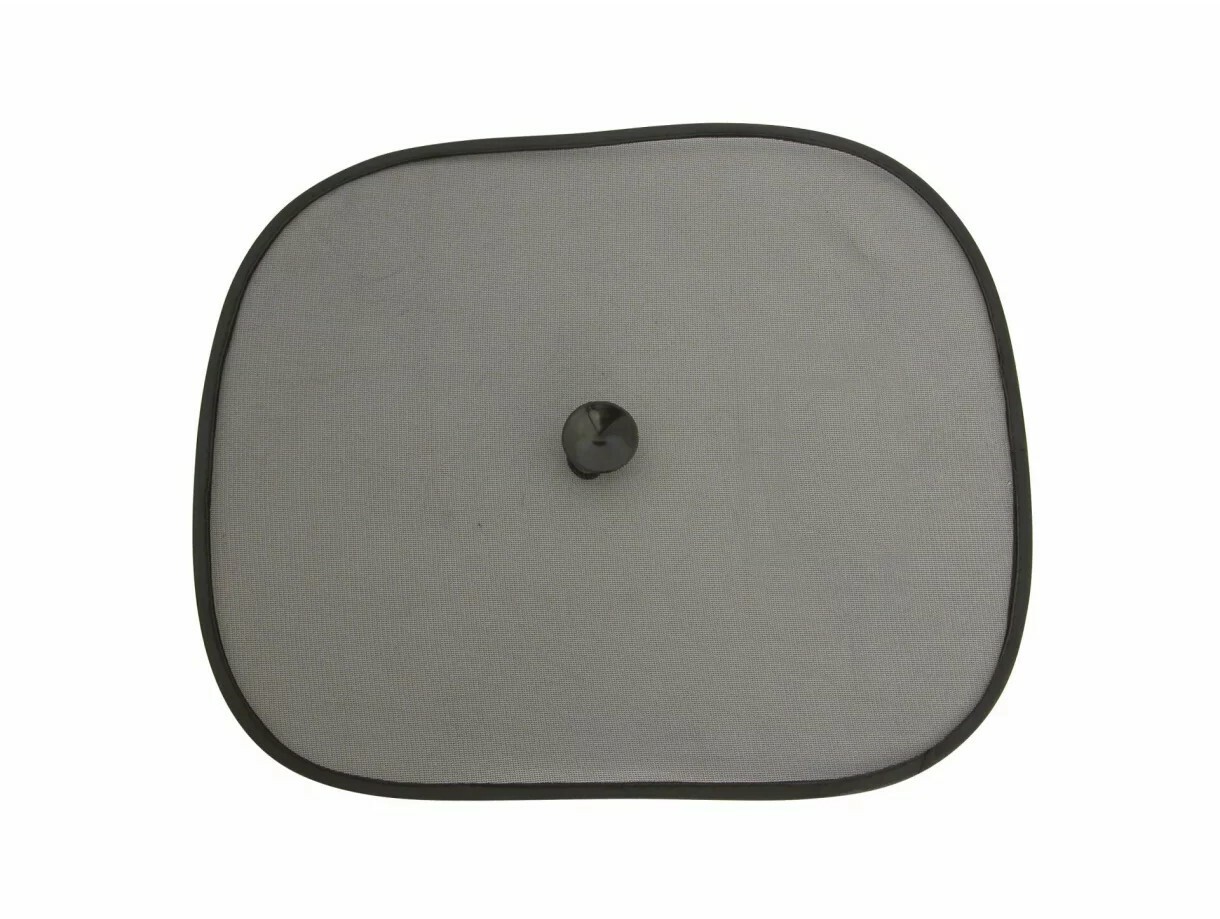
Side protection: Molly Contour side sunshades 45x65cm and Carpoint black side sunshades with suction cup limit heat penetration through the door windows.
Protecting car interior materials against UV degradation
Ultraviolet radiation constantly degrades the chemical structure of materials in the cabin, directly affecting their appearance and integrity. Prolonged exposure to the sun gradually destroys pigments in fabrics and diminishes the elasticity of polymers in the composition of plastic elements, which leads to fading and brittleness.
the dashboard is the most exposed element in the entire cabin, being directly subjected to the action of solar rays through the windshield. This continuous exposure generates extreme temperatures that favor surface fading, the appearance of cracks in the plastic material, and even structural deformation of joining components.
Constant use of car sunshades effectively blocks the direct penetration of harmful radiation when the vehicle remains parked. This simple preventive measure preserves the original appearance of the upholstery and dashboard, protecting the resale value of the vehicle in the long term.
Umbrella-style sunshade vs. classic foldable sunshade: efficiency and installation
The main difference between an umbrella-style sunshade and a classic foldable model lies in the attachment system and the efficiency of space usage.
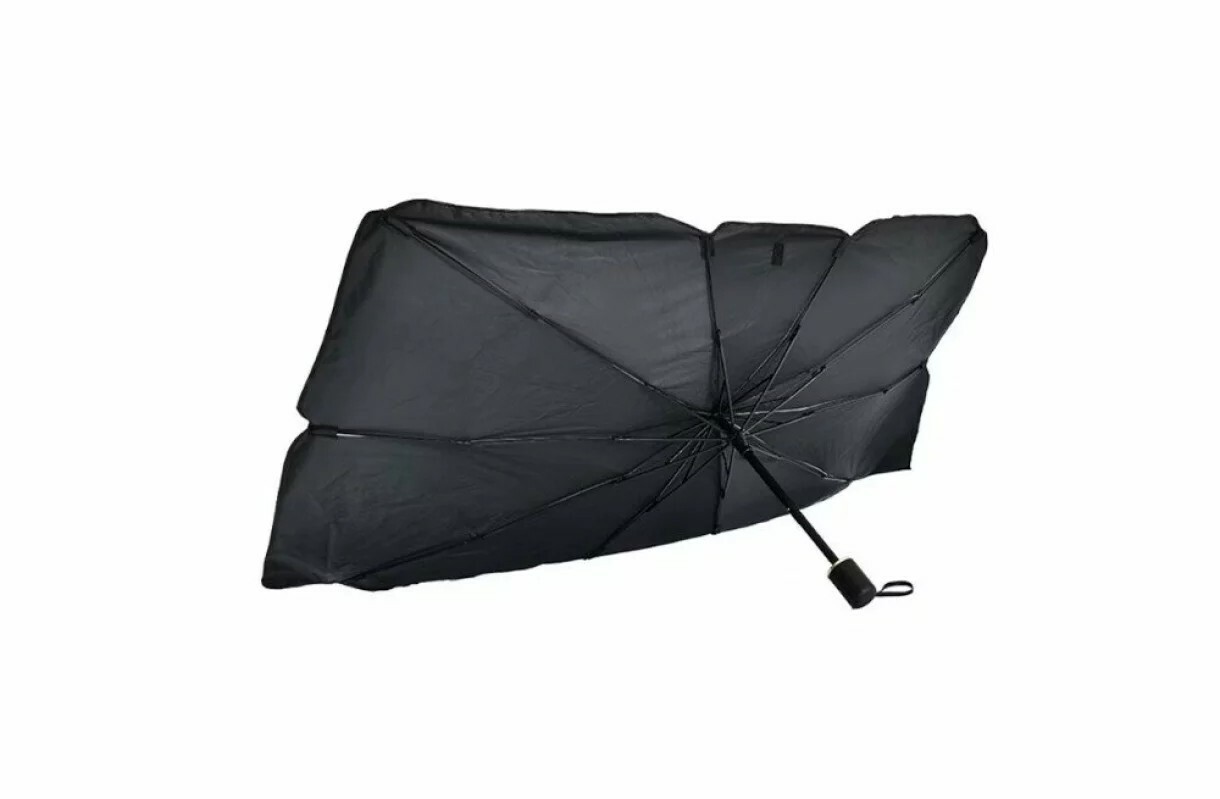
The umbrella-style model uses a quick-opening system that allows for a firm attachment directly to the windshield, completely eliminating the need for additional suction cups that can detach due to heat. The metal structure of the umbrella ensures superior stability on the window, unlike classic foldable models that require support from the car's sun visors or depend exclusively on suction cups to remain positioned correctly.
In addition, these modern car sunshades offer a major advantage in terms of storage. The UV-protective textile material of the umbrella folds extremely compactly, allowing for quick storage and minimal space usage in the door pocket or glove box, unlike classic cardboard or reflective foil versions that remain bulky and difficult to integrate into the cabin.
Choosing the right size for the windshield according to class
Choosing the correct size for car sunshades directly determines the efficiency of thermal protection, as the performance of these accessories depends on covering the entire glazed surface of the vehicle. A screen that is too small leaves open areas through which solar radiation penetrates and heats the cabin, canceling out the benefits of the reflective material.
For small or compact class cars, where the windshield has reduced dimensions, it is recommended to use models adapted to these proportions. A suitable example for this category is Diamant - Reflex front sunshade - 60x110cm - S, which ensures a precise fit without folding unattractively.
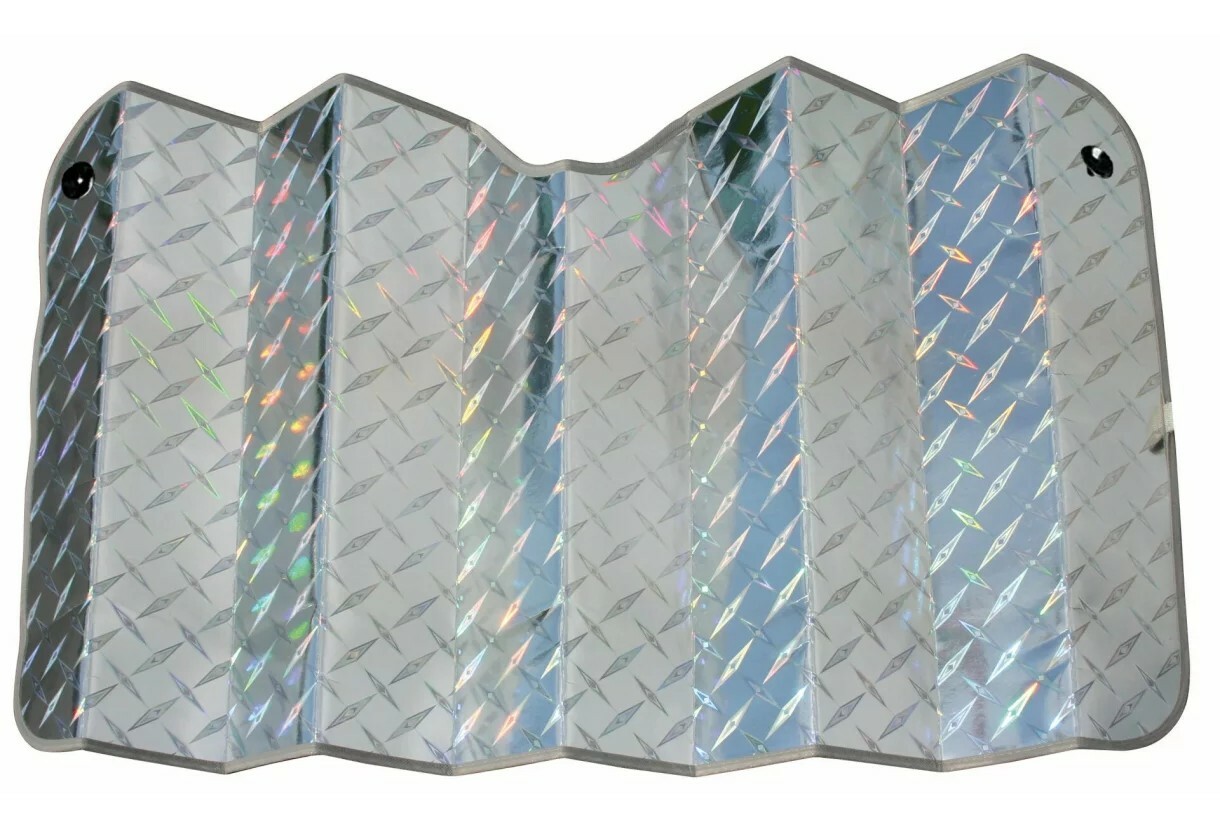
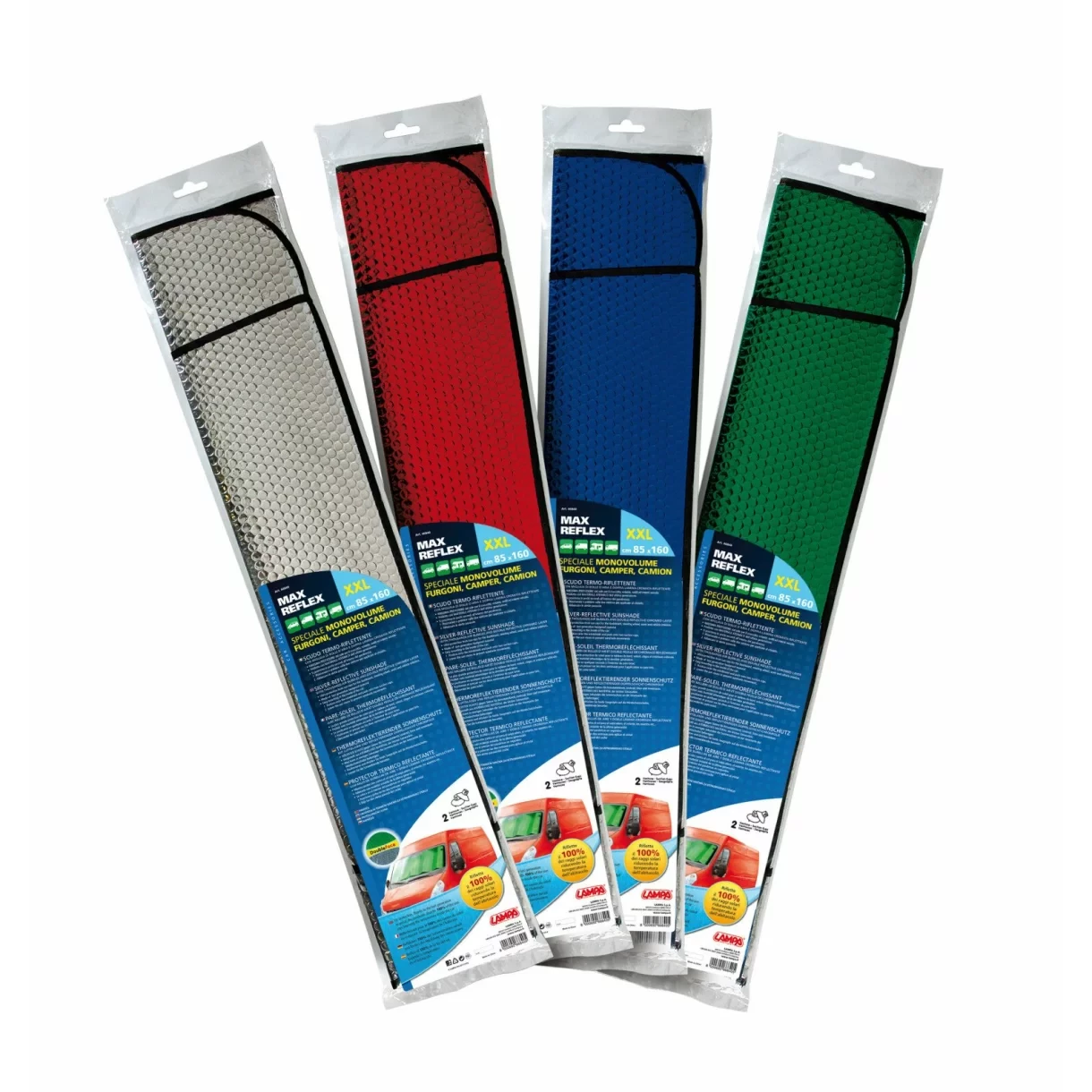
In contrast, bulky SUV or minivan vehicles are equipped with generous windshields that require extended coverage. In these cases, using a large screen, such as the Max-Reflex front sunshade - 85x160cm - XXL, guarantees effective blocking of solar rays over the entire available surface. To ensure optimal compatibility, it is recommended to measure the windshield before purchase and compare the data obtained with the dimensions specified on the product packaging.
Ensuring complete protection through sets and side accessories
Complete protection against solar radiation requires a perimeter approach to the glazed surfaces, as covering only the windshield leaves the side windows and rear window exposed, allowing heat to continue to penetrate the cabin. To effectively block thermal radiation, using a complete package or individual sunshades represents a solution for maintaining a low temperature inside the vehicle.
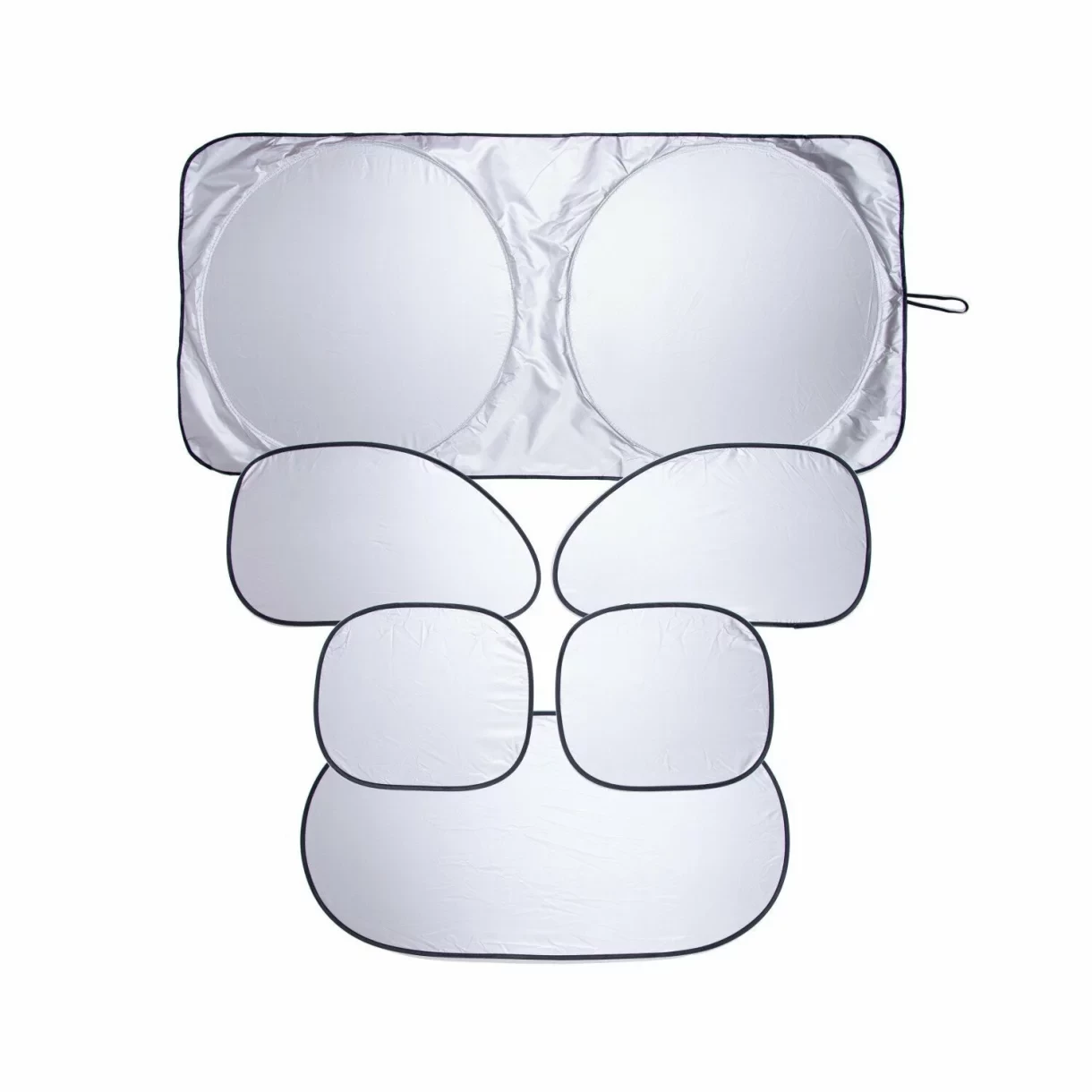
Such an integrated package is represented by the 4Cars large elastic car sunshade set - 1x Front 150x70 cm 1x Rear 4x Side, which includes one sunshade for the front, one for the rear window, and four pieces intended for the side windows. This configuration ensures a protective barrier all around the car, limiting excessive heating of the air in the cabin and protecting plastic elements or upholstery against premature degradation caused by prolonged exposure to the sun.
Dedicated accessories for the rear windows play an essential role during trips, offering thermal and visual comfort to passengers. These elements protect children from direct sunlight and reduce blinding glare without completely obstructing visibility to the outside. By installing car sunshades on every window, the air conditioning works more efficiently, lowering the energy consumption required for climate control.
FAQ
How does a car sun shade help reduce fuel consumption?
By keeping the interior cooler while the vehicle is parked, the air conditioning system can operate at a lower intensity after starting the car, thereby reducing initial fuel consumption.
What are the advantages of multi-layer heat-reflective material?
This material reflects sunlight thanks to its silver outer layer and thermally insulates the interior with the help of an internal foam layer, preventing heat transfer through the windshield.
How are side window sun shades correctly attached to the car windows?
Side window sun shades can be quickly attached using the suction cups included in the package or with elastic edges that fit around the door frame, ensuring stability while the vehicle is parked.
Can I use a sun shade that is larger than my windshield?
A sun shade that is too large will bend excessively and may not stay properly in place, leaving areas uncovered or potentially falling away from the windshield. For this reason, measuring the windshield beforehand is recommended.
How should I store the car sun shade when it is not in use?
Foldable models can be folded like an accordion or rolled up and secured with their integrated elastic straps, while umbrella-style models can be folded into their textile storage case and kept in the door pocket.


