



















Securing Loads: Ratchet Straps, Cords and Anchor Rings

Load securing: a safety guide for transport
Technical guide on load securing. Learn the differences between straps, cords, and rings, how to interpret labels, and the rules for proper anchoring.
Key points
The choice of load securing accessories should be based on the nominal lashing capacity and not directly on the gross weight of the transported object.
Ratchet straps provide active securing through rigid tensioning, while elastic cords are used for securing luggage and come with various attachment types, including hooks, carabiners, or no fasteners at all.
Load anchoring must be performed exclusively at approved structural points, avoiding fragile bodywork elements or suspension components.
Straps or ropes intended for vehicle towing operate under a different elasticity regime and must never be used for securing cargo.
Strap, cord, or ring: how does the role of each accessory differ?
For safe load securing, the choice of the right accessory depends directly on how it acts upon the cargo. A ratchet lashing strap or a cam buckle lashing strap is specifically designed to generate an active pre-tensioning force, which firmly presses goods onto the transport platform or structurally locks them to prevent any movement.
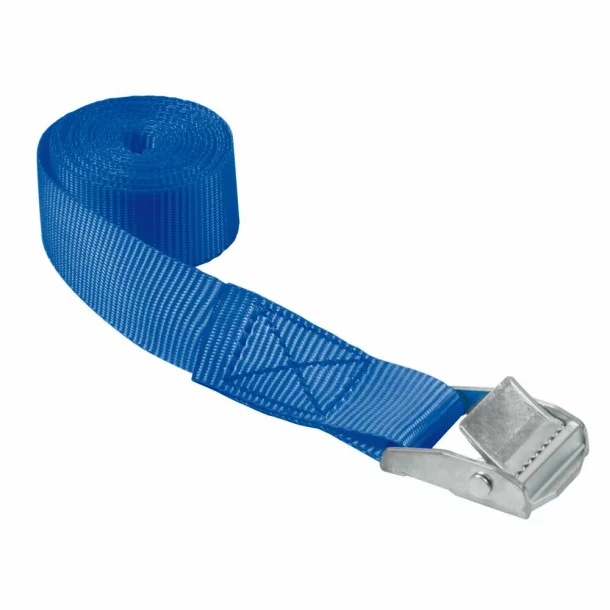
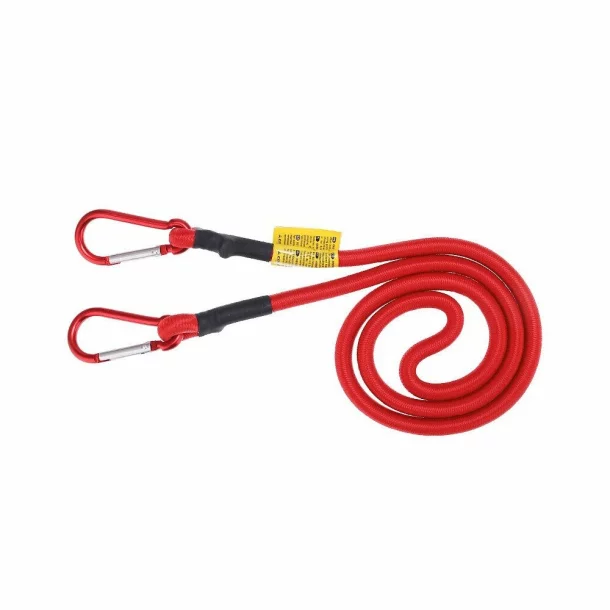
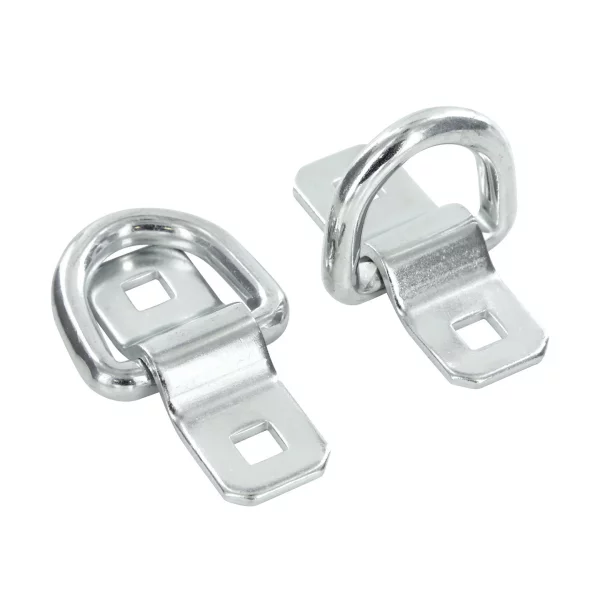
In contrast, an elastic luggage cord does not have the capacity to lock large masses in the event of sudden braking; its role is to secure luggage, with various types of fasteners available in the range. The final connection between these tensioning elements and the vehicle structure is made through cargo lashing rings, which act as solid anchor points, essential for the uniform distribution of physical forces during transit.
Accessory type | Main role | Mode of action | Usage recommendation |
|---|---|---|---|
Ratchet strap | Structural securing | Generates active pre-tensioning force | Heavy cargo, pallets, equipment |
Elastic cord | Varied securing | Passive, elastic tension | Miscellaneous objects, varied attachment (hooks/carabiners/none) |
Lashing ring | Connection point | Distributes forces to the chassis | Connecting straps to the vehicle |
Each of these components fulfills a precise technical role, and their correct use prevents damage to goods and ensures compliance with road safety regulations.
What do the values on the label mean and why should you not calculate based on cargo weight?
The lashing capacity indicated on the label represents the maximum force that the accessory can safely withstand under direct tension or clamping. This value should not be confused with the physical mass of the transported object, as the dynamics during transit completely alter the physical stress on the securing systems.
Forces acting on the cargo during transit, such as acceleration, sudden braking, or sharp turns, considerably exceed the static weight of the object. In the event of emergency braking, inertia can instantly double the force exerted on the anchor points.
Correct calculation of the securing system takes into account the friction coefficients of the platform and the dynamic accelerations during transport, not just the physical mass. For this reason, the choice of the right equipment is made by evaluating these dynamic stresses and the direction of anchoring.
Securing method | Type of stress | Force transfer efficiency | How to choose |
|---|---|---|---|
Direct lashing | Diagonal tension | Maximum for lateral movements | Calculated to directly absorb inertial force |
Friction lashing | Vertical pressure | Depends on platform grip | Requires anti-slip mats for efficiency |
How to properly pass the strap over the load to avoid damage?
The over-the-top lashing method presses the cargo directly onto the transport platform to increase friction and prevent sliding. For correct securing, the straps must be tensioned symmetrically on both sides of the vehicle, ensuring a uniform distribution of pressure.
Passing straps over sharp edges without special plastic or rubber protectors is a critical mistake. Under the effect of constant vibrations during transit, these sharp edges can quickly cut the polyester fibers, leading to the sudden failure of the connection.
Using appropriate accessories, such as a 4Cars ratchet lashing strap or versions equipped with a cam buckle, guarantees transport stability only if the strap is perfectly aligned, without twists along its path. Any torsion reduces the contact surface and concentrates tension on a single edge of the material, accelerating wear.
What are the common mistakes when securing loads on vehicles?
Common mistakes when securing loads on vehicles can seriously compromise road safety and the integrity of the transported goods. To ensure an incident-free journey, it is essential to avoid anchoring errors that weaken equipment or damage the vehicle structure.
Anchoring to non-compliant points: Attaching hooks to weak structural elements, such as thin tailgates, decorative pipes, or suspension components, is extremely dangerous. These areas are not designed to withstand the tensile forces during transit, with the risk of them being completely torn off during braking or sharp turns.
Using damaged or modified straps: Using cam buckle or ratchet lashing straps that are knotted or twisted drastically reduces the structural strength of the textile band. Knots can lead to material failure under tension, and twisting the band can cause the locking mechanism to accidentally release.
Neglecting periodic tension checks: Omitting to check the tension after the first few kilometers traveled is a major risk. The load settles on the platform during transit due to vibrations, which loosens the initial tension provided by a ratchet lashing strap.
For increased safety, use exclusively cargo lashing rings mounted to the chassis and check strap tension at every stop.
Anchoring vs. towing: why is the operating regime completely different?
Lashing straps and towing accessories are equipment with totally opposite technical roles, and their misuse endangers road safety. A ratchet lashing strap is structurally designed to have minimal elasticity, the goal being the complete immobilization of the cargo on the platform and the prevention of any movement during transit. In contrast, a towing strap or an elastic rope intended for towing is specifically designed to absorb dynamic shocks through controlled elasticity, protecting the vehicle's attachment points when starting from a standstill.
Using a lashing strap as a tow rope leads to rapid fiber destruction due to sudden shocks, with the risk of violent breakage. Conversely, using an elastic accessory to secure cargo allows it to sway during turns or braking.
Product category | Main role | Behavior under load | Risk of misuse |
|---|---|---|---|
Lashing strap | Rigid immobilization of cargo | Minimal elasticity, maintains constant tension | Fiber breakage during dynamic towing shocks |
Towing strap | Vehicle towing | Controlled elasticity for shock attenuation | Shifting and tipping of cargo on the platform |
The correct choice depends exclusively on the type of operation, ensuring the protection of the vehicle and other road users.
FAQ
How is the securing device correctly chosen based on the type of cargo transported?
The choice is based on the rigidity of the goods, so heavy and rigid objects require ratchet straps for firm tensioning, while light luggage can be secured with an elastic cord. For additional anchor points on the platform, metal lashing rings are installed, thus preventing accidental sliding during transit.
Is it recommended to use the Rubberized cord with carabiners Ø10mm product for securing heavy furniture on a trailer?
No, this type of product is intended exclusively for securing light objects or tarpaulins and must not be used for bulky or heavy loads. For furniture pieces or other heavy goods, a ratchet lashing strap is required, which can provide adequate and stable tightening force.
What is the difference in use between a ratchet strap and a car towing strap?
A lashing strap is designed exclusively for the static securing of goods through constant tension, having minimal elasticity to prevent luggage movement. In contrast, a towing strap is intended exclusively for pulling vehicles and is designed to absorb dynamic shocks during transit, having a completely different operating regime.
How does exposure to the elements influence the lifespan of polyester lashing straps?
Constant humidity and ultraviolet radiation gradually degrade synthetic fibers, reducing the tensile strength of the material. Higher-quality models, such as the Ratchet lashing strap with hook 1pc 5m from the Cridem portfolio, benefit from special UV and moisture resistance treatments to slow down this wear process.
Why should a lashing strap not be chosen based solely on the total weight of the transported object?
The weight of the object does not reflect the dynamic, friction, and acceleration forces acting on the load during braking or sharp turns. The correct calculation must take into account the LC load value marked on the label and the direction of anchoring, because the physical forces during transport can considerably exceed the static mass of the goods.


