



















The Role and Selection of Car Safety Equipment

Safety on the roads: mandatory automotive equipment for every vehicle
Learn about the importance of automotive safety equipment, legal requirements, and the first aid kits available in the Cridem range.
Get to know the mandatory equipment: legal compliance
A basic requirement for safe driving is having equipment that complies with legal regulations, such as the Cridem car first aid kit (Yellow bag) or the Petex car first aid kit. For road safety, keeping 1 high-visibility vest and 2 warning triangles on hand 100 percent supports the management of emergency situations.
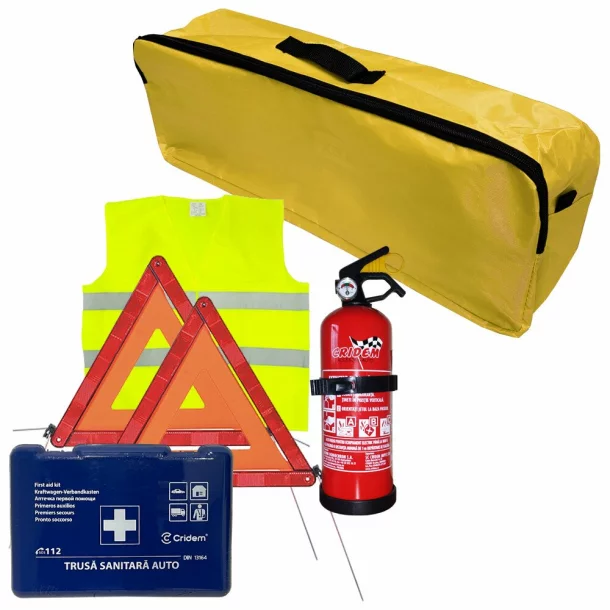
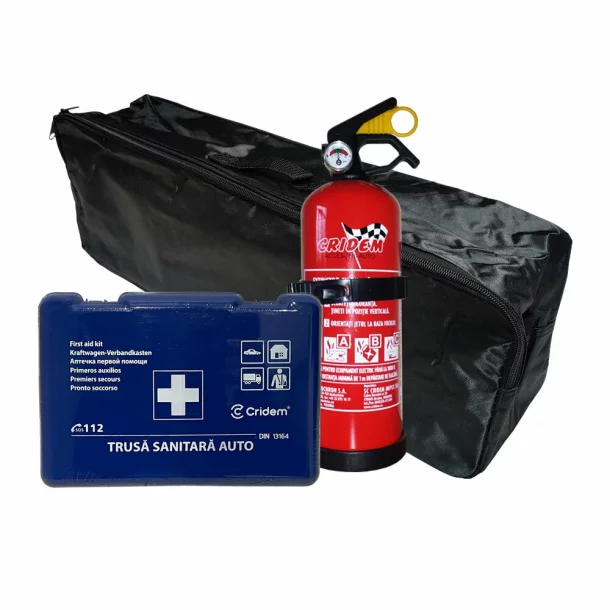
Legal compliance is essential for meeting official requirements, for which a first aid kit according to the DIN 13164 standard provides a reliable foundation. To meet various needs, the distributor offers several color variations, which have identical technical content. The selection includes the Cridem car first aid kit (Blue bag), the Cridem car first aid kit (Green bag), the Cridem car first aid kit (Dark blue bag) and the Cridem car first aid kit (Black bag) as well. These kits also include the 1 kilogram, pressure-gauge-equipped, rechargeable ABC fire extinguisher required by law for fire protection.
Product name | Bag color | Standard |
Cridem car first aid kit (Yellow bag) | yellow | DIN 13164 |
Cridem car first aid kit (Blue bag) | blue | DIN 13164 |
Petex car first aid kit | blue | DIN 13164 |
Standardizing equipment helps with quick response, as every kit contains the basic medical box and mandatory accessories. In addition to choosing the right tools, regular inspection is also recommended to maintain safety. Having these tools is not just a legal obligation, but a practical step to protect road users.
Choose Cridem safety kits: complete solutions
The Cridem car first aid kit and the brand's other safety kits contain every tool that ensures preparedness in accordance with current road regulations. The Cridem car first aid kit in the yellow bag version, as well as the associated assemblies, contain a first aid kit according to the DIN 13164:2022 standard, 1 fire extinguisher, 2 warning triangles, and 1 high-visibility vest.
When choosing road safety equipment, Cridem offers solutions tailored to different needs, which, in addition to legal compliance, also keep practical storage in mind.
Package name | First aid standard | Number of warning triangles | Fire extinguisher included |
Cridem car first aid kit | DIN 13164:2022 | 2 | yes |
Cridem basic safety kit | DIN 13164:2022 | 1 | no |
Cridem premium accessory set | DIN 13164:2022 | 2 | yes |
In addition to the yellow bag version of the Cridem car first aid kit, the Cridem basic safety kit and the Cridem premium accessory set are also available, all of which serve to support safe driving. The Cridem premium accessory set may contain additional accessories beyond the standard equipment, so drivers can choose a package that matches their own risk profile. Compliance with the DIN 13164:2022 requirements guarantees that Cridem products meet the expected quality and content requirements on every European road section. Choosing the right equipment significantly increases the sense of security during unexpected road events.
Compare Cridem packages: colors and design
The differences between Cridem car first aid kits manifest exclusively in the color of the organizer bag used for storage, while the internal equipment meets the same quality requirements for every version. The assembly of safety tools complies with the requirements of the MSZ 13553:2004 standard, so users receive a reliable package with 1 set of contents in every case.
model name | bag color | standard compliance | number of tools |
Cridem car first aid kit (Blue bag) | blue | MSZ 13553:2004 | 1 set |
Cridem car first aid kit (Green bag) | green | MSZ 13553:2004 | 1 set |
Cridem car first aid kit (Dark blue bag) | dark blue | MSZ 13553:2004 | 1 set |
Cridem car first aid kit (Black bag) | black | MSZ 13553:2004 | 1 set |
The Cridem car first aid kit (Blue bag), the Cridem car first aid kit (Green bag), and the Cridem car first aid kit (Dark blue bag) have identical functional content, so the choice is determined solely by aesthetic preferences or matching the vehicle's interior color scheme. The Cridem car first aid kit (Black bag) also provides the usual quality and equipment for users, ensuring 100 percent compatibility with current road regulations.
The organizer bags for the kits are made of durable material, which provides protection for the internal tools against external environmental influences. Every member of the product family offers the same high-level safety guarantee, regardless of external appearance.
Apply the Petex first aid solution: durable protection
The Petex car first aid kit provides the necessary tools for safety on the road with content that complies with the DIN 13164:2022 standard. The Petex car first aid kit stores the equipment in an impact-resistant plastic box, which protects the internal tools from environmental influences with 3 different protective layers. During road transport, proper preparedness is of fundamental importance, which is why, in addition to the Petex car first aid kit, other solutions are available on the market that have different storage and quality characteristics.
Solution type | Standard compliance | Storage container material |
Petex car first aid kit | DIN 13164:2022 | impact-resistant plastic |
Textile-based kit | DIN 13164:2014 | soft textile |
Metal box kit | DIN 13164:2014 | pressed metal |
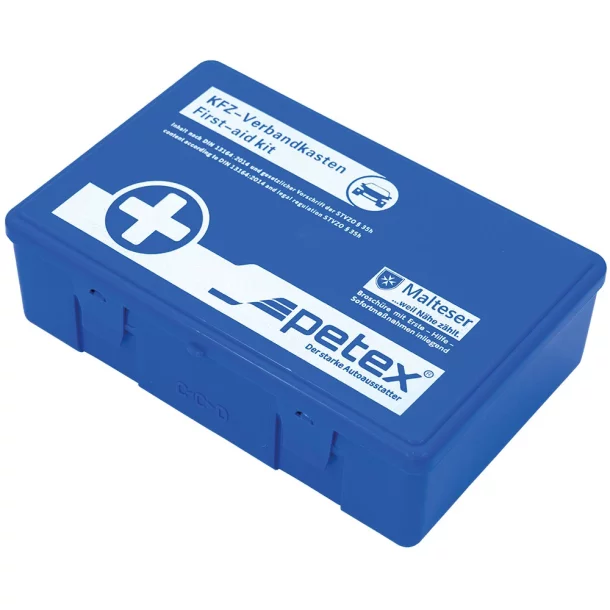
When using the Petex car first aid kit, users can count on reliable quality, as the product 100 percent complies with current traffic regulations. The design of the box allows for quick access to the 20-piece bandage set, which is essential for treating minor injuries. The durable plastic casing significantly increases the lifespan of the kit, ensuring the sterility and orderliness of the tools in the trunk. Choosing the Petex car first aid kit is a conscious decision by drivers who prefer long-term protection and standardized quality.
Use the fire extinguisher: emergency protocol
A fire extinguisher placed in the car is a key tool for the immediate suppression of sudden fires. The use of the rechargeable ABC fire extinguisher with a pressure gauge found in the kits is essential for effectively handling fires that occur in vehicles. The readiness of the device is ensured by regular inspection, which guarantees reliable operation in critical situations, in accordance with the requirements of the MSZ EN 3-7:2004 standard.
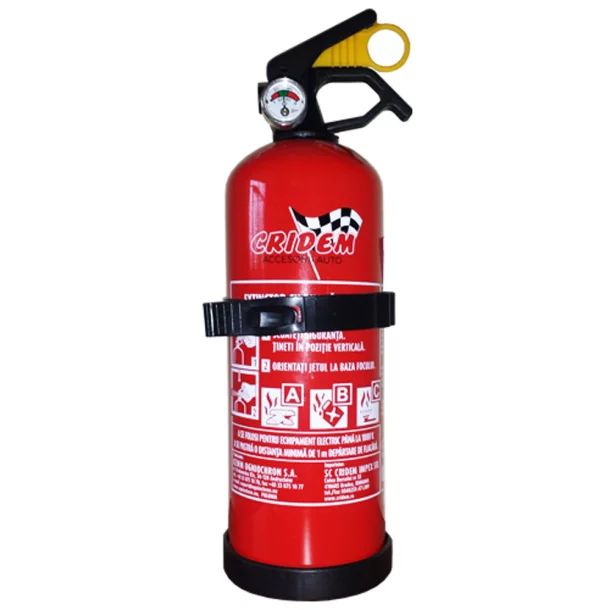
When maintaining fire extinguishers, it is worth considering several aspects for optimal performance. The table below presents the characteristics of different types of fire extinguishing methods and tools for safe application.
Tool type | Extinguishing agent | Area of application |
ABC fire extinguisher | extinguishing powder | solid, liquid, and gaseous fires |
CO2 extinguisher | carbon dioxide | electrical equipment and enclosed spaces |
foam extinguisher | foam-forming agent | liquid fires and solid materials |
Regular inspection of the pressure gauge is recommended every 3 months so that the device's pressure level remains in the correct range. The effectiveness of the tools depends 100 percent on proper storage and adherence to maintenance cycles. According to current traffic regulations, having a properly certified and maintained fire extinguisher is a fundamental part of safety equipment. During the lifespan of the device, inspection in accordance with manufacturer instructions is essential for compliance with 2024 safety protocols. The rechargeable design ensures that the device can be put back into operation after use.
Place the warning triangle: visibility and signaling
The use of the warning triangle is a fundamental tool for safely marking a vehicle with a technical fault, which prevents potential rear-end collisions by warning other road users. The 2 warning triangles found in the kits provide increased visibility in accordance with the requirements of the 6/1990. (IV. 12.) KöHÉM decree under all road conditions. Proper placement is critically important, as increasing the distance from the vehicle can improve the reaction time of other road users by +50 percent when a hazard is detected.
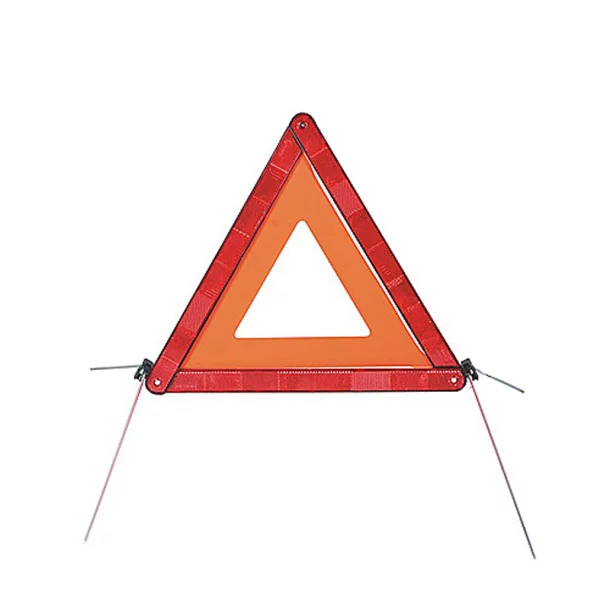
The effectiveness of safety tools depends on the method of placement, which the table below summarizes according to different road types:
Road type | Placement distance | Method of signaling |
built-up area | 50 meters | behind the vehicle |
main road | 100 meters | behind the vehicle |
motorway | 150 meters | behind the vehicle |
When placing the triangle, care must be taken in every case to ensure that the device stands stably and that its reflective surface faces the direction of approaching traffic. When leaving a vehicle with a technical fault, the use of a high-visibility vest is mandatory, as it increases the detectability of the pedestrian. The use of the 2-piece kit allows for the extension of the safety zone if conditions justify increased caution.
Proper signaling is not just a legal obligation, but one of the most important elements of maintaining road safety, which reliably warns other road users of the source of danger.
Wear the high-visibility vest: personal safety
The use of a high-visibility vest drastically increases the detectability of road users at night or in poor visibility conditions. The 1 high-visibility vest found in safety kits is a basic accessory for every driver, which is one of the most important tools for passive protection. To prevent road accidents, high-visibility clothing must comply with the requirements of the EN ISO 20471:2013 standard, which defines the visibility requirements for reflectivity and background materials.

To increase personal safety, it is worth for drivers to know the differences between different types of visibility tools. The table below presents the properties of three common safety accessories based on usage effectiveness and standard compliance.
accessory type | visibility class | daytime detectability | nighttime reflection |
high-visibility vest | class 2 | high | excellent |
reflective tape | class 1 | low | medium |
signal vest | class 3 | very high | outstanding |
When using a high-visibility vest, the class 2 classification ensures the appropriate reflective surface, which according to EN ISO 20471:2013 contains at least 0.5 square meters of background material and 0.13 square meters of reflective material. The use of 1 properly certified device kept in the vehicle in critical situations, such as a technical fault, significantly reduces the risk of pedestrian accidents. Compliance with safety regulations and the use of proper equipment is a mandatory expectation for every road user to maintain safe traffic.
Take care of car accessories: prevention and preparedness
Acquiring the right car accessories significantly reduces stress during a potential breakdown, as prepared drivers react faster to unexpected situations. Cridem's wide range helps drivers prepare, as critical minutes can be handled more effectively with the right tools. To increase road safety, it is recommended to use accessories that comply with the requirements of the ISO 1724:2003 standard or support visibility requirements.
When choosing safety equipment, it is worth comparing the functions of different tools based on effectiveness and reliability.
Accessory type | Function | Maintenance requirement |
emergency signal kit | increase visibility | check every 2 years |
tow rope | vehicle movement | 5 tons load capacity |
first aid kit | emergency care | 4 years shelf life |
For drivers, prevention is key, so among the products in the Cridem range, in addition to mandatory accessories, the purchase of comfort and safety accessories is also recommended. Properly maintained equipment is important not only because of legal compliance, but also plays an indispensable role in handling unexpected technical faults. Through the use of tools offered by Cridem, drivers can resolve minor problems 15 percent faster while minimizing safety risks. Preparedness therefore does not just mean having the mandatory elements, but also the conscious selection of quality accessories, which increase travel safety and vehicle operational reliability in the long term.
Optimize storage: efficient organization
According to Cridem experts, organizing the accessories placed in the vehicle significantly increases the speed of emergency response. Using the 3 separate compartments created in the trunk allows the equipment to remain 100 percent secured during the trip, thereby avoiding the shifting of cargo. The use of 2 fastening straps and 5 Velcro elements recommended for organization ensures that every tool is immediately available when needed.
For motorists, it is also crucial during 4-season use that the packages do not hinder access to the spare tire or basic tools. The storage solutions offered by Cridem help maintain order while every mandatory accessory remains in its place, thereby supporting safe driving under all conditions.
Check the tires: traffic safety
The proper condition of tires is of decisive importance for safe driving, as these are the only contact points between the vehicle and the road surface. According to Cridem experts, tire tread depth must be checked regularly, since according to legal regulations, the minimum value for passenger cars is 1.6 millimeters. It is worth setting the recommended pressure values based on the 4 different load levels provided by the manufacturer so that the car's road holding remains optimal under all conditions.
During the lifespan of tires, in addition to tread wear, the aging of the rubber material is also a critical factor, so professional inspection is definitely recommended every 6 years. The inspection protocol recommended by Cridem focuses on 3 basic aspects: the depth of the grooves, external damage to the tires, and the tightness of the valve caps. Maintaining proper air pressure not only increases safety but also reduces rolling resistance, which contributes to more economical vehicle operation in the long term.
Neglecting regular maintenance significantly worsens braking efficiency on wet road surfaces, which is why Cridem recommends monthly visual inspection for every driver.
FAQ
What types of vehicles is the Cridem car emergency kit suitable for?
The Cridem car emergency kit is a suitable choice for all passenger vehicles where safety regulations require equipment compliant with the DIN 13164 standard to ensure safe road use.
What is the difference between the Petex car emergency kit and the Cridem car emergency kit?
There is no difference in the contents, quality, or compliance of the first aid kit included in the Petex and Cridem car emergency kits. Both contain a rigid first aid case compliant with the DIN 13164 standard and provide the same level of safety equipment.
How many warning triangles are included in the Cridem car emergency kit?
Each Cridem car emergency kit contains exactly 2 warning triangles, providing sufficient equipment for proper road hazard marking and improved visibility during emergency situations.
When is it not recommended to use the Cridem car emergency kit?
The Cridem car emergency kit should not be used if the packaging is damaged or if the pressure gauge of the included 1 kg fire extinguisher does not indicate the correct operating range.
How long can the fire extinguisher included in the Cridem car emergency kit be used safely?
The 1 kg rechargeable ABC powder fire extinguisher with pressure gauge included in the Cridem car emergency kit is designed for long-term use. Its service life depends on regular maintenance and compliance with the required inspection intervals.


