



















Trailer Electrical System: 7 or 13 Pins, Adapters and Lights

7-pin or 13-pin trailer plug: compatibility guide
Learn how to correctly choose between a 7-pin or 13-pin trailer plug, when you need an adapter, and which lights are mandatory for road safety.
Key points
The 7-pin trailer plug provides only basic lighting functions and is generally used for light trailers without their own braking system.
The 13-pin trailer plug offers additional circuits for reversing lights, fog lights, and a permanent 12V power supply for caravans.
Electrical adapters allow for quick connection between vehicles and trailers with different standards without modifying the car's original wiring.
Trailer tail lights have strict asymmetrical configurations, with the fog light mounted on the left and the reversing light on the right.
How do we visually recognize the type of connector on the car and trailer?
Quick visual identification of the electrical connection is achieved by counting the metal pins inside the connector on the vehicle or trailer. A 7-pin trailer plug features seven pins arranged in a simple circular pattern, with a single pin positioned in the center, surrounded by the other six. In contrast, the 13-pin trailer plug has a similar outer diameter, but the interior space is much denser, grouping thirteen thin pins and a special bayonet guide system for attachment.
The functional and structural differences between the two types of connectors determine how towing equipment is used safely:
Connector type | Pin configuration | Main electrical functions | Recommended use |
|---|---|---|---|
7-pin connector | 7 pins in a circle | Basic signaling, position, brake, fog | Light trailers, various applications / 13-pin conversion |
13-pin connector | 13 dense pins | Full signaling, reverse, 12V permanent power | Caravans, car transporters, bike racks, various applications |
the seven-contact system provides only the basic lighting necessary for travel on public roads. The thirteen-contact version adds additional circuits for reversing lights and DC power sources useful for the internal appliances of a caravan.
7-pin vs. 13-pin plug: what electrical functions does each carry?
The difference between the 7-pin and 13-pin trailer plug lies in the number of independent electrical circuits that each connector can transfer from the towing vehicle to the attachment.
The 7-pin connector is generally used to transmit basic light signals, ensuring the operation of tail lights, left and right turn signals, position lights, and license plate illumination. This simple system is generally used for light trailers without complex internal electrical systems.
Unlike this, the 13-pin trailer plug adds dedicated circuits for essential additional functions, such as the reversing light and fog light. Also, this automotive electrical connector includes constant power and additional ground lines for auxiliary consumers. Modern caravans and large platforms require the 13-pin connection to keep the refrigerator or internal battery functional during travel.
Connector type | Main functions | Recommended destination | Signal type |
|---|---|---|---|
7-pin connector | Position, brake, signaling, plate | Light trailers, simple bike racks | Basic light signals and conversion |
13-pin connector | Position, brake, signaling, fog, reverse, 12V power | Modern caravans, car transporters, heavy trailers | Basic signals and constant power |
When is a trailer plug adapter necessary?
When the electrical connection between the towing vehicle and the trailer does not match directly due to different plug configurations, using an adapter becomes mandatory for road safety. This situation occurs frequently because modern cars often use the multi-pin standard, while older or light utility trailers retain simple connections.
The adapter is indispensable when the towing car has a 13-pin socket and the trailer is equipped with an old 7-pin plug. For switching from a 13-pin vehicle to a 7-pin trailer, compact models such as the Cridem 13-7 pin trailer plug adapter or the 4Cars 13-7 pin trailer plug adapter can be used. These accessories ensure the transmission of basic light signals, such as position lights, brakes, and turn signals.
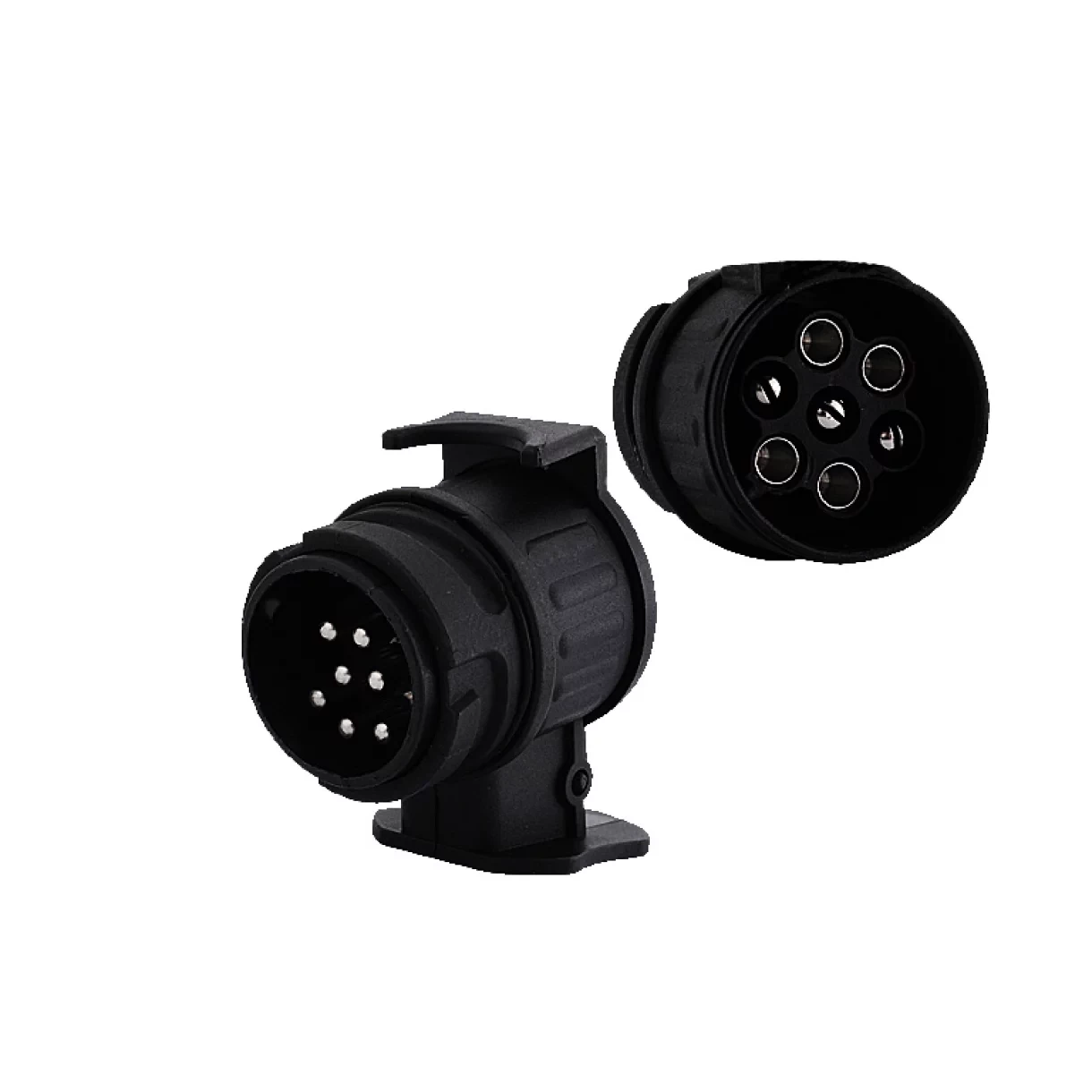
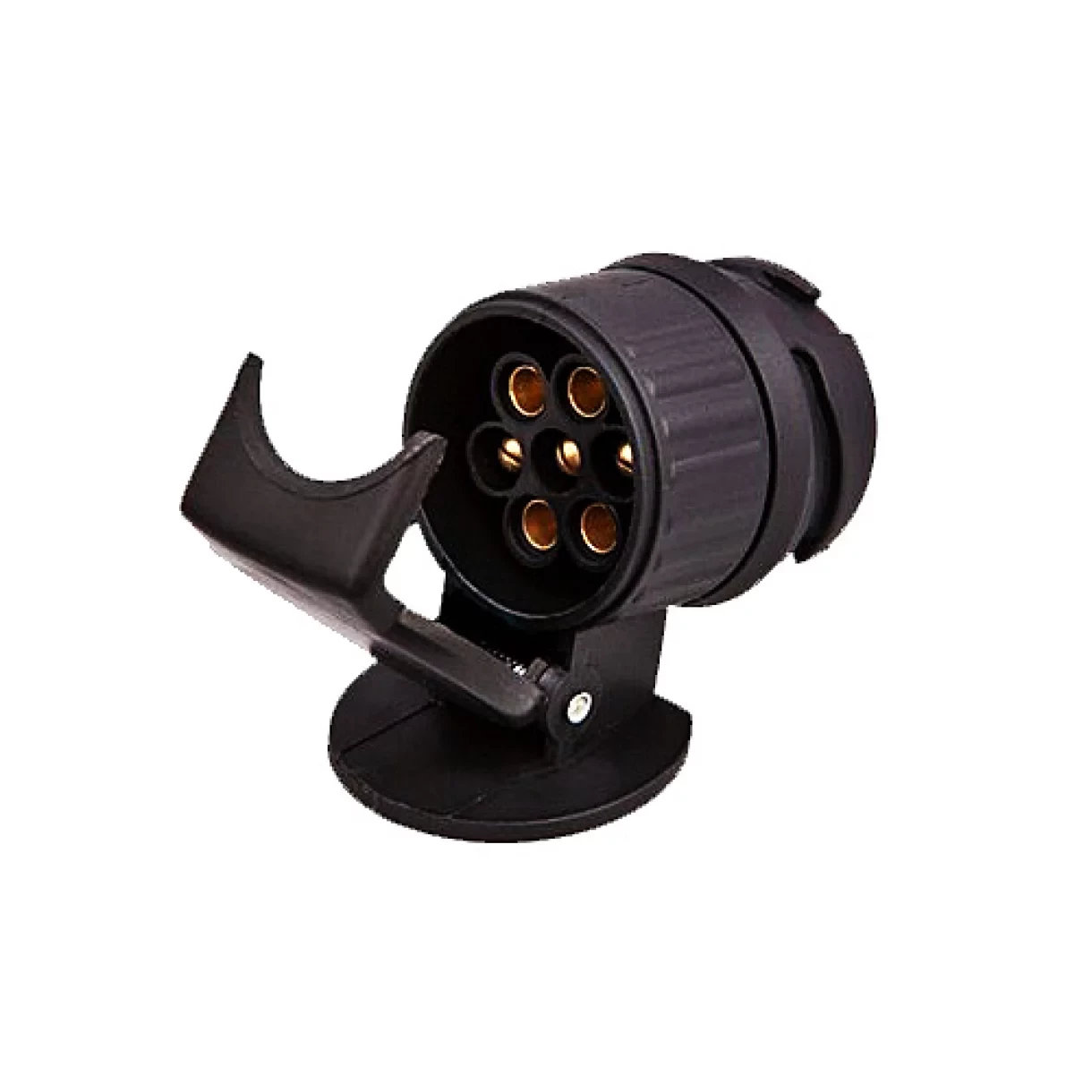
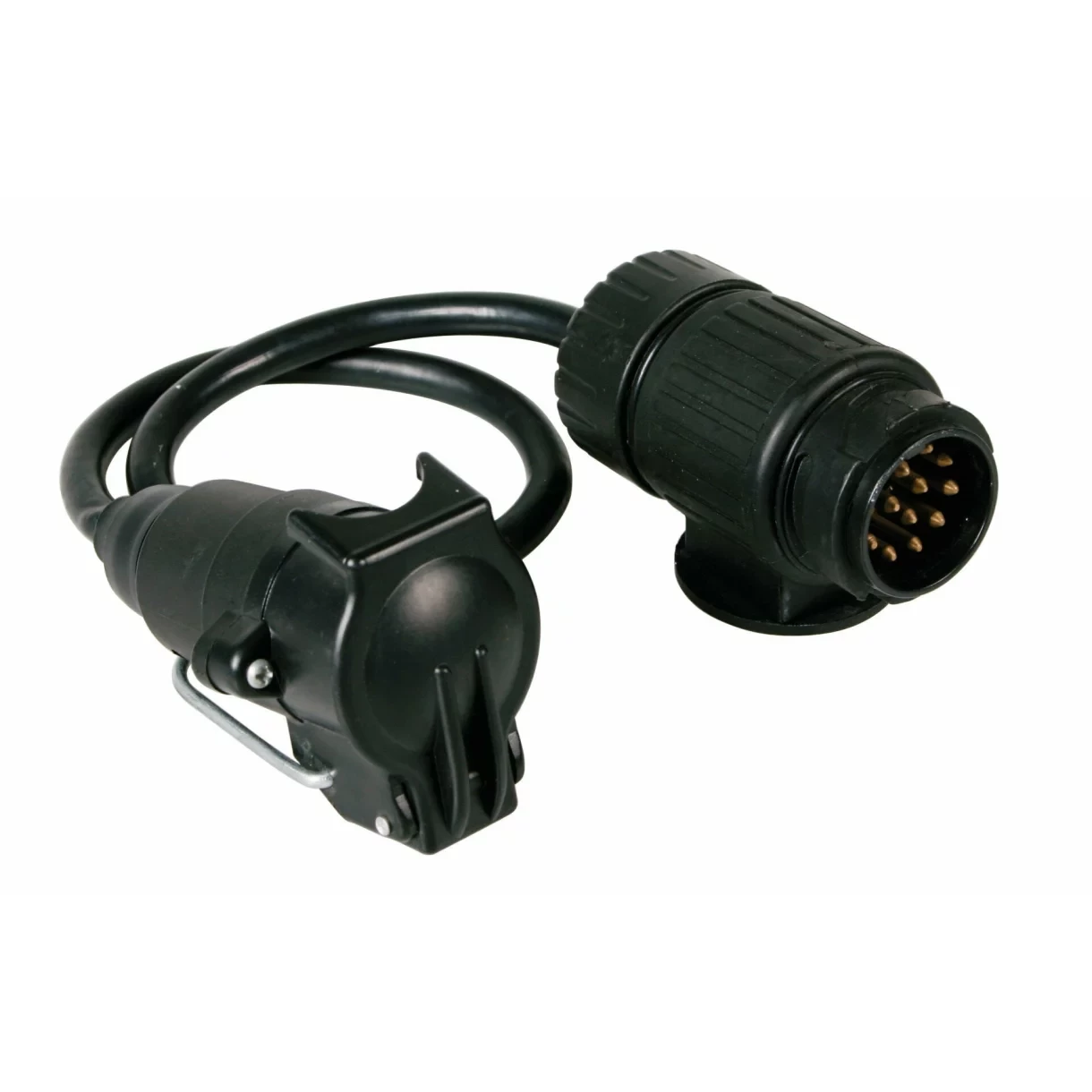
If extra flexibility is desired during coupling, the 40cm cable 13-7 pin trailer plug adapter prevents wiring strain during tight turns.
In the reverse situation, when the car has an old socket and the trailer has a new plug, a 7-13 pin trailer plug adapter is used for compatibility.
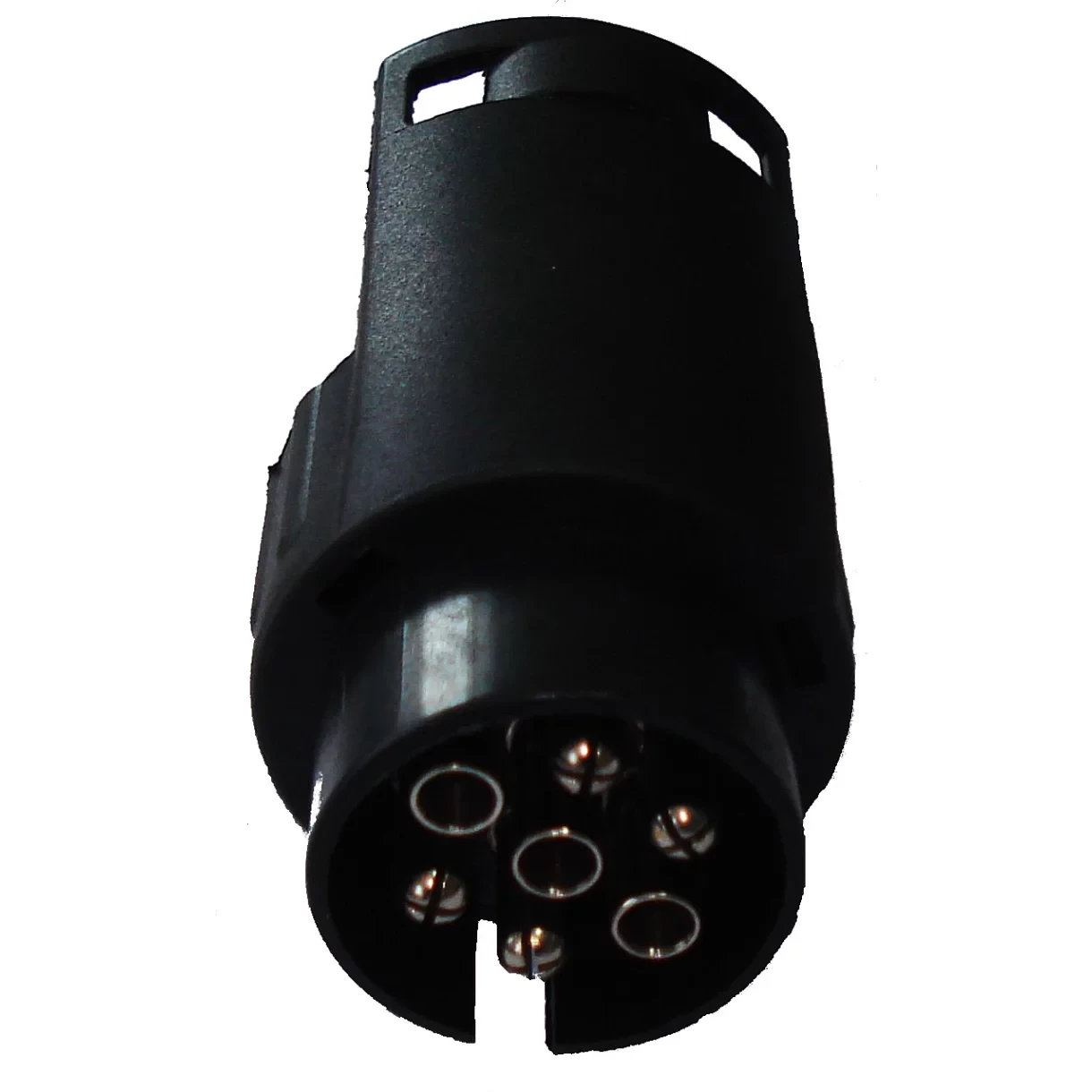
This accessory allows for physical towing under legal conditions, although the trailer's additional functions, such as the reversing light or constant power for caravans, will not be active due to the limitations of the car's socket.
Which lights and visual signaling elements must work on the trailer?
Any trailer towed on public roads has a legal obligation to faithfully reproduce the optical signals of the towing vehicle to ensure traffic safety. To be road-legal, the towed vehicle must be equipped with position lights, brake lights, turn signals, and at least one light to illuminate the license plate. Also, red triangular reflectors mounted on the back of the trailer are essential passive elements for nighttime visibility.
From a structural point of view, a trailer stop light can integrate several functions into a single housing, but the equipment differs between the two sides. The left light must include the fog light, while the right light often integrates the reversing light. This differentiation is dictated by the need to correctly signal the width and intended movement based on the position in the lane.
For full details regarding mandatory equipment and specific technical requirements in force, it is recommended to consult legal regulations and official sources from the traffic code.
Why do the multifunctional lights on the left side differ from those on the right?
Trailer tail lights are not identical on both sides due to the asymmetrical distribution of fog and reversing functions, a configuration designed to ensure clear signaling in traffic. The electrical system directs current differently to the two sides, complying with standard visibility requirements on public roads.
Typically, the left light integrates the mandatory fog projector, an intense red light that warns vehicles behind in conditions of low visibility. In the mirror position, the right light houses the white light intended for reversing. This separation prevents visual confusion for other road users and optimizes the space inside the light housing.
For simple trailers that do not require complex fog or reversing circuits, the 12V 3-function trailer tail light 1pc offers a universal and compact solution.
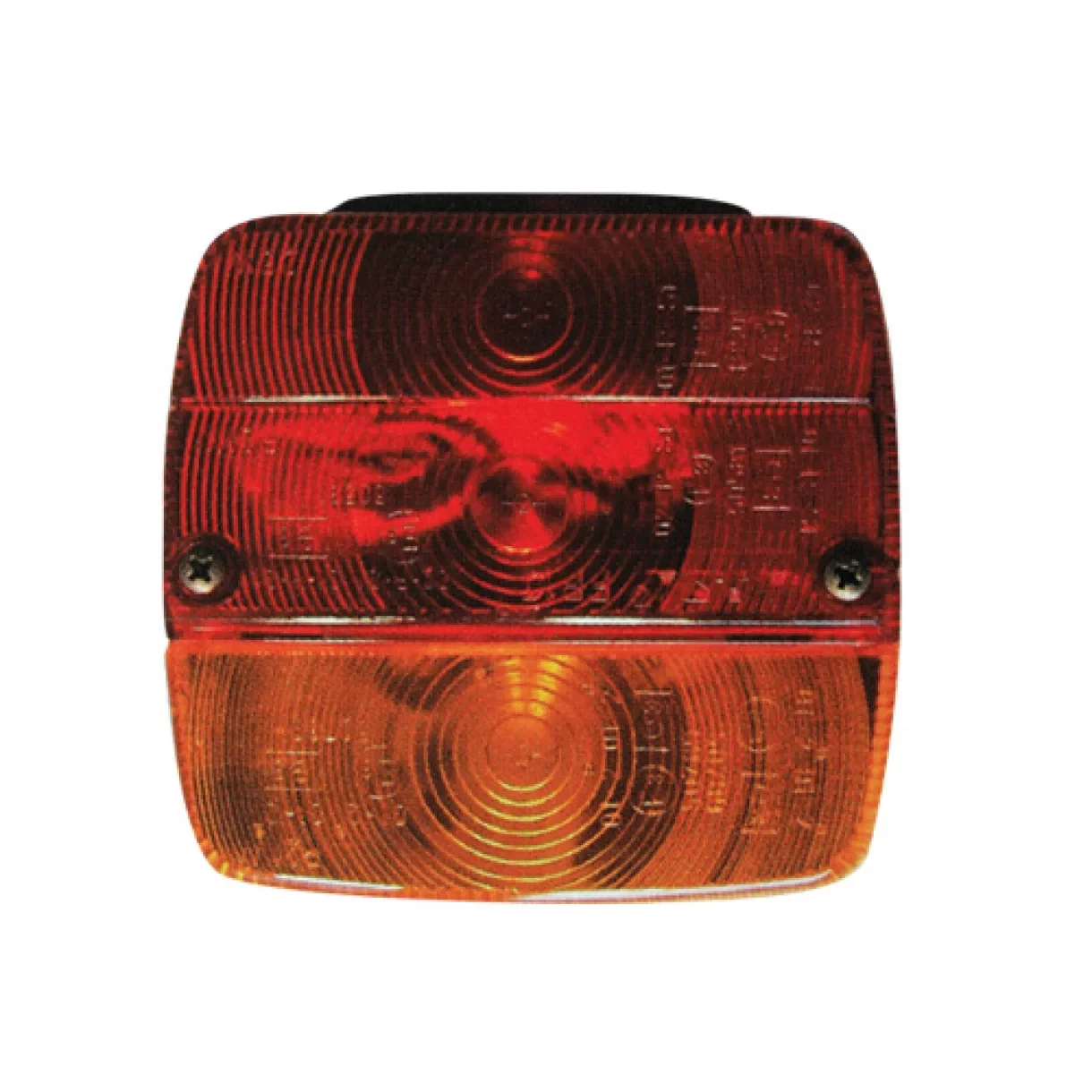
This product provides basic position, brake, and signaling functions, being easy to mount on both sides when the configuration of the towed vehicle is simplified.
FAQ
What happens if I use a 13-to-7 pin adapter for the reversing function?
The reversing function will not be transmitted to the trailer. Because the 7-pin plug does not have a pin allocated for this light, the adapter will isolate that circuit, and the signal will not reach the lights.
Are triangular reflectors mandatory on all trailers?
Yes, red reflective triangles are mandatory on the back of any trailer to visually differentiate them from the back of a simple car in low visibility conditions.
Can I mount a universal license plate light on any type of trailer?
The license plate light must ensure clear illumination of the license plate, and its mounting must respect its visibility from the rear, according to general traffic rules.
How do I check if the trailer's electrical system is working correctly before a trip?
It is recommended to couple the trailer to the vehicle and test all lights (position, brake, turn signals, hazard lights) successively with the help of a second person observing the back of the trailer.


