



















Windshield Wipers: How to Find the Correct Length and Which Adapter You Need

Windshield wipers: how to find the correct length and which adapter you need
Technical guide on windshield wipers. Learn how to measure blades correctly, why lengths differ, and how to choose the right mounting adapter.
Key points
The length of the driver and passenger side blades differs in most vehicles to maximize the cleaned area without them colliding during movement.
Correct blade measurement is performed exclusively along the length of the rubber strip, without including the plastic elements of the mounting structure.
Universal wipers use adapter sets to ensure physical compatibility with various types of metal car arms, with the adapter type varying depending on the specific model.
Blade performance at high speeds depends directly on the aerodynamic profile, while winter efficiency is influenced by the flexibility of the structure.
Commercial vehicles and trucks use long lengths and robust mounting systems, adapted for windshields with large surface areas.
Why do the two windshield wipers have different lengths?
Choosing the right fit for your car's windshield requires understanding the structural asymmetry used by manufacturers, where blade length differs significantly between the two sides. This asymmetric configuration is specially designed to optimize the driver's critical field of vision, ensuring rapid and extensive cleaning directly in the area of maximum visibility.
The size difference also prevents physical collision between the blades during the sweeping cycle on the windshield. If both accessories had equal maximum lengths, their trajectories would overlap at the central meeting point, leading to the locking of the mechanical arms or rapid deterioration of the rubber.
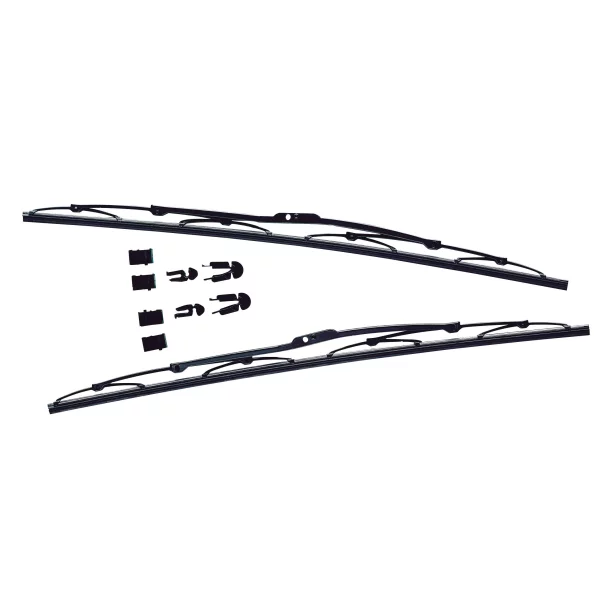
Modern windshield design, curved and steeply raked for improved aerodynamics, necessitates this variable geometry. The passenger-side arm must cover a differently curved surface, which is why a shorter blade conforms much more efficiently to the glass without losing contact at the extremities. To maintain optimal visibility, you can use dedicated sets such as Standard graphite wiper blades - 41cm (16") - 2pcs or individual pieces adapted to each side, such as Standard wiper blade - 60cm (24“) - 1pc, always respecting the technical specifications established by the vehicle manufacturer.
How to correctly measure the existing blade to avoid errors?
Determining the exact size for windshield wiper blades requires a simple but rigorous physical measurement performed directly on the vehicle. To find out the length of your car's wipers, use a tape measure or a ruler, measuring exclusively the flexible rubber strip that comes into contact with the glass.
The correct measurement procedure involves the following steps:
Lift the metal arm off the windshield to allow full access to the blade.
Place the measuring tool at one end of the rubber strip and extend it to the opposite end.
Completely exclude from this measurement the length of the plastic end caps or the mounting adapter body, as these components do not participate in active cleaning and can distort the actual size required.
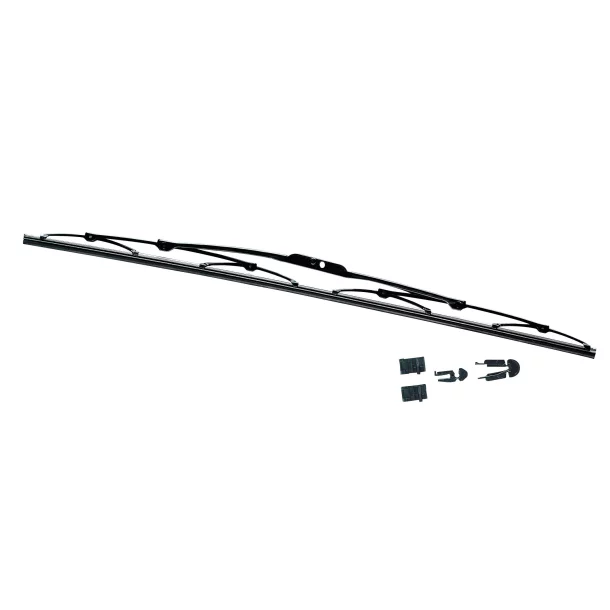
A common error is visual approximation, which can lead to the purchase of incompatible parts that will overlap during operation. As an example of a standardized size frequently used for precise replacements, you can use Standard graphite wiper blades - 38cm (15") - 2pcs, ideal for vehicles that require this specific length on one side of the windshield. Noting both units of measurement on the packaging helps in quickly identifying compatibility in auto parts catalogs.
Blade structure in the catalog: what do flat blade and classic types mean?
Choosing the wiper type depends on the windshield profile and the performance sought at high speeds or in freezing conditions. Classic models use an articulated metal frame that presses the rubber blade at specific points, being a traditional option effective for less curved surfaces. In contrast, modern flat blade technology completely eliminates the external metal structure, integrating a flexible special steel strip directly into the blade structure. This internal strip distributes pressure evenly across the entire surface of the glass, ensuring constant wiping and reducing aerodynamic noise.
A representative example of this modern technology is the use of flat blade type wipers, which use a flexible special steel strip to maintain optimal grip even at high speeds.
Wiper type | Resistance structure | Pressure distribution | High-speed behavior |
|---|---|---|---|
Classic | Articulated metal frame | At specific pressure points | Sensitive to aerodynamic lift |
Flat blade | Flexible special steel strip | Uniform along the entire length | Stable aerodynamic profile |
For vehicles frequently exposed to highway driving or low temperatures, flat models offer the additional advantage of not allowing ice to accumulate in the joints, maintaining optimal visibility in any season.
High-speed behavior vs. winter efficiency: how does structure influence performance?
The optimal choice of equipment depends directly on the vehicle's operating regime, driving speed, and the severity of climatic conditions. To ensure optimal visibility, the blade's structural design must cope with aerodynamic forces and extreme temperatures.
At high driving speeds, the airflow tends to lift classic blades off the windshield, reducing contact and leaving water streaks. For this reason, modern models integrate asymmetric spoilers that use wind pressure to constantly press the blade against the glass. In winter, the metal joints of conventional models can freeze due to water ingress, blocking the system's mobility.
In contrast, flexible flat blade structures, such as those in the Lama range, do not have external metal joints, remaining functional in various climatic conditions. Also, the use of high-quality graphited rubber maintains material elasticity in freezing temperatures and reduces friction noise on the windshield.
Structure type | Composition and construction | Main purpose | High-speed behavior | Winter performance |
|---|---|---|---|---|
Bosch Aerotwin wiper | Flat flexible blade, integrated spoiler, graphited rubber | Uniform cleaning at high speeds and low temperatures | Excellent, aerodynamic profile prevents lifting off the glass | Variable performance depending on the model |
Valeo First wiper | Hybrid or protected conventional structure, treated rubber | Daily efficiency in moderate climatic conditions | Good, standard spoiler ensures stable pressure | Average, requires periodic cleaning of ice deposits |
For drivers who frequently drive on the highway or in areas with severe winters, a flat blade wiper is the recommended option for safety.
Why does a universal wiper need a set of adapters?
Car metal arms exhibit great structural diversity, as car manufacturers have developed extremely different mounting systems over time, such as hook, bayonet, side pin, or button types. For this reason, a universal blade cannot be mounted directly on any vehicle without an intermediate piece that ensures physical compatibility and safety during driving.
The windshield wiper adapter fulfills this exact essential role as a link, taking the force of the metal arm and distributing it evenly across the blade body. Without this connection element, mounting on a specific attachment system would be impossible or unstable, risking the component detaching at high speeds.
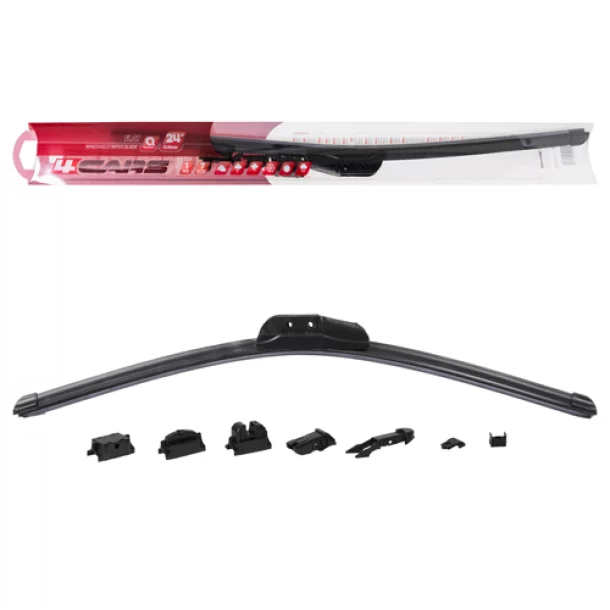
An excellent example of solving this technical problem is the 4Cars wiper blade with 7 adapters - 61cm (24“) - 1pc set. This package includes several coupling pieces specially designed to cover a wide range of car configurations encountered in traffic. Using such a set eliminates uncertainty regarding compatibility, allowing for firm and quick attachment of the blade to various metal arm profiles, directly by the user.
What are the clear signs that windshield blades need to be replaced?
Identifying blade wear in time is essential for road safety, and drivers can determine the optimal time for replacement by observing a few clear signs during operation.
Cleaning deficiencies: The appearance of persistent water streaks, entire areas left uncleaned, or a fine film of fog on the windshield indicates the loss of uniformity of the rubber profile.
Noise and vibrations: Piercing squeaks, jerky friction, or vibrations on wet glass signal the hardening of the material, which no longer slides smoothly on the surface.
Visible structural damage: The presence of cracks, partial detachment of the blade from the support, or unnatural curling of the edges due to prolonged exposure to UV radiation and large temperature variations.
To maintain excellent visibility in any season, users look for efficient solutions such as the Bosch Aerotwin windshield wiper blade set or the robust Valeo First Multiconnection windshield wiper option, both being recognized for material resistance under intensive use conditions. Understanding these signs of degradation clearly shows how to choose car wipers when the old ones no longer ensure perfect contact with the windshield.
Particulars for commercial vehicles: what lengths and structures do trucks use?
The large windshields of commercial vehicles and utility vehicles impose special technical requirements for ensuring optimal visibility. Long blades intended for these windshields must maintain constant and uniform pressure on the entire sweeping surface, even at high driving speeds. For this reason, the classic plastic structure is replaced by robust metal frames, equipped with additional springs that offer structural stability and increased resistance to the force of strong wind.
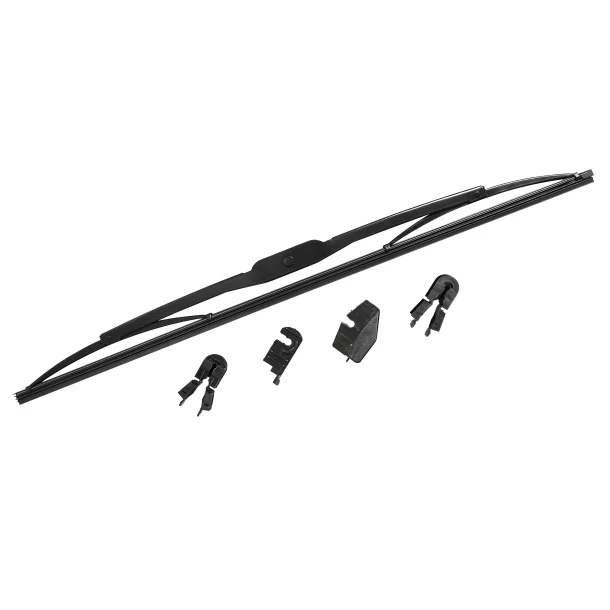
To meet these severe demands, the right choice is equipment specially designed for the intensive work regime of trucks. A representative example in this segment is the Optimax Truck Line windshield wiper 1pc - 70cm (28") model, equipped with a solid frame and integrated metal springs. This reinforced construction prevents blade deformation under the action of airflow and guarantees efficient cleaning during long hauls, regardless of the weather conditions encountered on the route.
FAQ
How can I find out what type of wiper arm my car has to choose the adapter?
The arm type is identified visually by removing the old blade and analyzing the terminal shape of the metal arm, which can be in the form of a hook (U-hook), side pin, or button. Most universal wipers include in the package a set of adapters compatible with the most common mounting systems.
Can I mount a blade with a slightly different length than the original one?
A deviation of a few millimeters is acceptable only if the new blade does not touch the windshield pillars, the rubber seal, or the other wiper during operation. It is recommended to respect the lengths specified by the manufacturer to avoid overloading the system's electric motor.
Why do new wipers squeak even if the length is correct?
Squeaking can occur due to the presence of a film of wax or grease on the windshield, an incorrect angle of the metal arm relative to the glass, or the quality of the rubber. Thorough cleaning of the windshield and the use of blades with a graphite layer can eliminate these friction noises.
How often should wiper blades be replaced?
It is recommended to replace the blades twice a year, preferably before the start of the cold season and after it ends. Exposure to frost, ice, strong sun, and dust prematurely wears out the rubber, reducing visibility and safety while driving.


