



















Van Seat Covers: Complete Guide to Choosing the Right Model

Van seat covers: how to choose the right model?
Why is dedicated protection necessary for van seats?
Purchasing van seat covers is an essential practical decision for protecting the interior of commercial vehicles against intense daily wear, dust, and the mechanical damage that is inevitable during transport activities. Vans are operated under intense professional conditions, which means that drivers and passengers frequently get in and out, often carrying equipment, tools, or goods that can scratch or stain the original material.
Using high-quality protective accessories preserves the factory upholstery of the commercial vehicle, preventing premature degradation. This direct preservation contributes to maintaining the vehicle's resale value in the long term, offering a neat and professional appearance to clients or business partners.
According to industry data published by the specialists at autonecesar.ro, systematic protection of the cabin significantly reduces the reconditioning costs required at the end of the commercial fleet's usage cycle. Instead of investing in expensive reupholstery services or professional chemical cleaning of damaged seats, replacing a worn cover is a quick and affordable operation.
To ensure an effective barrier, the modern materials used to manufacture these accessories are extremely durable. For example, faux leather covers or those made of thick jacquard fabrics stop liquids, mud, and grease from penetrating directly into the seat foam. Thus, cleaning the cabin becomes much simpler, limited to a quick wipe with a damp cloth in the case of waterproof finishes.
How do the materials in the Practical seat cover range differ?
The Practical seat cover range stands out for its use of black faux leather, available in various seating configurations, a material designed to protect original upholstery in commercial vehicles. This premium synthetic texture eliminates the need for difficult washing, allowing for quick cleaning by simply wiping with a damp cloth, making it ideal for vans used in intensive courier or freight transport.
Each model in this range is designed to meet a specific cabin configuration, ensuring a precise fit without blocking the native functionalities of the seats:
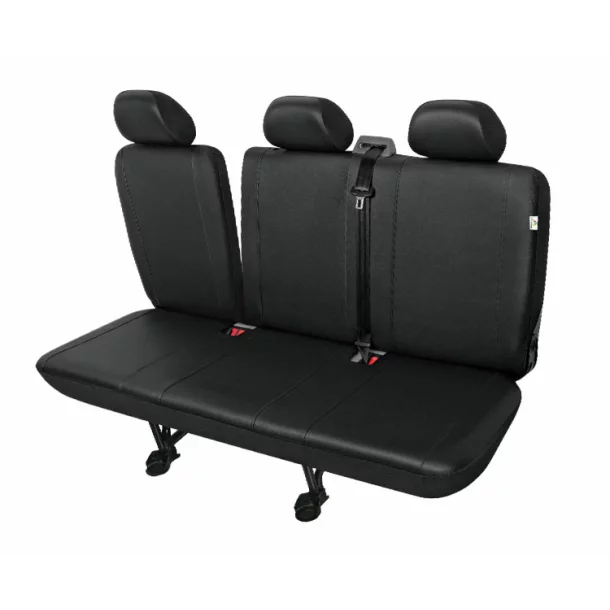
The Practical faux leather DV3 3-seater van seat covers model offers complete and uniform coverage for standard three-seat configurations, fully protecting surfaces exposed to friction.
The Practical faux leather DV3 Split 3-seater van seat covers variant is specially adapted for split triple benches, allowing for individual folding and unhindered access to the cabin's functional elements.
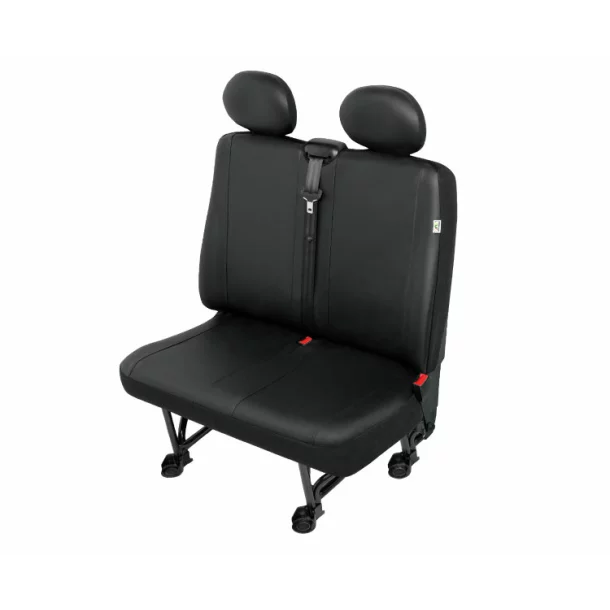
For commercial vehicles equipped with a more compact cabin, the Practical faux leather DV2-M 2-seater van seat covers model ensures the same effective barrier against dirt for two-seat configurations.
This multi-layer material structure, which includes a layer of polyurethane foam for increased comfort and a durable protective film, guarantees the maintenance of a clean interior appearance in the long term, preserving the resale value of the van. Fleet owners and professional drivers can check the exact compatibility of these accessories directly in the technical section dedicated to each product on the cridem.ro website.
What advantages do the jacquard material covers from the Ares range offer?
Jacquard material covers from the Ares range offer superior breathability compared to those made of faux leather, being specifically structured to ensure optimal thermal comfort in all seasons. This premium technical fabric allows for constant air circulation, preventing overheating and moisture accumulation during intensive use of the commercial vehicle.
The Ares DV3 Split 3-seater van seat covers product features special seams certified to allow for the correct and rapid deployment of side airbags in the event of an impact. The secure seam technology guarantees that passenger safety is not compromised, with the covers opening instantly under the pressure of the airbag, in accordance with automotive safety standards.
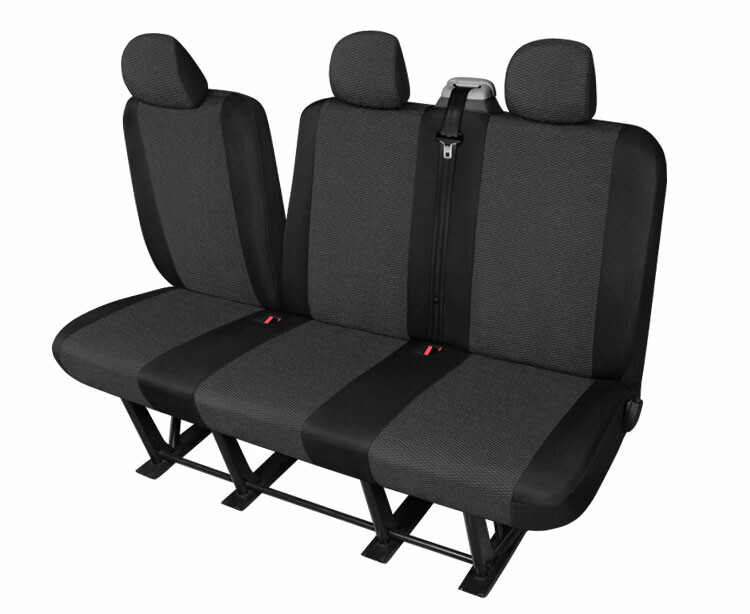
The dense weave of the Ares range prevents premature abrasion caused by repeated entering and exiting of the cabin, while also offering increased tactile comfort for professional drivers who spend many hours behind the wheel. The three-dimensional structure of the jacquard material retains dust and dirt on the surface, facilitating quick cleaning and maintaining the neat appearance of the cabin in the long term.
Comparison criteria | Ares jacquard material covers | Standard faux leather covers |
|---|---|---|
Material composition | Dense jacquard fabric with sponge layer | Synthetic polyurethane layer on textile backing |
Main purpose | All-season use | Protection for intensive use |
Thermal properties | High breathability and passive ventilation | Tendency to heat up during summer |
Wear resistance | High protection against mechanical abrasion | Sensitivity to scratches and punctures |
What advantages do dedicated van seat covers offer?
For drivers who want the most precise fit while retaining the full functionality of the seats, dedicated van seat covers are an important alternative to universal models. They are tailored to the specific cabin configuration and take into account features such as the double passenger bench seat, armrests, headrests, side airbags, and folding tables integrated into the backrest.
For example, dedicated front seat covers for Ford Transit Custom 2012–2018, with folding table, 1+2 seat configuration, are made from 100% polyester laminated with flame-retardant PUR foam and allow unrestricted use of the folding table, driver's armrest, and SRS Airbag system.
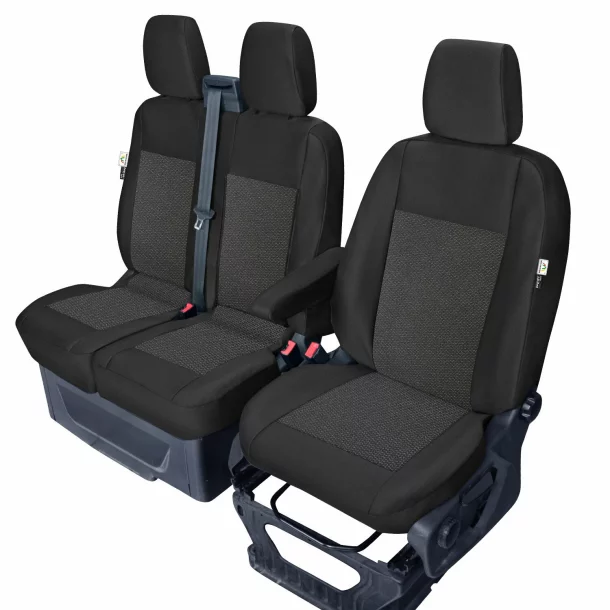
Dedicated versions are also available for other commercial vehicles, adapted to their original seat configurations, including Mercedes Vito III W447 (>2014), 1+2 seats, Mercedes Sprinter W907 (>2018), 1+2 seats, and Ford Transit Connect II Van (>2014), with folding table, 1+2 seats.
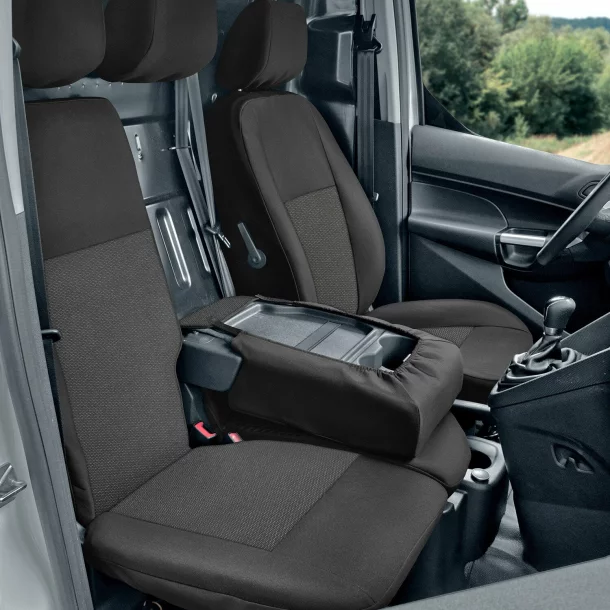
Compared with a universal seat cover, a dedicated model follows the shape of the seat more precisely, remains more stable during use, and provides access to the cabin's original functional elements, making it a suitable choice for commercial vehicles used intensively on a daily basis.
How is the correct compatibility determined before purchase?
Car cover compatibility is not universal; it depends strictly on the make, model, year of manufacture, and the exact configuration of the cabin seats. Choosing an unsuitable set can block essential functionalities or lead to a poor aesthetic fit. To prevent these issues, the selection process must follow a few clear technical steps.
Identifying the exact structure of the bench, checking if it is simple or split in a two-thirds and one-third ratio.
Checking for the presence and positioning of armrests integrated into the cabin seat backrests.
Confirming the type of headrests, specifically whether they are adjustable and removable or integrated directly into the backrest structure.
Identifying the presence of side airbags built into the seats, in which case covers with special safety seams are mandatory.
Each of these construction details determines whether a set of van seat covers will fit correctly on the commercial vehicle's seats. To simplify the purchasing process, the Cridem team recommends using the technical filters available directly on the official website. If the cabin configuration has atypical features, customers can contact the specialists at the phone number 0728 929 994 to receive personalized technical assistance before placing the order.
How is correct maintenance ensured to extend the life of the covers?
Periodic cleaning and following the washing instructions represent the most effective method to maintain the appearance and protective properties of car covers intended for vans. For variants made of durable synthetic materials or jacquard, it is recommended to remove dust and solid residues with a handheld vacuum, followed by wiping light stains with a damp cloth and a neutral detergent.
In the case of heavy soiling, covers compatible with machine washing should be placed in the machine at a maximum temperature of 30 degrees Celsius, without intensive spinning and without the use of aggressive chemical bleaches that could degrade the textile texture or the elasticity of the fastening systems. Drying should be done naturally, in well-ventilated spaces, avoiding direct exposure to strong heat sources or direct sunlight to prevent premature fading of the material.
How to correctly choose the cover configuration for double van benches?
The correct configuration of covers for double van benches is chosen by checking for the existence of seat belts integrated into the backrest, the headrest, and the seat folding systems. Many light commercial vehicles are equipped with a two-seater passenger bench, where the middle seat belt comes directly out of the backrest shoulder, a detail that requires the use of a special cover, provided with secure slots or dedicated zippers. A standard cover, lacking these technical cutouts, would block the operation of the seat belt and compromise the integrity of the passenger protection system.
It is also essential to analyze whether the bench backrest is split or if it includes a folding table integrated into the central part. The Cridem brand offers in its range of car accessories construction variants designed specifically to allow the opening of these work consoles without the need to completely remove the textile protection. Identifying the number of headrests and their type, fixed or height-adjustable, represents another critical step in ensuring a perfect fit, thus preventing excessive tensioning of the material or the cover slipping during intense daily use.
FAQ
What is the difference between faux leather and jacquard seat covers?
The faux leather seat covers from the Practical range can be quickly cleaned with a damp cloth and are waterproof, while the jacquard seat covers from the Ares range offer superior breathability and thermal comfort on hot days.
What limitations do universal seat covers have compared to dedicated models?
Universal seat covers may not allow full use of folding tables, armrests, or split-bench systems if they are not designed with the appropriate openings and cut-outs.
When should standard seat covers be avoided on van seats?
Seat covers that are not certified for airbags should not be installed on seats equipped with integrated side airbags, as they may prevent the airbags from deploying correctly in the event of an impact.
How does premature wear appear on low-quality seat covers?
Poor-quality seat covers may shift on the seat during use, fade due to UV exposure, and develop tears around the seams because of constant tension.
How do you choose between the standard Practical DV3 and DV3 Split models?
The choice depends entirely on the configuration of your bench seat. The DV3 Split model is required if the three-seat bench is split or includes a folding table integrated into the backrest.


