



















Rubber or Carpet Car Mats? Choose the Right Protection for Your Car

Car floor mats: how to choose between rubber and carpet protection
Verdict in brief
Rubber car floor mats offer complete waterproofing and are ideal for cold seasons or heavy use in muddy environments.
Carpet car floor mats provide a refined aesthetic and trap dry dust, being recommended for the warm season.
Correct installation of textile mats requires dedicated accessories to prevent accidental sliding under the pedals while driving.
The choice between the two materials depends directly on the level of humidity in the cabin and the frequency of outdoor activities.
The cabin dilemma: why does the choice of material influence comfort?
Equipping the cabin with car floor mats is the first practical decision a vehicle owner faces to protect the car's internal structure. Beyond the initial aesthetic aspect, these floor accessories play an active role in preventing the degradation of the original carpet, which is extremely vulnerable to mechanical wear, abrasion, and liquid penetration. Once the factory carpet is damaged, repairs involve high costs and the complete removal of the seats, which is why using protective barriers is essential for preserving the vehicle's value.
Choosing the material directly influences the humidity level and air quality in the cabin. While a waterproof protector keeps water on the surface, textile materials tend to absorb moisture, which can create an environment conducive to the development of unpleasant odors in the absence of proper ventilation. Therefore, selecting the right type of barrier must align the material's behavior with the vehicle's usage pattern.
Decision criterion | Rubber variants | Carpet (textile) variants |
|---|---|---|
Structural composition | Flexible rubberized material, waterproof, often with raised edges | Thick carpet, anti-static structure, often with heel reinforcement |
Moisture behavior | Completely repels liquids, accumulating them on the surface | Absorbs moisture, requiring complete drying to avoid odors |
Maintenance effort | Quick wash with a water jet, almost instant drying | Requires periodic vacuuming, brushing, or washing with slow drying |
Main advantage | Maximum protection against mud, snow, and dense dirt | Refined aesthetic appearance, comfort to the touch, and sound dampening |
Best use | Cold season, outdoor activities, heavy use | Dry season, urban environment, preference for classic finishes |
Each material responds to different operational priorities. The correct decision does not boil down to the visual aspect, but starts from analyzing how the vehicle is used in everyday life.
Rubber mats vs. carpet mats: the differences that matter
Choosing accessories for car floor protection depends on the practical priorities of each user, balancing raw weather resistance and everyday aesthetic comfort. To clarify this decision, the table below presents the essential differences between the two materials based on real-world usage criteria.
Comparison criterion | Rubber mats | Carpet mats |
|---|---|---|
Composition and structure | Waterproof synthetic elastomer, often with raised edges | Textile fibers woven onto a waterproof or granulated backing |
Water and mud retention | Excellent; liquids remain trapped in the profiled channels | Average; fibers absorb moisture but can saturate quickly |
Ease of cleaning | Quick; requires only water jet washing or wiping | Complex; requires periodic vacuuming and washing with complete drying |
Behavior in extreme temperatures | Resists without deformation, although some rigid variants may crack in frost | Remain flexible and pleasant to the touch regardless of the season |
Stability and fixation | High due to their own weight and guide studs | Requires a dedicated mat stopper set to prevent sliding |
Elastomer models excel in wet seasons, effectively retaining melted snow, coarse mud, and accidentally spilled liquids without them penetrating the vehicle's original carpet. Cleaning is done by simple rinsing, with drying being almost instantaneous. However, lower-quality materials can become rigid at extremely low temperatures or emit an unpleasant odor on hot summer days.
Textile floor mats offer a superior aesthetic and actively contribute to the cabin's sound insulation, absorbing road noise. These car interior accessories trap fine dust in the fibers, preventing it from being redistributed into the air breathed by passengers. The main disadvantage is the sensitivity to prolonged moisture; if not dried completely after washing or exposure to rain, the fibers can develop mold and unpleasant odors. To prevent shifting under the pedals, these textile models require fixation systems compatible with the car's floor.
When is textile carpet a better option for the vehicle?
Textile carpet is the optimal option when the main priorities are acoustic comfort, thermal insulation, and a refined aesthetic look in the cabin. Unlike rigid surfaces, textile fibers have the capacity to trap fine dust and volatile impurities in their structure, preventing their recirculation in the air breathed by passengers while driving.
Choosing textile floor mats brings clear benefits in certain usage conditions and times of the year:
Damping road noise by absorbing sound waves that penetrate through the vehicle floor.
Maintaining a clean atmosphere in the cabin during dry seasons, thanks to the trapping of dust particles in the fabric until the next vacuuming.
Improving the visual appearance of the interior through dense textures and elegant finishes that complement the car's original carpet.
Additional thermal protection for the feet, offering a warmer and more comfortable feeling compared to cold synthetic materials.
Using thick carpet models during the warm summer months ensures a more pleasant and quieter internal environment. To guarantee stable fixation and prevent sliding under the pedals, it is recommended to purchase dedicated floor mats equipped with a mat stopper set compatible with the car's original anchor points.
How do we ensure floor stability to avoid sliding?
Uncontrolled movement of protective accessories in the pedal area represents a major risk to road safety, as a slipped material can physically block the brake or accelerator pedal. To prevent these dangerous situations, firm fixation on the vehicle floor is mandatory. Vehicle models may be equipped from the factory with mounting bases, and for cars that do not have these elements, it is possible to install fixation systems, including the Amio 4-piece textile car floor mat stopper set.
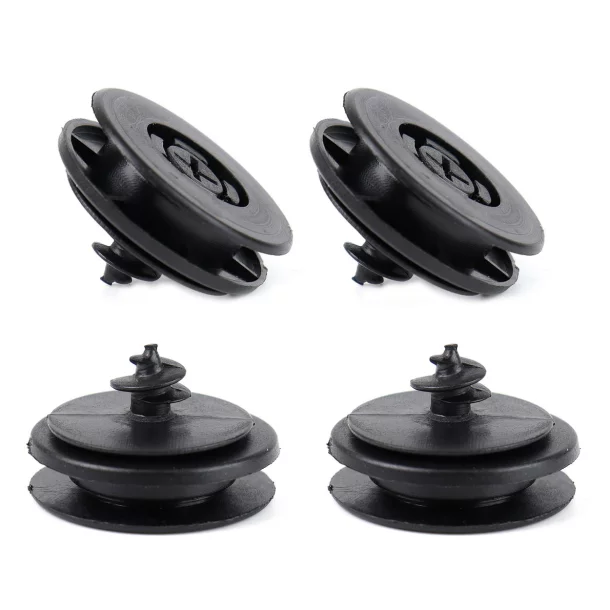
An Amio 4-piece textile car floor mat stopper set offers a practical and effective solution for securely anchoring protective materials to the cabin's original carpet. This set of fixation accessories prevents sliding by anchoring directly into the floor, ensuring the correct position is maintained even during sudden driving maneuvers.
Choosing the stabilization method depends directly on the type of protection used and the presence of the car's original anchor systems.
Floor protection type | Recommended stabilization system | How it works |
|---|---|---|
Rubber mats | Factory-integrated clips or profiled edges | Direct fixation on floor pins or adhesion through material weight |
Textile mats | Dedicated stopper set or fixation strips | Mechanical anchoring by piercing the carpet and locking by rotation |
Correct use of the fastening systems eliminates the risk of accidental displacement and protects the car's original carpet against premature wear caused by friction. Installing these accessories is a simple but essential step for maintaining absolute control over the pedals while driving.
Clean accessories correctly: steps to extend their lifespan
Maintaining an impeccable appearance and preventing premature degradation of cabin protective accessories depends directly on applying cleaning methods adapted to each material. An incorrect approach not only shortens the product's lifespan but can also affect comfort during trips. To ensure correct and safe maintenance, it is recommended to follow these specific procedures:
Washing flexible rubber models is done quickly using a water jet with moderate pressure, followed by wiping with a dry cloth to prevent the accumulation of limescale deposits.
Cleaning textile variants requires rigorous vacuuming of dust, washing with dedicated dry foam, and complete drying before repositioning, thus eliminating the risk of mold or unpleasant odors.
Avoiding the use of industrial detergents or aggressive solvents is essential, as these chemicals stiffen the elastomer structure and quickly discolor the carpet fibers.
Correct fixation after cleaning prevents the material from sliding under the pedals, with the use of a floor mat stopper set being the recommended measure for driving safety.
The drying process should take place naturally, in well-ventilated spaces, away from the direct action of strong sunlight which can crack waterproof surfaces or fade fabrics.
What is the right verdict for your lifestyle?
Choosing car interior accessories depends directly on daily priorities and how the vehicle is used. For active families who frequently transport children or pets and deal with mud, spilled liquids, and food scraps, rubber floor mats are the optimal option due to their waterproofing and ease of cleaning. In contrast, urban drivers and professionals who use the car for business purposes may prefer textile floor mats, as they offer a superior aesthetic, absorb road noise, and complement the cabin design.
To ensure complete protection of the car floor throughout the year, owning two distinct sets is the specialists' recommendation. Using a set of dedicated rubber floor mats during the cold and rainy season prevents water from penetrating the carpet, thus avoiding mold formation. Switching to universal or dedicated carpet mats during the summer reduces dust accumulation and offers a comfortable atmosphere during times with high temperatures, when rigid synthetic materials can emit unpleasant odors. The selection guide boils down to the balance between time and aesthetics:
Choose rubber if the priority is quick maintenance, extreme wear resistance, and cleaning by simple water washing.
Choose textile material if you want increased tactile comfort, visual customization, and better floor sound insulation.
It is recommended to use a floor mat stopper set for both variants, ensuring firm fixation and preventing sliding under the pedals.
FAQ
How does the wear resistance of rubber car mats compare to carpet mats?
Rubber car mats offer superior resistance to abrasion and punctures caused by rigid footwear. Carpet mats may wear out more quickly around the heel area, which is why higher-quality versions often feature additional reinforcement in this section.
What is the main criterion when choosing between the two types of car mats?
The level of exposure to moisture and mud is the decisive factor. If the vehicle is frequently used in wet or rural environments or during winter, rubber mats are the better choice. For predominantly urban use in dry conditions, carpet mats provide greater comfort.
When should carpet car mats be avoided?
Carpet mats should generally be avoided during seasons with heavy rainfall or snow, as the fibers absorb water and retain moisture inside the vehicle. This can lead to persistent window fogging and unpleasant musty odors.
How can you check whether a universal car mat is positioned correctly?
Check the position by fully pressing the clutch, brake and accelerator pedals and making sure the mat does not catch on or obstruct their movement. The anti-slip backing should also adhere firmly to the vehicle’s original carpeting.


